Tag Archives: Carol Willette Bachofner

Book Review of Carol Willette Bachofner’s New Poetry Collection

I once wrote a poem that ended with a man astounded at witnessing “a woman / blaze from the womb.” If ever an entire poetry book witnesses women blazing, it’s Carol Willette Bachofner’s new collection, Every Place I Look. Whereas I had only hinted at the phenomenon, Bachofner embraces it, even subtitles the group of poems, “women with embers at their feet.”

I’m sure it seems odd to start a review with a quote from my own poem, but I feel so connected with Bachofner’s new work that it’s as if the poems are siphoned from my heart—or, conversely, as if they fill my heart with their truths.

The theme of Eve and the apple runs throughout, as poem after poem documents what women have been had to deal with, starting with the mythology that she is created from Adam’s unimportant rib. Eventually, Bachofner has it out with the myth in the poem “Rib and Other Fantasies.”

We are not bone of anyone but ourselves,

not stolen property of biblical proportions.

My favorite lines are in this poem:

Why

think we are spilling used blood? We are cleansing

ourselves, making our inner home a temple.

For ages, men held to the notion that menstruation proved that women were inferior, even dirty. But, no, instead we are self-cleaning, creating something holy.

Brava to Bachofner for this thought-provoking, radiantly feminist poetry collection, Every Place I Look: women with embers at their feet. Drag your feet through the embers to find a copy for yourself!

###

You can purchase a  copy of Every Place I Look at the publisher’s website here:

Every Place I Look

WE HAVE A WINNER: MERRIL D. SMITH HAS FOUND THE POEM IN DOLL GOD AND WILL HAVE A COPY OF EVERY PLACE I LOOK WINGING TO HER SOON!!!

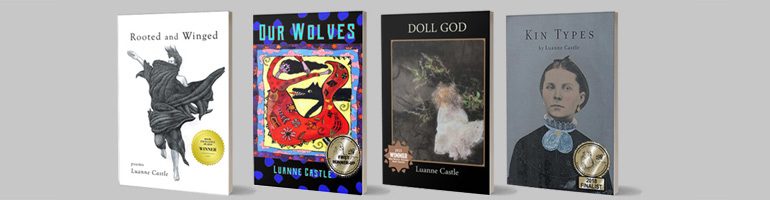
One person who has a copy of my first book Doll God can win a copy of Every Place I Look:

First person (with an address in the U.S.) who responds in the comments below with the name of the poem and the page number (from Doll God) with the woman blazing from the womb, I will send you a free copy of Carol Bachofner’s new book! I will keep the comments open to give you plenty of time to find the poem (and the book–I realize it’s been eleven years)! (Hint: it’s not that hard to find the poem if you start at the beginning of Doll God).


4 Comments

Filed under Book Review, Poetry, Poetry book, Poetry Collection

What is That Beat from Inside the Earth?

In December, I posted a two-part essay by Abenaki poet Carol Bachofner here and here. In this piece, she redefines her artistic identity. Today I am sharing my review of her 4th poetry collection, Native Moons, Native Days.

These lovely poems explore and illuminate the life stories of the Abenaki, both past and present. They begin as lyric poems, but the singular first-person perspective doesn’t insist on itself as a lone entity. Rather, the view merges with a larger “we.” In this way, the poetry collection gives voice to a people.

The first poem, “Origin,” tells a story of how “[e]verything started over water” when a woman looked down through a hole in the clouds, “dreaming and falling.” By “Epilogue,” “We look to the sky to see who is falling, who is rising.” I read this as a creation story that informs a system of symbols that give meaning for the woman telling these poetic stories as well as for the Abenaki. As the moons come and go, so do the generations.

Bachofner’s poems bring the reader closer to the rich earth and its fruit (“Plunging hands into warm earth / where worms have shed casts”)–the dirt, the squash, the ocean, its fish. They have a way of slowing down the contemporary world and connecting the reader through place and naming. The names are important: they punctuate the poems. Medawihla, Mezatanos, Pashipakokee: loon, moon, river. My first time through the book I read the poems aloud, relying on instinct for pronunciations, and they felt good in my mouth.

Just under the musicality of Bachofner’s lines, I hear a heart beat that seems to come from the center of the earth. No one could expect poetry to do more.

Here’s a sample from the book:

We Speak the White Man’s Language

except when dreaming, except when our fingers

braid hair, weave blankets, knot bait bags,

when we are praying in Indian. Work brings words

from the belly, the soles of the feet.

Words walk the woods where our relatives

burned the way forward from camp to camp,

trading stories with people along the way.

We speak in our own tongues, syllables full

of consonants, echoing from the back

of the throat to the nose, to the wind.

Our words are a clearing, a place for fire.

Where did the language go when the black robes

threw holy water on it? Did it disappear

when the switch was on our backs? Into the trees,

into the streams, into our combs to wait.

Carol has also published three other poetry collections. Go forth and check them out!

6 Comments

Filed under Book Review, Books, Poetry, Poetry book, Poetry Collection, Writing