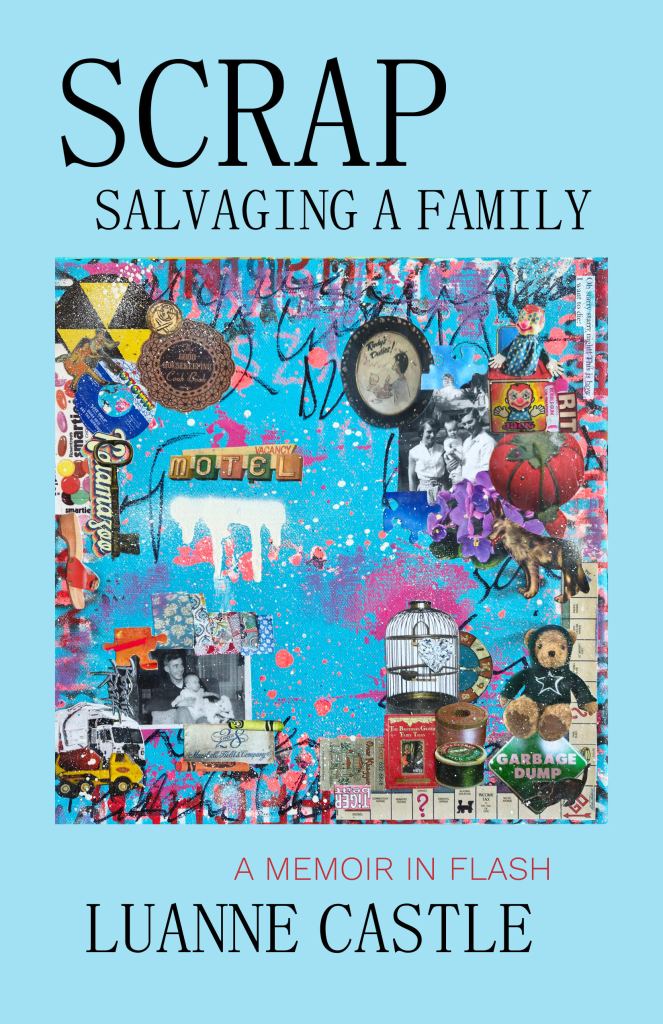
A big thank you to Merril D. Smith for her heartfelt review of my memoir Scrap:Salvaging a Family.
MERRIL’S REVIEW OF SCRAP

A big thank you to Merril D. Smith for her heartfelt review of my memoir Scrap:Salvaging a Family.
Once my memoir was published I felt free to think over my life again, mind unfettered by writing about it, and it occurred to me how important female friends have been to me.
I’m not one to generally enjoy hanging out with a group of women unless I am actual friends with each of them. Once there is anyone else in the (small) group who I don’t know it becomes more difficult for me. I’ve written before about being a Highly Sensitive Person. Maybe it’s just introversion. Or social anxiety. My ADHD. Or maybe I’m on the spectrum–there are certainly enough autism “tests” available online that would put me there. (Seriously, I think this is really unfair to people with real autism). Anyway, I prefer my friends one on one. That way I can focus on that person and not feel sidetracked and overstimulated by too much going on.
I had a best friend in first grade. Her name was Michelle, and we were both the best readers in our class. She was fun and smart and had an older sister so Michelle was a little old for her age. She even had a Chatty Cathy doll that talked. Or was it a Betsy Wetsy who wet her pants? We got split up in third grade, and I made two new friends, but I wasn’t close to them as I was to Michelle, whereas it appeared to me that Michelle went on to make lots of best friends in her class.
After we moved, I met Jill. We both loved to read mysteries and Gene Stratton Porter books which were wonderful for the approach to nature, but had some virulent racism in them. Nobody was monitoring our reading! We played in the woods and collected what we found. Jill not only was in my fourth grade class, but she was in my Sunday School class as well.
But then we moved again. The friend I met that first week in the new house was the girl next door. She is the first friend who shows up in Scrap. She is one of the only characters in the book where I changed her name and called her Ellen. The reason I did that is because Ellen died at age nineteen of ovarian cancer. Her stepbrother is also in the book, and he also died too young. I don’t know why I made this decision, but somehow I know it’s because of Ellen’s death. Although by the time she passed, we had already moved away again and had gone to different high schools. Ellen attended my wedding, but we were no longer close. I ended up seeing her a few weeks before she died, when she was looking for a suitcase to take back and forth to the hospital. Then I went to the visitation at the funeral home, a very distressing event.
Ellen’s sarcasm and sharp wit helped me get through some difficult 10-12 year old times with my father. She spoke up to my father, something he was not used to. And she was a bit of a wiseacre. But in the years we were apart, Ellen changed completely and became what I thought of at the time as a goody-goody, dressing very modestly (in the early 70s!), carrying a tiny mom-style purse on her forearm. But did this happen because of the cancer? I have her senior picture still, taken before she got sick. In it, she’s beautiful, her long brown hair thick and wavy, her eyes sparkling.

Best friends take on the world!
The next best friend that shows up in Scrap is Randi. We are still friends although we live in different states. Randi and I were in all our classes together all through junior high because our school was “tracked” and there was only one class of our track. Randi and I became inseparable and pulled off some pretty weird capers, even after I had moved to a different high school, such as secretly driving 150 miles away to see a boy I had a crush on who had moved. If my parents had known!!! But they didn’t. Randi was always there for any silliness I could concoct and always had my back. I couldn’t have gotten through those years without her.
All of my female friends have been important to my development as a person and also as a writer. They have been a saving grace of my life.
This leads me to this: I had a LOT of help writing this book. Any book that takes 18 years to come to fruition has either sat there doing nothing most of the time or has been kicked around and around and around. Scrap is the latter. So many people–friends and strangers–have had a hand in Scrap that when I thought of writing a thank you to go in the book, I had one panic attack after another. What if I forgot someone at the time I was writing it? After all, memories come to us in fits and starts. They don’t rest at the front of our minds all the time. Not enough room!
Finally, I decided to skip the public thank you because it was too overwhelming. But if you helped me with this book don’t think for one moment that I don’t think of you often and of the help you gave me.
And thank you if you read it recently or are reading it now. You can’t imagine how much it means to me to share this story that’s been brewing for many decades!!!
###
A few recent links:
My guest post about the process of writing Scrap at True Book Addict
A review of Scrap and several excerpts from the book at Storyteller Poetry Review
A new ekphrastic microstory at The Hoolet’s Nook (nothing to do with Scrap)
The Umbrella at The Hoolet’s Nook
This link is the photograph that inspired the story.
###
Tour Schedule for Scrap: Salvaging a Family (memoir in flash):
March 21: Joy Neal Kidney (review)
March 23: Liz Gauffreau, (review)
March 24: Marie Ann Bailey, (review)
March 25: John W. Howell, (excerpt)
March 30: Miriam Hurdle, (companion story)
March 31: Review Tales (review)
April 2: the bookworm (review)
April 9: Ashley’s Books, Cozy Home Delight (review)
April 13: What’s That Book About (guest post)
April 15: Tabi Thoughts(review)
April 23: Lavender Orchids (review)
April 27: The Reading Bud (review)
May 4: Chelsea’s Books (review)
May 4: Smorgasbord (excerpt)
May 6: Brotman Blog (review)
May 7: The Reading Bud (interview)
May 14: True Book Addict (guest post)
May 15: Storyteller Poetry Review (review and excerpts)
May 19: True Book Addict (review)
May 21: The Book Connection (review)
May 26: Author Anthony Avina (review)
May 28: Author Anthony Avina (guest post)
Follow the tour with the hashtag #ScrapSalvagingFamily
###

Just a quick update post.
Sorry if I split your eardrums ;). Scrap: Salvaging a Family is a Finalist in the Next Generation Indie Book Awards.

I think it’s very interesting that another of the memoir finalists is Deborah Sosin’s book Escape Velocity. She wrote it in 70 70-word memoir pieces. So that makes two finalist books that were heavily influenced by flash/micro writing. It would be interesting to look at memoirs from previous years and see if flash or micro popped up in that field. I kind of doubt there was much.
Just ordered Deborah’s book!
Remember that if you want to order an ebook of Scrap, it needs to be through the publisher, not Amazon. You can get a paperback either place.
If you’re up for an interview of me, there is one at The Reading Bud.

closeup of a blue retro typewriter and the word memoir written with it in a yellowish foil
Last night the gardener and I got back from visiting my mother in Michigan. As soon as I pull it together and maybe get a little sleep, I’ll letcha all know how it went.
Today, Scrap: Salvaging a Family is featured on Sally Cronin’s Smorgasbord! A huge thank you to Sally!
You can find it here:
I came home with some more old photos from my mother. Here are pix I found of the cottage that is found in SCRAP. I wrote about it here:
The grass on the ground shows me that this was taken years after we first moved to the lake for the summers. I think this was when the cottage was finally demolished.


Tour Schedule:
March 21: Joy Neal Kidney (review)
March 23: Liz Gauffreau, (review)
March 24: Marie Ann Bailey, (review)
March 25: John W. Howell, (excerpt)
March 30: Miriam Hurdle, (companion story)
March 31: Review Tales (review)
April 2: the bookworm (review)
April 9: Ashley’s Books, Cozy Home Delight (review)
April 13: What’s That Book About (guest post)
April 15: Tabi Thoughts(review)
April 23: Lavender Orchids (review)
April 27: The Reading Bud (review)
May 4: Chelsea’s Books (review)
May 4: Smorgasbord (excerpt)
May 6: Brotman Blog (review)
May 7: The Reading Bud (interview)
May 14: True Book Addict (guest post)
May 19: True Book Addict (review)
May 21: The Book Connection (review)
Follow the tour with the hashtag #ScrapSalvagingFamily
Lavender Orchids has published a review on Instagram. Here is the start of it:

###

A copy of the newspaper we received at our home about President Kennedy’s assassination
President Kennedy’s assassination was the biggest news of my childhood and happened when I was in third grade. It’s the one event that touched the lives of every child. In my case, we got let out of school early, but didn’t know why. I remember waiting outside for the school bus, wondering what in the world was going on.
On the bus, we got the scoop from the oldest boys on the bus, the older twin brothers of my friend Vivian. They had a transistor radio and were listening to the news. I could see from their excited faces that they loved being the ones to share the awful news with our tender little minds and hearts. After all, they were in SIXTH grade.
At one point in Scrap: Salvaging a Family, I tell the story of what happened when I got home that day, as well as what happened to me on the day of President Kennedy’s funeral.
Tour Schedule:
March 21: Joy Neal Kidney (review)
March 23: Liz Gauffreau, (review)
March 24: Marie Ann Bailey, (review)
March 25: John W. Howell, (excerpt)
March 30: Miriam Hurdle, (companion story)
March 31: Review Tales (review)
April 2: the bookworm (review)
April 9: Ashley’s Books, Cozy Home Delight (review)
April 13: What’s That Book About (guest post)
April 15: Tabi Thoughts(review)
April 23: Lavender Orchids (review)–on Instagram
April ?: The Reading Bud (review)
May 4: Chelsea’s Books (review)
May 4: Smorgasbord (excerpt)
May 6: Brotman Blog (review)
May 7: The Reading Bud (interview)
May 14: True Book Addict (guest post)
May 19: True Book Addict (review)
May 21: The Book Connection (review)
Follow the tour with the hashtag #ScrapSalvagingFamily

The website Women Writers, Women’s Books has featured an article I wrote about the process of writing Scrap: Salvaging a Family. Here is a quote:
At least two, if not three, versions of this traditional chapter memoir were completed. By me apparently. But it didn’t feel as if I wrote them. Because I felt strongly that I wanted the distillation of image and experience. Creating chapters meant writing filler language. That felt inauthentic to me.
###

In Scrap I wrote about the playhouse my father built for me. In 2020, Twist in Time magazine published my story, “The Changing House,” about the little house. Their website is down, so I suspect the magazine is defunct. The first half of the story is about building the playhouse, which is very similar to the story in Scrap. But the second half of the story follows the little house on its path as long as I knew it.
###
The kids couldn’t wait to play inside the playhouse. Near the ceiling, the rafters formed long wooden pockets where we stored secret agent supplies like decoder rings and invisibility raincoats and private notes listing the boys we liked. Eventually, those things became irretrievable as the wasps set up nests.
We discovered that during the summer, the little house was too hot. We’d haul the child-sized table and chairs out onto the grass. In the winter, the air was as frigid inside as it was outside, but the snow and ice couldn’t get in, so we’d sit in our snow pants and stocking caps and play Candyland. Our fingers froze as we pushed our tokens, but then we’d pull our hands back up into the sleeves of our jackets until it was our turn again.
Eventually, we lost interest in the playhouse and started walking up to the plaza to buy candy and try on lipsticks. The house still stood at the back lot line, an ignored remnant of my childhood, until one fall when we discovered a new use for the little building.
We held sleepovers on Friday nights in the house, away from Mom’s prying eyes. One Friday, my next-door neighbor invited her brother’s friends. Before the boys showed up, we swigged the Grand Marnier I’d pinched from Dad’s bar in the basement. For a few minutes, my neighbor’s brother and I made out on top of my sleeping bag, but the boys didn’t stay long. After they mumbled their goodbyes, we practiced making each other pass out by squeezing our diaphragms. The tender skin on my upper lip burned from the neighbor boy’s stubble. That was one of the last nights we spent in the playhouse.
When we moved away from my favorite neighborhood, Dad strapped the house onto a flatbed truck and hauled it to our newly-purchased rundown summer cottage. My mother christened my playhouse, “The Changing House,” bestowing on it a new identity. Inside we stored stretched out bathing suits, Styrofoam floaties, and boat cushions. Daddy long legs set up residence in there, too, wrapping everything in webs so that when we wanted to use something, we had to make sure our hands were dry enough to wipe them clean or the silk would adhere to our skin until we ran, screaming and shaking our hands, off the dock and plunged into the lake.
One night when I came in from a moonlight swim, I caught my twelve-year-old brother in the little house making out with the fourteen-year-old neighbor girl. Apparently, she didn’t mind that he looked nine, while she could be mistaken for sixteen. My brother grinned when I opened the door on them.
Years later, my father moved the little house—now entirely brindle brown, the crescent moon long ago painted over–across the street, into the woods, where he used it as a storage shed. My brother built my parents a lovely home on the site of the old cottage. After my father’s death, my mother sold the lake property. Last time I drove by, the little house was gone. I imagine the new owners carted it to the junkyard where somebody scavenged it for usable parts.
Tour Schedule:
March 21: Joy Neal Kidney (review)
March 23: Liz Gauffreau, (review)
March 24: Marie Ann Bailey, (review)
March 25: John W. Howell, (excerpt)
March 30: Miriam Hurdle, (companion story)
March 31: Review Tales (review)
April 2: the bookworm (review)
April 9: Ashley’s Books, Cozy Home Delight (review)
April 13: What’s That Book About (guest post)
April 15: Tabi Thoughts(review)
April 23: Lavender Orchids (review)
April 27: The Reading Bud (review)
May 4: Chelsea’s Books (review)
May 4: Smorgasbord (excerpt)
May 6: Brotman Blog (review)
May 7: The Reading Bud (interview)
May 14: True Book Addict (guest post)
May 19: True Book Addict (review)
May 21: The Book Connection (review)
Follow the tour with the hashtag #ScrapSalvagingFamily
There is a lovely new review by Tabi on “Tabi Thoughts.” Here is a quote:
Scrap is a story of forgiveness and making peace with the past. It will resonate with readers who appreciate introspective writing, stories about healing and complicated family relationships.
You can read it here:
One of the characters of Scrap is my little cat Toby. He was an all black cat, and the story is bittersweet, especially bitter. It also is one of the memories that I choose to “interrogate” in the book. Because my cat Meesker was very reminiscent of Toby in looks and personality, and I just lost Meesker when he passed away in the bathroom while I was out of town and the pet sitter was here, it’s an old wound rubbed a little raw. Here is a pic of Toby.

Tour Schedule:
March 21: Joy Neal Kidney (review)
March 23: Liz Gauffreau, (review)
March 24: Marie Ann Bailey, (review)
March 25: John W. Howell, (excerpt)
March 30: Miriam Hurdle, (companion story)
March 31: Review Tales (review)
April 2: the bookworm (review)
April 9: Ashley’s Books, Cozy Home Delight (review)
April 13: What’s That Book About (guest post)
April 15: Tabi Thoughts(review)
April 23: Lavender Orchids (review)
April 27: The Reading Bud (review)
May 4: Chelsea’s Books (review)
May 4: Smorgasbord (excerpt)
May 6: Brotman Blog (review)
May 7: The Reading Bud (interview)
May 14: True Book Addict (guest post)
May 19: True Book Addict (review)
May 21: The Book Connection (review)
Follow the tour with the hashtag #ScrapSalvagingFamily
I wrote a guest post, “From Grimm to Golden Books: Writing Myself Out of the Fairy Tale,” for What’s That Book About–about the fairy tale influence on my new memoir Scrap: Salvaging a Family.
You can read it here:
 Illustration by Walter Crane for “The Almond Tree” (or “The Juniper Tree”)
Tour Schedule:
March 21: Joy Neal Kidney (review)
March 23: Liz Gauffreau, (review)
March 24: Marie Ann Bailey, (review)
March 25: John W. Howell, (excerpt)
March 30: Miriam Hurdle, (companion story)
March 31: Review Tales (review)
April 2: the bookworm (review)
April 9: Ashley’s Books, Cozy Home Delight (review)
April 13: What’s That Book About (guest post)
April 15: Tabi’s Thoughts (review)
April 23: Lavender Orchids (review)
April 27: The Reading Bud (review)
May 4: Chelsea’s Books (review)
May 4: Smorgasbord (excerpt)
May 6: Brotman Blog (review)
May 7: The Reading Bud (interview)
May 14: True Book Addict (guest post)
May 19: True Book Addict (review)
May 21: The Book Connection (review)
Follow the tour with the hashtag #ScrapSalvagingFamily
This week, Ashley at Cozy Home Delight reviewed Scrap: Salvaging a Family.
[The book] brings up that complicated space where grief, resentment, anger, love, and even forgiveness all exist at the same time. The book does not try to simplify those feelings or resolve them neatly. It allows them to exist together, which felt very honest.
I thought I’d share a photo related to my memoir. I write about the cottage my father bought for us to reburbish. This is what it looked like near the beginning, although you really can’t see some of the details I describe in the book. But it gives you what I saw when we first pulled up outside it.
This cottage came with a dirt floor which had been applied over the old linoleum. And yet somehow my father supposedly found a pair of pristine white ice skates with red pompoms in my size in the dirt crawl space (Michigan cellar) underneath.

Tour Schedule:
March 21: Joy Neal Kidney (review)
March 23: Liz Gauffreau, (review)
March 24: Marie Ann Bailey, (review)
March 25: John W. Howell, (excerpt)
March 30: Miriam Hurdle, (companion story)
March 31: Review Tales (review)
April 2: the bookworm (review)
April 9: Ashley’s Books, Cozy Home Delight (review)
April 13: What’s That Book About (guest post)
April 15: Tabi’s Thoughts (review)
April 23: Lavender Orchids (review)
April 27: The Reading Bud (review)
May 4: Chelsea’s Books (review)
Mary 4: Smorgasbord (excerpt)
May 7: The Reading Bud (interview)
May 14: True Book Addict (guest post)
May 19: True Book Addict (review)
May 21: The Book Connection (review)
Follow the tour with the hashtag #ScrapSalvagingFamily
While I think of my new memoir Scrap as being hybrid (a mix of genres, such as flash, poetry, playscript, essay) with flash the predominant genre, I thought I’d look at references to poetry in the book.
I mention how much I loved Edna St. Vincent Millay poetry when I was young. This poem, which she wrote when she was nineteen years old, I listened to over and over again on an LP album.
“Renascence” is a dramatic poem, perfect for reading aloud, much different from the short and pithy Emily Dickinson poems I also read in my late teens. Here is one I remember reading in high school lying on my bed:
If I can stop one heart from breaking,
I shall not live in vain;
If I can ease one life the aching,
Or cool one pain,
Or help one fainting robin
Unto his nest again,
I shall not live in vain.
I also mention Omar Khayyam, not for his poetry, which I didn’t know at that age, but because I knew of him and his Rubaiyat and ate dinner at a restaurant named after the poet. Khayyam was a Persian poet who lived one thousand years ago.
Most significantly in Scrap is a reference to Anne Sexton and “The Starry Night.” Here is the poem:
The Starry Night
“That does not keep me from having a terrible need of—shall I say the word—religion. Then I go out at night to paint the stars.” Vincent Van Gogh in a letter to his brother