Category Archives: Memoir writing theory

A Story of Grief

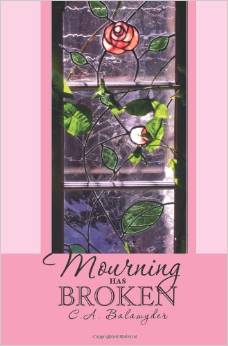
WordPress blogger Carol Balawyder‘s book Mourning Has Broken explores her grieving process after the death of her sister.
As with many griefs, Carol’s is entangled with her mourning over losing other relatives and friends and even her retirement. She writes:

I try to separate my sister’s loss from that of my mother, who died nine months before Diana. Daughter. Sister. They weave into each other by stitches on a quilt. To grieve the loss of a mother and a sister at the same time is more than the sum of the two parts.

Carol identifies her book as a memoir, but it’s not a memoir in the usual sense. Instead, it’s written in the form of lyrical essays. They are all stand-alone pieces, but together they function to give the book an arc, thereby making it a memoir in a nontraditional sense.

The journey of Carol’s grieving takes place against a spiritual landscape, but Carol herself is not a particularly religious person. That she keeps searching in religious and spiritual arenas shows me that she is a very spiritual person.  She refers to herself as an immature person on more than one occasion, but I found her to be a wise person in many respects.

The high point, or climax, of the book’s plot arc, occurs in the title essay “Mourning Has Broken.” In this piece, Carol’s new Reiki Master tells her that at the commemorative for Diana, Diana will give Carol a sign if Carol asks for one. When Carol’s sister gives her a sign it’s more powerful than imagined and has a profoundly healing effect on both Carol and on the reader going on this journey with Carol (the book’s protagonist I refer to here, rather than the actual Carol).

The writing style of the book is beautiful and distinctive, but I felt as if my best friend was sharing with me. I found myself very charmed by the book. I also made notes throughout the book, so that I can refer back to passages later.

All memoirs are part reflection and part storytelling, but the majority are heavier on the storytelling than the reflection. Lyrical essays tend to be heavier on reflection. In this book, Carol creates a perfect balance of the two (50-50? maybe), which I find fitting for the subject of living through grieving.

Carol’s book is the loveliest book about grief and mourning that I’ve read.

###

There are a few typos Carol’s editor left in the book, but Carol is cleaning them up in the Kindle edition. If you’re interested in reading Carol’s fiction, she has a story online at the literary journal carte blanche. You can find “The Witness” here. 

28 Comments

Filed under Book Review, Creative Nonfiction, Memoir, Memoir writing theory, Nonfiction, Research and prep for writing, Writing

Secret War Hero: One Woman’s Story (A Memoir)

Years ago, my friend, Lisa Ercolano, urged me to read a memoir by a friend of hers who had passed away. This is how she describes her friend for this post:

Over the quarter of a century that I worked as a newspaper reporter, I met and interviewed a lot of interesting people. There was treasure hunter Mel Fisher, famous for finding the 1622 wreck of the Spanish galleon Nuestra Señora de Atocha at the bottom of the sea; “The Amazing Kreskin,” a mentalist who flabbergasted me with his seeming ability to read my mind; comedian Professor Irwin Corey, “the world’s foremost authority,” whose conversation was so off-color that I left blushing to the roots of my hair; and a Wiccan priestess and her son, Merlin, who frightened me out of my wits by “calling the wind” and making things blow off the family’s living room shelves. I have interviewed survivors of Iwo Jima, hypnotists, Native American shamans, nudists, actors, musicians, poets (including Allen Ginsberg), children’s author Maurice Sendak and a woman who believed that the spirit of Elvis Presley visited her as she was baking in her modest kitchen. And I enjoyed (almost) every minute of those interviews.

But my interview with a tiny, white-haired woman named Hiltgunt Zassenhaus changed my life. I knocked at her door one spring day in 1993 looking for nothing more than a good story for my newspaper, and I came out with a friend. I cannot remember any other interview in which I connected so instantly to another person, nor that person to me. It was like we had known each other our whole lives. From then on, I visited her several times a week, sitting among the potted plants in her little backyard, hearing not just about her harrowing life during World War II (which she writes about in her memoir, Walls) but discussing the books we had read, her life as a doctor and mine as a reporter, our families, politics and more. No matter how varied her opinions and experiences, what came through loud and clear was her strong, unbending and unwavering lifelong commitment to helping other people and, as she put it, “serving life.” She told me, “We all have to do what we can, every day, to serve life and help others. People who hear my story are always saying ‘Oh, I cannot imagine what I would have done in your place going through all that.’ I tell them ‘You don’t have to wait — you shouldn’t wait — for some big, dramatic thing to happen. You have to act now.” Her words have echoed through my life ever since, informing decisions big and small.

Since reading Hiltgunt Zassenhaus’ book,  Walls: Resisting the Third Reich–One Woman’s Story, I have also felt inspired to live my life in a better way.

I’ve read many memoirs by Jewish survivors of the Holocaust, but this one is by a German woman, a Gentile, who decided not to play it safe, but to “fight back” against the Nazis.

Her story reads like an adventure tale. I became caught up in the danger that Zassenhaus put herself through to save Scandinavian political prisoners. I learned what it was like for her and for her family, living in Germany during the war. Although she does anything but draw attention to it, Zassenhaus’ strong ethics and sense of honor inform the book. She refused to compromise these codes when her resulting actions put her life in danger.

The main theme seems to be how important it is to speak up or act in resistance against dangers to freedom like Nazism. Her clearly written scenes allowed me to envision how and why an entire nation was caught up in Hitler’s madness. As an example, one character, her neighbor Mr. Braun, is an angry man who doesn’t get along with any of the neighbors. There is something a little “off” about him. But as the Nazi movement takes over the country, Mr. Braun becomes  the Warden of the precinct that Zassenhaus and her family live in. This gives him control over their freedom and their lives. By transferring control to “small” and dangerous people like Mr. Braun, Nazism was able to create a net (network) that captured all of Germany in its mesh.

I had to force myself to consider what I learned about writing memoir from this book. After all, I didn’t read it for analysis, but was caught up in the events of Zassenhaus’s life during the war and how she would survive. After I finished, I was overwhelmed with feelings of inadequacy and admiration for such a brave and honorable woman.

But then I remembered what Lisa had told me: that Zassenhaus told her not to wait for a dramatic event in life, to step up now and perform an act that makes a difference. In memoir writing this advice could translate this way: Those of us with less horrific or courageous stories might discover that there are others who find our stories important, even inspirational.

Psst: about Lisa. She’s in China right now, helping take care of babies in an orphanage, thanks to Hiltgunt’s inspiration.

28 Comments

Filed under Book Review, Creative Nonfiction, Memoir, Memoir writing theory, Nonfiction, Research and prep for writing, Writing

I Found A Memoir About Loss

The book is called Found. And I am so glad I did. I have been searching like mad through my brain trying to remember who recommended this book so I can thank her.

Found is actually a sequel to a memoir called Blackbird, which I have not read. There was no need to read it first, although I plan to search for it.

Jennifer Lauck is an award-winning journalist, a skilled memoir writer, teacher, and speaker. But before she was those things she was a newborn never touched by her biological mother, a baby adopted by a sickly woman and her husband who both died by the time Jennifer was seven, and a little girl sent to live with various relatives of the adoptive parents. Later she was adopted by relatives who were inadequate and abusive. She knew they didn’t love her and wanted her social security money.

Apparently Blackbird is the story of her childhood, but in Found, Lauck gives the reader enough scenes of that childhood to understand the woman Lauck became. Found is the story of that woman.

Lauck presents herself as a “tough cookie” who goes after her education and a career as a reporter with determination. At the same time, the reader learns that there is a gaping abyss of loss and crushing feelings of abandonment at her very core. When she begins to search for what is wrong, she ends up at a Buddhist retreat, and for years, she commutes between the retreat and her home. But it’s a long time before she realizes that she needs to search for her birth mother. The irony of the seasoned reporter not realizing she had the tools necessary to search indicates how far down Lauck had suppressed her real feelings.

There is so much about Lauck’s story that is tragic. In the midst of the trail of tragedy the reader follows Lauck on, guide posts are placed. These guide posts are clues back to, or threads leading from, her original identity. They also add suspense and tension to the story.

Where this book moved beyond other adoption stories I’ve read is that Lauck allows the reader to explore with her the complexity of her feelings about her losses, about adoption, and about her family members, especially her birth mother.  There are so many emotion-filled scenes, but a quiet moment that really touched my heart was when Lauck agrees to be the mommy driver for two of her daughter’s classmates. She recognizes them as fellow adoptees. In their case, they are international adoptees, from Vietnam and India, whereas Lauck’s adoption was domestic (and private, not through the state, which made her search more difficult). With this one expert move, Lauck shows the reader her growing awareness of how the trauma of adoption has affected her personality, that she has learned compassion for others (yes, others have gone through this early abandonment and loss, too), and that some of the same problems of adoption still exist today.

As an adoptive mother and sibling, I feel so strongly that anybody considering adoption today needs to read accounts by adult adoptees and make sure she pursues adoption for the right reasons and in a manner that is set up 100% to benefit the child (and maybe not even just that one child, but children in general).

Although this book focuses on adoption, most people have experienced or will experience losses in their life, and this book will resonate triumphantly within the heart and soul of any reader.

28 Comments

Filed under Book Review, Creative Nonfiction, Memoir, Memoir writing theory, Nonfiction, Research and prep for writing, Writing

The Other Addiction

Maybe you don’t know a gambler whose destructive addiction has taken its toll and still think of gambling as an amusement of a sophisticated man like Nicky Arnstein in the movie Funny Girl or Jim Sturgess’ character Ben Campbell in 21. The reality is that a gambling addiction often leads to financial and emotional losses, even prison and suicide. I call it the Other Addiction because we hear so much about drug and alcohol addiction, but gambling can be just as deadly.

To find out what it’s like to live your life as a person with this terrible disease, read Bill Lee’s memoir Born to Lose. Lee is a 2nd generation Chinese-American, born in 1954. The origins of his addiction have their roots in his genetic history (father, grandfather) and in his upbringing (struggle between traditional Chinese home disturbed by mental illness and dysfunction and life on the tough streets of San Francisco amid gang life).

Lee’s book is written in a straightforward, no-nonsense journalistic style, very different from the lyrical style of The Kiss or Another Bullshit Night in Suck City. There is a simplicity to how he tells his tale that belies the hard work he put into (I’m sure) structuring his mainly chronological story. I say “mainly” because the story begins with a framework that allows him to share his story as he might “therapy” in a 12 step meeting. It begins with Bill hosting a GA (Gambler’s Anonymous) meeting and when he’s asked to share for the sake of a new member, the story begins:

My mother was convinced that the men in our family were cursed by a gambling demon.

I love how this opening focuses on how bad and longstanding the problem of gambling was for Lee’s family, as well as how it shows his mother as a traditional Chinese woman who believes there can be such a thing as a “gambling demon.”  Also, when I noted the structure, I thought “of course” because the structure seems to fit the idea of a recovery story so well. Because that is what happens and the reader knows it from the beginning. Lee’s story is one of addiction and recovery.

In some ways this book is a complement to books like The Joy Luck Club, which focus on the stories of Chinese and Chinese-American women. We get some insight into what it is like to be a Chinese-American man of Lee’s generation.

Lee also writes much of his life as a Type-A businessman in the Silicon Valley and how he juggled the demands of his job and the demands of being a single father with the more intense demands of his addiction. Addictions are soul-deadening, and that is what Lee shows the reader by allowing us into his private world.

One little warning: before you go over to Amazon, know that there is a spoiler in Lee’s bio. It doesn’t ruin the book, but something horrific occurs in the book that reminds me of another memoir I’ve reviewed here. If you want to experience it as a shock, as I did, don’t read the bio or reviews on Amazon, just order the book!

OK, now a little postscript: Lee does a great job of showing his contradictory reaction to GA meetings and depicting that the meetings and people involved are not all a positive experience. It’s a sign to stop looking for perfection. By reading this book, an addict who comes up with excuses for not going to 12 step meetings can learn that it works to take what one needs and leave the rest. I really like his whole philosophy about rehab. Let me leave you with this portion.

Many Twelve Steppers believe people can only begin their recovery after they hit rock bottom. That’s probably true for the most part, but we need to be mindful that as addicts, there is no guarantee that we have hit rock bottom. All addicts are a slip away from relapse and a potentially deeper bottom. That’s why as addicts, it’s important to accept our addictions as lifelong diseases–we’re never cured. [Then Lee gives an example of a man named Robert who was left alone, while other gamblers waited for him to hit bottom before they helped him more actively. Unfortunately, Robert died during his next relapse.] But what Robert taught me is that we need to reach out and carry the GA message to other compulsive gamblers before they hit their bottom, which in many cases is prison, insanity, or death.

Brilliant. And good advice to those who love addicts, as well.


15 Comments

Filed under Book Review, Creative Nonfiction, Memoir, Memoir writing theory, Nonfiction, Research and prep for writing, Writing

The Most Difficult Book Review

I find it so hard to write a review of this book that I can’t help but wonder how Kathryn Harrison wrote it. It was a New York Times bestseller when it was originally published in 1997 and has been read by many. The Kiss is a very disturbing story. It’s about incest. And betrayal. And mental illness. And a “man of God” who was anything but. But mainly it’s Kathryn’s story* and how she negotiated growing up and learning how to be a woman. She accomplished it–painfully–in the midst of predation and neglect and without even a pretense of protection from anyone. The writing is hypnotic, reflecting the way Kathryn felt drugged or poisoned by events and by the power of her father’s personality. The tense is present, making the reader feel as if events are happening “right now” and “always and forever.”

One of the fascinating things about this book has been the response of critics and readers. It tends to polarize people. There are many who sympathize greatly with Kathryn for what she went through  and others who wonder why she was compliant. There are others who question her motives for making her family’s story public. People who despise the tell-all nature of many memoirs villify her for exposing a taboo subject.

My task, as always, is to see what I learned from the book. The book’s arc seems to take an odd twist. It begins with how the father developed as such an obsession in Kathryn’s mind. She grew up without him in her life, witnessing him in the house as if he were a ghost. The story continues by showing how Kathryn was caught like a fly in the father’s web when they met as adults. And, finally, it moves to how their relationship ended. But the twist is that, near the end, the relationship with the mother is made central. There is a forgiving and coming-together of mother and daughter when the mother is dying. The book is dedicated to the mother: Beloved 1942-1985.

Because the book was so successful, I have to conclude that it is possible to twist and tweak to give a story the sort of long-range perspective the writer desires. Nevertheless, I wasn’t persuaded. The mother was not presented positively. She abandoned her daughter to be brought up by a mentally ill grandmother. Is that forgiveable? Forgiveable enough to make the book about the mother?

Or is the forgiveness on Kathryn’s part because Kathryn realizes that as her father ruined her life, he had done so with her mother’s?

I don’t think there can be a satisfying ending in the face of the tragedy that occurs in the book. But I am wondering if the through-line of the book is damaged or distorted by trying to make it “about the mother” at the end.

Have you read the book? If so, what do you think about the storyline?

Flawed or not, it’s a book you will never forget.

* I purposefully rely on Kathryn’s first name here to give her a breathing presence because of all she went through as a child and young woman.

60 Comments

Filed under Book Review, Creative Nonfiction, Memoir, Memoir writing theory, Nonfiction, Research and prep for writing, Writing

Paper Hanging My Book

When we moved into our last house, I had a vision for my kitchen and family room. Those “two” rooms were a large open space, divided by a bar-height counter and a set of upholstered bar stools. Now keep in mind that this was the nineties.To coordinate with my rose and green plaid drapes and couches, I wanted an old-fashioned small print floral wallpaper inside two glass doored cabinets and on the bulkhead above. While I like to design, I am not very good at implementing projects like painting and wallpapering. So I asked around and called the paper hanger that was most highly recommended.

I can no longer remember his name, though “Jim” pops into my head. He was of retirement age with white hair and a nasty case of diabetes, but he was still working full-time. When he arrived in his rusted and dented panel truck, he spent some time examining the wallpaper rolls I had purchased. Then he began hauling out all manner of sawhorses and drop cloths and tools.  By noon he had converted my garage into an elaborate workroom.

By 5PM he had finished measuring and preparing the walls. I figured he would start pasting up the wallpaper the next morning. I was wrong. He did arrive by 8AM, but he still had more prepping to do. I asked him why it was taking him so long to prep. He said, “I’ve been doing this a long time. More’n forty years. If I spend my time prepping, the job will go quickly and there won’t be any mistakes.”

I probably rolled my eyes when I left the room. But once he started putting up the pretty wallpaper, I was able to watch him complete the room, even with a trim border, in an hour. One hour to wallpaper my kitchen. And it looked perfect, with invisible seams and absolutely no bubbles. Clean edges.

Later, I had him wallpaper my kids’ bedrooms, too, and he did the same excellent job by putting the focus on the prep, not on the final step.

Whenever I have a job to do, I tend to think back to Jim and what he taught me with his work technique. His method can be applied to many projects.

In fact, I was thinking today about how writing a book is turning out to be like paper hanging Jim’s way. By writing 200,000 words in scenes ahead of time, and by taking the time to really plan out how to structure it all, I suspect that when I put it all together, that will be the fastest part of the writing.

P.S. I’ve been super busy at work lately, so I am really frustrated that I don’t have time to work on the book, but when you let me chat about it on here, it helps keep me motivated, so thank you!

Have you ever worked using a method like Jim’s–heavy on the prepping, light on the final step?

36 Comments

Filed under Blogging, Creative Nonfiction, Essay, Memoir, Memoir writing theory, Nonfiction, Research and prep for writing, Writing

The Debt I Owe Bernard Cooper

Last summer I wrote a post about a memoir that had a positive effect on my book project: Bernard Cooper‘s The Bill from My Father

The title, The Bill from My Father, serves as a reminder throughout the book that there is a reason Cooper keeps his father at arm’s length most of the time–sometimes even farther, such as when he let a period of several years ago by without communication. The title refers to the father sending his son a bill for the cost of bringing him up. The father is a “character,” in the sense my mother means–somebody I would call a “piece of work.” His son tries to make sense of the man and of his own feelings about his father in this remarkable memoir.

Although I’ve learned something about writing my book from every memoir I’ve read, this book has probably been the most important to me–at least in pulling the book together into a narrative.

Let me break a big rule of writing and quote myself (from that post):

 [Cooper] sets the story in a very limited present-day, which covers his father’s aging and eventual death.  Then he goes on excursions into the past through flashbacks, which are in some cases very lengthy.

His structure is a far cry from what my first memoir instructor insisted upon–complete chronology without flashback.  And while I can understand that a story focused upon childhood or a coming-of-age story makes the most sense told chronologically, for my story it wasn’t working.

What I plan to do is use “a present-day framework that moves to the past and then comes back to the present again.” Again and again. A weaving together of various time periods. Let’s hope it works.

Back to Cooper, the father seems to get progressively crazier as he ages. It eventually becomes clear that he has Alzheimer’s, but Cooper doesn’t have this context for his father’s nutty or dangerous antics until he comes to this realization. Since the father has always been a difficult person and the onset is so gradual, it seems as if his odd behavior is just part of who he is/was.

There is a scene where the old man attacks the DWP man with a potato peeler.  Twenty pages later, after his father has died and Cooper wants to open the packaging of a video (it’s a Christian video about Hell and was given by the father’s caregiver/girlfriend–the Cooper family is Jewish), Cooper accidentally picks up a potato peeler.  In this passage, we see him re-thinking his views on his father.  I love the way the action functions as a metaphor of sorts.  We are used to “things” being metaphors or symbols, but it’s Bernard’s absentminded grasping of the potato peeler that seems more potent because it echoes his father’s earlier action which was viewed as nutty.

If you have had a difficult parent, this book is a must-read. If you have a parent with Alzheimer’s or have struggled with conflicted feelings about an aging parent or a parent who has died, this book is a must-read. Even if none of those applies to you, the book is a must-read.


29 Comments

Filed under Book Review, Creative Nonfiction, Memoir, Memoir writing theory, Nonfiction, Research and prep for writing, Writing

Target My Structure

I’ve mentioned before that I have had many problems structuring my book. With 200,000 words of memoir already written, I was overwhelmed and confused about how best to structure the story. What to leave in and what to take out. Whether to organize chronologically or thematically.

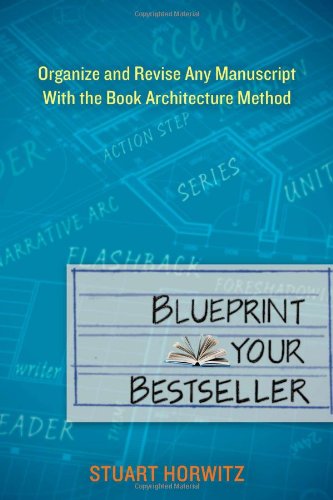
So I was very happy to find the book, Blueprint Your Bestseller, by Stuart Horwitz. His “architectural” method is really working for me.


In following Horwitz’ plan, some of the first steps include identifying all the series in your book. You can’t know this until you have enough scenes written.  So if you don’t have 50,000 or more words, I would just write out your scenes first. Then find all your series.  A series is anything that has “iterations.” Repetitions, a pattern. But not just any pattern–a pattern where the series “undergoes a clear evolution.” It happens or shows up more than once and changes a bit? It’s probably a series.

Series can be symbols or metaphors like the hat that Holden wears in Catcher in the Rye. They can be characters, objects, phrases, settings, absolutely anything. When I worked on this aspect, I was shocked to discover that many of my series are emotions, such as anger, fear, and shame. Of course, these emotions don’t exist by themselves. They are represented by tangible events or objects, such as locked rooms and guns.

In another early step in this method, I discovered the “One Thing” my book is about. Horwitz took me on a sure path to find this out through a step by step process.

Every time I work on a new step I experience an epiphany about my book.

This past week I accomplished the next step. I created a target for my book, putting my “One Thing” in the center bullseye location. Then I placed post-it notes representing scenes (pink), series (yellow), characters (blue), and settings (green) on the board.  Horwitz says, “The trick of the exercise is to put the narrative element closer to or farther from the bull’s-eye, or theme, depending on the strength of the relationship.” Doing this project, allowed me to see that certain scenes and settings were too far removed, whereas there is a close-knit relationship between everything else.

Caveat: I have so many scenes that I did not place all my scenes on the board. It would have been impossible. I expect to weed out scenes in the next step of the process.


The architecture method is supposed to work with any book, no matter the genre.

As a blogger or a writer, do you ever have problems with structure?

46 Comments

Filed under Books, Creative Nonfiction, Essay, Memoir, Memoir writing theory, Nonfiction, Research and prep for writing, Writing, Writing goals

An Unflattering Portrait

Rosemary Mahoney’s genre-bending book, A Likely Story: One Summer with Lillian Hellman, creates a fascinating portrait of the famous writer at the same time that it tells the story of the teen Mahoney was in the summer of 1978.

Cover of "A Likely Story: One summer with...

Cover via Amazon

Mahoney was 17 and went to work as a housekeeper for Lillian Hellman on Martha’s Vineyard that summer. This book explores her experience with Hellman. Because Hellman was famous and a larger-than-life character, the book operates a bit as a biography, but truly it’s Mahoney’s coming-of-age memoir.

Her father had passed away, her mother was an alcoholic, and Rosemary needed a job. She was about as equipped to be a housekeeper as I would have been at 17, which is to say, not at all. She had read Hellman’s memoir An Unfinished Woman and idolized her.

If you thought you knew Hellman, you will soon learn that there is a lot more to find out. The picture Mahoney creates of the older woman is not positive or uplifting, but it certainly glitters with star power.  Under Mahoney’s pen, Hellman is not a nice person, and Mahoney grows to despise her; even so, there is some sort of attachment between the two women. After all, Mahoney was completely unsuited for the job and could (should?) have been fired by Hellman at any moment.  A very complicated relationship shapes up as the book goes on.

Reading what Mahoney went through with Hellman, made me think there is some truth to this expression: whatever doesn’t kill you, makes you stronger. Mahoney learned invaluable lessons that summer–maybe most importantly, not to fear anyone else and to have confidence.

The question I ask myself about every memoir is: what did I learn?

The easy answer is that I learned about two women who have a lot more guts than I have–both Hellman and Mahoney. After all, look at the guts it took to take a job Mahoney knew she couldn’t perform.

The more difficult answer is that I learned about the soft and malleable boundaries of memoir. Memoir can incorporate other genres. It can have different textures. This book is thickly textured with public knowledge, the details of celebrity life, and a rich and lush setting of life on the beach. Most memoirs I read have textures that look and feel much different. I learned that memoir needs to look and feel and sound like the subject matter.

If you’re writing a memoir that involves a famous person, I would recommend reading this book to see how Mahoney handles the job. She’s a master at it.

If you want to read a nonfiction story that is a little bit juicy about a celebrity, head right to this book!

If you just want a good read, this is it.

###

If you want to look at Mahoney’s other books, check out her website.

Enhanced by Zemanta

13 Comments

Filed under Book Review, Creative Nonfiction, Memoir, Memoir writing theory, Nonfiction, Research and prep for writing, Writing

A Butterfly Net, Not a Story

I had a nightmarish image come to mind today. My gravestone popped up right in front of me. On it was carved:

She never met a memoir she didn’t like.

Although I’ve been selecting memoirs to review by pulling books haphazardly off my shelf, maybe I’ve been drawn to choose my favorites. To keep that gravestone from being carved (in the far distant future) with those words, I’m going to share a book I have mixed feelings about.

June Jordan’s Soldier: A Poet’s Childhood certainly has the subject matter for an enthralling tale. The daughter of Jamaican immigrants, Jordan (1936-2002) learned to love literature from her loving and abusive father. She grew up in New York at a time when her life experience covered some dramatic changes in the lives of African- and Caribbean Americans.  The book was “A Best Book of 2000” by both the Los Angeles Times and the Washington Post.

The details of her memories are those of a poet, and therefore rich and evocative. Her story is personal and specific, but also important as an addition to the voices of People of Color in this country.

But the book has no real sense of being a memoir. The very difficult work of memoir is forging all those bits of one’s life into a compelling narrative.  Instead, Jordan catches them like butterflies in a net and lets them flit off each other from one fragment to the next.  While I found her life fascinating, I had to struggle to keep the momentum because there was no urgency or tension or cohesion to the story. Maybe that is an overstatement.  At least, there wasn’t enough of those elements to satisfy this reader.

I did learn from reading this book. It showed me just how much I want to create a thickly textured and urgent story in my own memoir.

The book would be a wonderful source of material for a biographer of Jordan–or for a literary critic who is writing about the poet. But for an engaging nonfiction read, I would choose a different book.

29 Comments

Filed under Book Review, Creative Nonfiction, Memoir, Memoir writing theory, Nonfiction, Research and prep for writing, Writing