Tag Archives: Writers Resources

History, Headstones, and Helter Skelter

I was tempted to save this memoir for a Halloween blog post, but that might give you the wrong idea about this book written by a “gravedigger’s daughter.” Rachael Hanel, who blogs here, tells the story of growing up in a small town in Minnesota. Her father was a caretaker at the cemeteries, as well as a digger of graves.

The emphasis on cemeteries and graves in the book make their way onto the page of her blog, as well. Very educational and even entertaining to look directly at headstones and death, without flinching. While Hanel’s family story and history is very middle America (and I don’t mean that dismissively–it’s interesting for its specificity), the style she wrote the memoir in deviates from the norm. It is overwhemingly memoir-ish throughout, but also threads through journalistic techniques and in the last portion of the book even becomes more like a lyric essay–lyrical and reflective.

hanel

I was stunned to see how many photographs were “allowed” in Hanel’s book. They add a lot, and they made me a little (oddly enough) jealous because I know how difficult it is to get a publisher to agree to using photographs (presumably because of the cost).

As a child, Hanel was interested in violent deaths, even reading Helter Skelter, the story of the Manson murders, at age eleven. This fascination is not surprising given the emphasis in the family on death. Adult reflection tells us she has learned this:

Reading became a protection; the words were a blanket I wrapped tightly around me. The stories helped me prepare for the inevitable. I surrounded myself with these words, reminders that bad things happen to good people. I read somewhere that we are drawn to stories of death and disease to convince ourselves that we would act differently. That somehow, by learning of someone else’s story we can protect ourselves.

I not only agree with these words, but I think they are a main reason I love to read memoirs.

***

For a related memoir, check out this one.

30 Comments

Filed under Book Review, Creative Nonfiction, Memoir, Memoir writing theory, Nonfiction, Research and prep for writing, Writing

In a Land Far Away, A Long Time Ago, There Was the Shoah

I’ve been behind in responding to comments on Monday’s post–and on reading your blogs–because I was away, visiting Sedona for a couple of days.

I had a lovely time rebalancing my energies, although I never caught a glimpse of my aura (which I’m sure is coral in color) and didn’t even see any crystals for sale.

On to my memoir review.

I’ve read a lot of stories about the Shoah (the Holocaust), but never one quite like the story of Helen Fremont’s family. Her book, After Long Silence: A Memoir, is truly a blend of genres, regardless of the title.

Fremont is of my generation, but her parents were European refugees who came to the United States after WWII. To everyone outside the family they were a nice Polish-American Catholic family. Inside the nuclear family, they also appeared to be Catholics of Polish ancestry.

The book is about the story Helen discovers when she is an adult. Her parents were actually Jews who had survived the horrors of the Holocaust. They won’t admit it, though–at least not until Helen hounds them for the truth.

From the opening, the main question Helen seeks to answer in the book is “What really happened to my parents during the war years?” Eventually that question turns into “Why do they still want to keep the secret?”

Fremont alternates her story with that of both her parents before and during and right after the war. Once the story of her parents’ paths to survival begins in earnest, Fremont has me completely hooked. Those chapters/sections are to me the essence of the book–and they truly would not be memoir if they were not framed within a memoir. They read like a Holocaust biography or novel–gripping and disturbing. What her parents did to survive shows how far the human spirit and personality can stretch and mold.

The sections about Fremont’s parents’ lives are imagined stories based upon Fremont’s research. This is exactly what I am planning to do with my book, although I have not done enough research yet and have left those portions for last. They won’t take over my story the way Fremont’s parents’ stories take over her memoir. It makes sense that the stories of her parents overshadows Fremont’s own story since the huge secret her parents imposed on their family overshadowed Fremont’s life. But at the end of the book she feels independent of them. This is important because it means she can differentiate herself as an individual adult.

I did a little research after finishing the book. The Afterword made me believe that Fremont’s parents were not happy with the publication of the book, but that Fremont and her sister found Jewish (2nd) cousins they didn’t know existed. I’ve read sources that talk about a rift in the family caused by the book.  Then I discovered that after Fremont’s father died, still “estranged” from Judaism, she wanted her father remembered in a Jewish ritual.  I found this quote in this article (if I were you, I wouldn’t read the article until after you read the book because it gives away too much of the parents’ story):

“Two weeks ago” – my relative told me – “Helen Fremont was in touch with me and informed me that her father had passed away. She asked me to do something in order to commemorate him according to Jewish tradition. After checking that there was no Halakhic obstacle involved and “although he sinned, he remains a Jew”, I promised that I would say Kaddish for him each time I prayed with a Minyan [quorum of ten required for saying the Kaddish]. And this I do.”

In my research, I found this website for the children of Holocaust survivors. Here is also a website about an organization devoted to teaching about the Holocaust USC Shoah Foundation.

Here are a few posts I’ve written related to the Holocaust:

20 Holocaust Books for Children and Teens

On Monday, I wrote about  Johanna Reiss’s Holocaust memoir The Upstairs Room. As a follow-up I pulled together a list of 20+ Holocaust books for children and teens.

Teaching the Holocaust to Children and Teens

One section of my memoir bookshelf is devoted to books by Holocaust survivors. I read these books years ago, long before I started to think about memoir as a genre. I’ve read Holocaust memoirs written for children and ones written …Continue reading →

Secret War Hero: One Woman’s Story (A Memoir)

Years ago, my friend, Lisa Ercolano, urged me to read a memoir by a friend of hers who had passed away. This is how she describes her friend for this post: Over the quarter of a century that I worked … Continue reading →

29 Comments

Filed under Book Review, Creative Nonfiction, Memoir, Memoir writing theory, Nonfiction, Research and prep for writing, Writing

In Mary Gordon’s Shadow

A year or so ago, I read Mary Gordon’s memoir The Shadow Man. I felt an immediate kinship with Mary because her book is about searching for her father’s past.

The Shadow Man

Before I’d read Gordon’s book, Bernard Cooper’s memoir about his father exploded what I had been told about memoir structure, showing me it is possible to deviate from chronology, to use flashbacks, and to merge the past with the present. Gordon’s story struck me as similar to my own because we share a similar problem: that our story is really about the process we went through to learn about the pasts of our families. When I finished The Shadow Man, I realized that now I had another memoir to add to Cooper’s memoir and Mary Karr’s The Liar’s Club to serve as models for me.

Mary Gordon actually spends a fair amount of time detailing her research in the library and in contacting strangers. The reader gets to participate in the research process. This is like following Nancy Drew’s progress in solving a mystery–albeit without the imprisonment in the cistern, tarantula/black widow spider, etc.

While Gordon’s book focuses on the actual research process, my research will be more of a framework with more stories from the past and present. However, this book was eye-opening to me because writing teachers say you have to put everything into action and that doing research, reading letters, etc. are not active enough–that these moments of small epiphanies have to be put into scene. It’s not always possible to put into scene because if the scene didn’t occur the writer can’t make it up as it’s not fiction!

The twist in Gordon’s book is that Mary Gordon was raised Catholic by her parents, although her father was born Jewish. But he had become a (IMO dangerous) anti-Semite and this made Gordon’s search for his past–and really the man himself as he had died while she was so young–a very complicated emotional ordeal.

Let me say that Mary Gordon’s book is gorgeously written. Maybe this heavy reliance on process wouldn’t work in the hands of a lesser writer, but it really works here. Will you enjoy the book? I’m not sure. It depends on the type of books you like. I think someone like me who is curious about family history, 20th century history, family relations, and beautiful, almost lyrical, writing will love it.

###

Maybe you’ve read one or more of Mary Gordon’s other books? Check out her website.


38 Comments

Filed under Book Review, Creative Nonfiction, Memoir, Memoir writing theory, Nonfiction, Research and prep for writing, Writing

Writing like Dancing

A memoir that entranced me for years was not written by a writer, per se, but by a celebrity, choreographer Agnes DeMille (1905-1993).

DeMille was a groundbreaking and significant reshaper of modern American dance and shaper of contemporary American dance.  DeMille’s influence is evident by listing just a few of the dozens of dances she choreographed:  the musical Oklahoma, both on Broadway and on film; the Broadway musicals Carousel and Brigadoon; the original and uniquely American ballet, Rodeo; Obeah, or Black Ritual, the first full-length ballet created exclusively for African-American dancers; Fall River Legend, a ballet representing the life of Lizzie Borden; and A Rose for Miss Emily, a ballet based on the William Faulkner short story.

In addition to developing choreography unique to the history of dance, DeMille also wrote exceptionally well.  She published memoirs and other non-fiction works, as well as a two-volume autobiography.  Dance to the Piper (1952) and And Promenade Home (1958) read like engaging novels, but are DeMille’s perspective of her childhood, young adult years, and initial Broadway successes.

My favorite of her books is Where the Wings Grow (1978), a memoir of childhood summers in the country.  DeMille’s memories are sometimes idyllic, sometimes shocking.  She observes racism and other bigotry with a relentless eye.Where the Wings Grow

The writing style is beautiful and evocative of those relaxing times. You can almost envision girls and women in white lawn dancing through the woods. DeMille’s voice is distinctive and “of her era.” For awhile after reading the book, I felt compelled to write poems based on various scenes.

In this video you can get a feel for her voice. Also, she talks about how her father kept standing in the way of her ambitions.

A couple of important issues come to mind when thinking about DeMille’s memoir.

The first is how close she was to her mother, even as an adult. Although DeMille’s father was a playwright and her uncle the famous filmmaker Cecile B. DeMille, DeMille’s creativity stemmed in large part to her mother’s artistry with a needle.

Anna George, DeMille’s mother, was a contemporary of Virginia Woolf.  Anna was born in 1877, Woolf in 1882–five years and an ocean apart.  Anna had no financial means independent from her husband.  Her own father was famous political philosopher Henry George.  Throughout her life, she tirelessly campaigned for her father’s Single Tax theory.  Yet, unlike her “scribbling” husband, who followed in his father’s footsteps as a writer, never tried to write herself.  She did not have 500 (pounds) a year or a room with a lock on the door, to paraphrase Woolf.  She ran the household in the days before refrigerators and vacuum cleaners.

Anna was regularly accessible to her children, her husband, and the other people who were temporarily or permanently a part of the household.  Yet Anna managed to produce art from the creativity welling within her, the product of which lasted beyond her husband’s mediocre plays–art which, when she was producing it, wasn’t considered art–merely a woman’s menial labor.

Another important portion of the memoir describes Anna’s aunt and how she and her family lived near DeMille’s family during the summer. The aunt married a Japanese diplomat. This intermarriage was quite unusual for that time period, as was their transracial family. DeMille’s family seems to have accepted the family without question.

Maybe this book will most appeal to nostalgia buffs and those who love women’s history. If you love costume dramas, you might be thrilled at this peek behind the scenes of an intellectual and artistic family in the 1910s.

Forget all that. The reason you will love this book is because of DeMille’s charismatic personality.

35 Comments

Filed under Book Review, Creative Nonfiction, Memoir, Memoir writing theory, Nonfiction, Research and prep for writing, Writing

I Contradict Myself

If you read my review of the Augusten Burroughs’ book Running With Scissors, you know I’m conflicted about it. I feel differently about the prequel A Wolf at the Table–the story of his frightening father.

a wwolf at the table

In this book Burroughs captures my attention up front by saying that for years he couldn’t remember much from his childhood about his father. When it all starts coming back, it’s almost too much to bear.

He also presents himself as a sympathetic character, one that I feel a deep empathy for. One of the ways he does this is by showing how his father treated one of their dogs–and how it bothered Augusten.

They had three dogs, and Burroughs loved them all. The two larger dogs were allowed inside the house by the father. The smallest, “a little black elkhound with a curlicue tail” named Grover, was not allowed in the house. The reason was that the father, for no apparent reason, considered him an “outdoor dog.” Grover “practically never left the deck where he slept, pressed against the sliding glass doors.” Burroughs writes: “Like there was a special breed of dog that might die if exposed to a sofa.” This upsets Burroughs (and me). The last two paragraphs in this passage are especially poignant:

Even on the coldest winter night when Grover was no more than a black, furry mound curled into himself and pressed up against the house, my father wouldn’t let him in.

Sometimes, I let bad thoughts linger. Like, if my father made Grover sleep outside in the cold, what stopped him from locking me out there, too? He had two sons; what if he decided to make the younger one the “outside” son?

And, in a way, that is exactly what does happen to Burroughs.

One of the strongest threads in this book is the secret that Burroughs’ father shared with him. The question is: did it happen or not? But it’s Burroughs asking the question this time, not the reader.

If you look up reviews you will see that some critics don’t like this book. They might miss the humor they found in Running with Scissors. But this book has real heart. Some readers say that Burroughs couldn’t possibly remember the mobile above his crib. I don’t know what they are talking about because I remember a vivid event from when I was still in a crib–less than two years old. I remember my room in detail, especially the shadows and lights and special objects like my music box.

In reading reviews of this book, I noticed that Burroughs’ brother, who has Asperger’s, says he has trouble reading behavior in other people and that he believes their father had some of his own “autistic traits.” This is a controversial subject because many of us love people who have Asperger’s or are autistic. Their condition doesn’t make them cruel to children or animals.

If you had a very difficult parent, this book might break your heart.


36 Comments

Filed under Book Review, Creative Nonfiction, Memoir, Memoir writing theory, Nonfiction, Research and prep for writing, Writing

Running from Lawyers

I haven’t seen the film Running With Scissors. But this trailer looks similar to the book.


I’ve read the book.

Augusten Burroughs’ memoir Running with Scissors is the weirdest one I’ve read. According to this story, Burroughs had a horrific childhood. His father was a terrible alcoholic, and his troubled mother abandoned him to her psychiatrist. But it gets worse. The psychiatrist was wildly inappropriate and his household was in chaos. Burroughs was molested by the psychiatrist’s son.

What I found most disturbing, though, was Burroughs’ light rendering of this tale of his childhood.

The reviews mainly focus on this humor and how it makes such a dark tale palatable. Sometimes I found myself being taken in by this humor, but most of the time I felt odd being complicit (by reading) in making light of what Burroughs went through. It’s his choice to coat the events in that tone, but it demeans the events for other people who have gone through similar situations.

Running with Scissors

So what did I learn from reading this memoir? That you need protect yourself from being sued as much as you possibly can.  Because he was. Sued. By the family that raised him (Turcotte in real life; Finch in the book).

This article tells how the lawsuit was eventually settled.

Author Augusten Burroughs and publisher St. Martin’s Press agreed to call the work a “book” instead of “memoirs,” in the author’s note — though it still will be described as a memoir on the cover and elsewhere — and to change the acknowledgments page in future editions to say that the Turcotte family’s memories of events he describes “are different than my own.” It will also express regret for “any unintentional harm” to them.

Here’s an article in Vanity Fair telling the point of view of the psychiatrist’s family.

In this article, you can meet Burroughs’ mother.

The more I read about this case, the more I am uncertain who to believe. The story seems fantastical to me, but what if it all really happened?

The Turcottes say Burroughs made up many events (including the name Augusten Burroughs as his real name was Chris Robison)–and that he embellished most of the rest.

I am not going to presume to be a judge and jury. All I can do is take the book on the book’s own merits. For me the tone wasn’t right for a memoir with the events and characterizations that are included in this book. But if you can get past it being a memoir and think of it as fiction, it seems more like a John Irving novel, like The World According to Garp (RIP Robin Williams).  And I love John Irving novels.

Maybe I’ll watch the movie. Should I?


59 Comments

Filed under Book Review, Creative Nonfiction, Memoir, Memoir writing theory, Nonfiction, Research and prep for writing, Writing

Now, What Happened Again?

I feel a little bothered–maybe even disturbed–about something I noticed in reading memoirs.

When I go to write memoir reviews, I tend to remember them by their schtick. You know: the memoir about the father with Alzheimer’s, the one about the college-age woman who was diagnosed with breast cancer, the girl from Texas with crazy gun-toting alcoholic parents,  the woman who secretly taught women Western literature during the Iranian Revolution, the man who learned gambling as part of Chinese culture while still a child, the young woman who had sex with her father, the girl who slept with hundreds of men. You see what I mean?

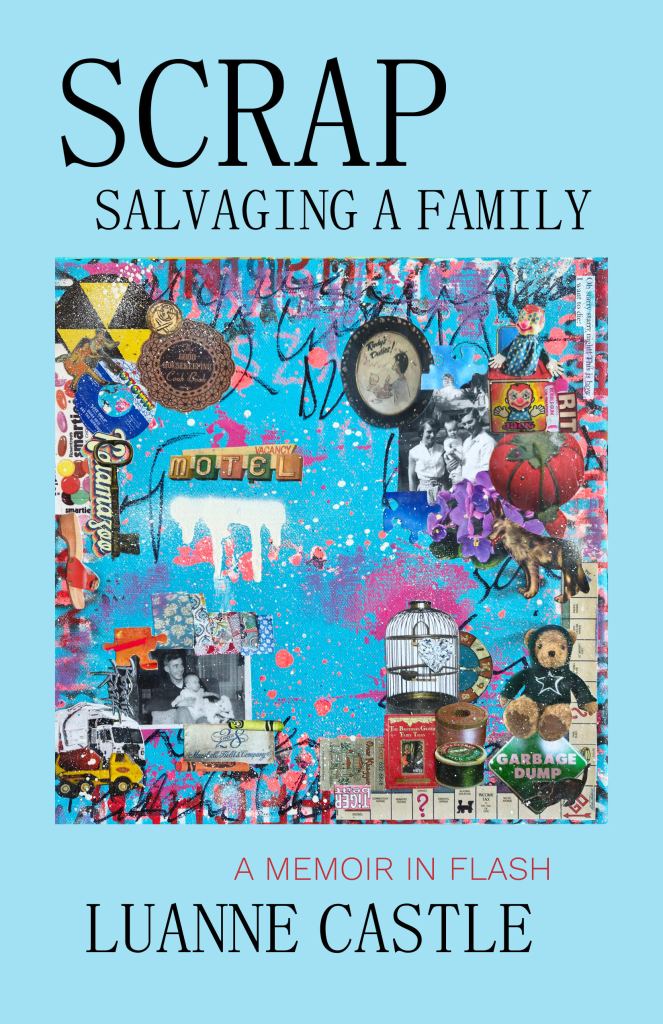
This is all well and good. After all, I am writing about the girl who lived over a bomb shelter and in front of the city dump with the garbage man father.

But does it mean that all memoirs have to have schtick to make them memorable?

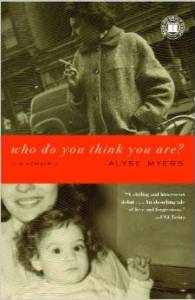
I eagerly raced through New York Times contributor Alyse Myers’ memoir who do you think you are?, thinking, “Wow, this is a well-written exploration of a sad and horrifying mother-daughter relationship.” It seemed as though Myers’ mother resented her daughter (more than Myers’ two sisters). The narrator is almost a Cinderella character, her mother a wicked and cruel mother.

Myers becomes independent at a young age in response to her relationship with her mother. She is driven and successful. Finally, she finds the perfect man to marry. She is nervous for him to meet her mother. When they do meet, her mother asks him what he sees in her daughter. Yet the man is charmed by Myers’ mother, and the mother even tries to impress a little by baking a cake–something she didn’t do for her daughter.

How does Myers go from being the abused outsider of her family to “being there” for her dying mother? To even wanting her future husband to meet her mother? The book shows the path.  Excellent story.

But when I go to remember the story, it’s difficult. I have to reread the book. I don’t have that hook to grab onto and reel in the plot elements from my memory.  And why? Because the book has no schtick. Sure, it’s about a horrible mother-daughter relationship and there is much to be learned from reading the book. But many memoirs showcase bad parent-child relationships. Many take place in the 1960s as this one does. In New York City, as this one does.

Does that mean the book’s weakness is that it doesn’t offer a memorable image?

As readers, sometimes we make fun of the schtick that memoirs are made of, but when it comes down to it, is that what makes them books that live on in our imaginations?

55 Comments

Filed under Book Review, Creative Nonfiction, Memoir, Memoir writing theory, Nonfiction, Research and prep for writing, Writing

Disney and Me:A Memoir

A memoir is usually focused on a specific thread or time period of a writer’s life, whereas autobiography is “my chronological life story.”

One of my favorite books is an autobiography that I would argue is a memoir because of its focus on the writer’s artistic life as an artist and writer. It’s a children’s book that is also a book for adults.

I’ve mentioned the book here in a previous post: Disney animator, illustrator, and writer Bill Peet’s Caldecott Honor BookBill Peet: An Autobiography.

Autobiography for children and adults of one of Disney's great illustrators, Bill Peet

Autobiography for children and adults of one of Disney’s great illustrators, Bill Peet

The book is 190 pages–longer than a traditional picture book; however, it won an award as a Caldecott Honor Book in 1990 because the book is fully illustrated–there is at least one illustration on each page, along with engaging text.

Bill Peet worked for Walt Disney on many movies, shorts, TV shows, books–even Peter Pan peanut butter. He wrote the original (1961) 101 Dalmatians, working from Dodie Smith’s book. Disney asked Peet to “plan the whole thing: write a detailed screenplay, do all the story boards, and record voices for all the characters. That had been a job for at least forty people on Pinocchio in 1938, but if Walt thought I could do it, then of course there was no question about it.”

Throughout the book, Peet’s desire to pursue his own artistic endeavors is constantly at odds with first school and then his job at Disney. If you are an artist or a writer, you will feel that, in some ways, his story is your story.

In many great memoirs, readers learn about other characters in addition to the narrators. Peet’s book presents a complicated and somewhat frightening Walt Disney. The simplest disagreement could cause Disney to put an employee “in the doghouse,” and then other employees would give that person “the silent treatment.” He even shows a scene where Disney comes in to Peet’s office and unburdens himself about his own difficult childhood. While there isn’t anything in the book that isn’t appropriate for children, there is enough texture–enough “teeth”–to the book that makes for a fascinating read for adults, too.

Pear Blossom checking out Bill Peet's book

Pear Blossom checking out Bill Peet’s book

The illustrations are all by Peet himself, and you will recognize the classic Disney look. By the story, you will learn how much of Peet’s creations are part of that Disney look and of the Disney stories you or your parents have grown up with.

Something about this book stimulates my mind and my heart. I think I have a crush on the book. I love chatting about it.

29 Comments

Filed under Book Review, Children's Literature, Creative Nonfiction, Memoir, Memoir writing theory, Nonfiction, Research and prep for writing, Writing

Searching for The Holy Grail for Writers

I thought that there was a Holy Grail for writers: a list of all the “good” lit journals.  Once I found that list I could just cross off each journal as I sent them a manuscript.

You can find out if that list exists in my article, “From Creation to Publication: Finding the Submission Strategy That Works for You, published by The Review Review. In this piece, I describe how I changed my approach to submitting to magazines and journals.

Photo by Marisha

Photo by Marisha

I realized that I had forgotten to tell you about The Review Review. You can check out my article and the other helpful advice in the “tips” section, and you can read reviews of lit magazines and interviews.  You can also sign up to have the newsletter with links to articles sent to your email. I’ve been reading the newsletter for a while and have found a lot of magazines that interest me. Sometimes I print out the articles so I can read them later, when I’m less inclined to want to sit at the computer.

When I discovered The Review Review, I added the link to the toolbar on my computer!

42 Comments

Filed under Creative Nonfiction, Nonfiction, Poetry, Research and prep for writing, Writing, Writing goals

Three Little Words From A Silenced Voice

Yesterday was a lousy day. My 16-year-old cat, Mac, was diagnosed with diabetes. The vet wants him to have two shots of insulin a day. I have no problem giving a cat a shot–my cat Pear needed allergy shots for years. But Mac has been very irritable in the last year. While he gives me face kisses on a several-times-a-day schedule without a problem, he most likely will not want shots.  Just a guess on my part, but everybody who knows him agrees.

That was my memoir sound byte of the day. Now on to the review of the week. It’s sort of a retread review, but a book you can’t miss.

In February 2013, on another blog, I wrote two posts about a memoir by a voice that is rarely heard: the voice of someone who grew up a ward of the state–a foster child. Here are excerpts from my posts:

Last night I finished reading Ashley Rhodes-Courter’s memoir Three Little Words.  The book, published in 2009, tells the story of how Ashley survived in Florida’s foster care system. Eventually she was adopted by a family with two adult sons, and she began a battle through the courts to seek justice and help for other foster children.

On Rhodes-Courter’s website, the synopsis is described this way:

“Sunshine, you’re my baby and I’m your only mother. You must mind the one taking care of you, but she’s not your mama.” Ashley Rhodes-Courter spent nine years of her life in fourteen different foster homes, living by those words. As her mother spirals out of control, Ashley is left clinging to an unpredictable, dissolving relationship, all the while getting pulled deeper and deeper into the foster care system.

Painful memories of being taken away from her home quickly become consumed by real-life horrors, where Ashley is juggled between caseworkers, shuffled from school to school, and forced to endure manipulative, humiliating treatment from a very abusive foster family. In this inspiring, unforgettable memoir, Ashley finds the courage to succeed – and in doing so, discovers the power of her own voice.

. . .  Ashley Rhodes-Courter . . .  was a foster child who lived in over a dozen foster homes and a shelter.  She was abused and neglected and lost in the system.  But because she eventually got a wonderful guardian ad litem to advocate for her, she ended up in an adoptive home.

In Ashley’s story, she describes how Gay Courter, her final foster mother and eventual adoptive mother, discovered that nobody had ever read a bedtime story to 13-year-old Ashley.  After that, Gay began to read Ashley “Pat the Bunny, Goodnight Moon, and Where the Wild Things Are.”

I took special note of the book choices because when I used to teach children’s literature, the picture books I used for in-depth analysis were Goodnight Moon and Where the Wild Things Are.  What phenomenal stories to introduce to Ashley.  They both are centered on images of the moon and the mother hovering in the background of the house.  The moon can be synonymous with the mother figure.  In this way, it could be seen that the mother in the house with the child is the adoptive mother and the moon overlooking, but at a distance, is the child’s birth mother.

. . . Ashley began babbling in baby talk and Gay responded by playing along.  Ashley declared that she wanted a baby bottle because her mother took hers away too soon.  This can also be “read” as Ashley losing her mother too soon.  Gay bought Ashley a bottle the very next day, and Ashley drank out of the bottle with relish.

I’m not a psychologist, and I’ve always pooh-poohed more “radical” ideas like the notion of taking somebody back to their babyhood.  But in Ashley’s story, she clearly initiated these actions herself, and it sounds like it was short-term, but helpful to her.

Some excellent reviews have been written about Three Little Words.  I won’t try to re-invent the wheel here, but I paid attention to some things that were mentioned almost in passing, but which I felt were important.

One of these passages was when Ashley went to her first event at the White House, an invitation she received from the Dave Thomas Foundation.  She was blushing with excitement and confesses “that it was as if my childish fantasies about accidentally being lost in foster care, while I was really meant for another, grander life, had come true.”  In literature, we see the “Cinderella” story being one of the most prevalent story types there is.  Harry Potter is a Cinderella character–an orphan raised by mean relatives until he goes off to Hogwarts and discovers that he is destined for greatness.  What a powerful fantasy to keep one going in the worst of times, to know that one deserves much more.

Ashley Rhodes-Courter’s book is a treasure to foster children and to a system that needs fixing so badly.  Every person who reads this book will feel a desire to advocate for these kids and to see the system change.  As a teen, Ashley herself sees the movie Erin Brockovich and decides that she will be like Erin and stand up for what’s right.  She will help other children who are enmeshed in the foster care system.  Today she is a public speaker on this issue and a foster mother.

When I read Rhodes-Courter’s book, I wasn’t looking at memoirs as a writer, but rather as an adoptive mom who cares about the plight of children–especially those without “representation.”

What do I find when I look at the book as a writer? I was transfixed by Rhodes-Courter’s story and surprised at the story-telling powers of a writer so young (Rhodes-Courter was 24 when her book was published). What I really learned from this book was not about writing, but about living. I learned how important it is to listen to the voices of those who often are not heard, how there are ways to help foster children without being a foster parents (becoming a guardian ad litem will give a child a voice in court!), and what it’s like to be a child caught up in the “system.”

This book should be read by teens, as well as adults.

39 Comments

Filed under Book Review, Creative Nonfiction, Memoir, Memoir writing theory, Nonfiction, Research and prep for writing, Writing