Tag Archives: Writing tips

A Baker’s Dozen?

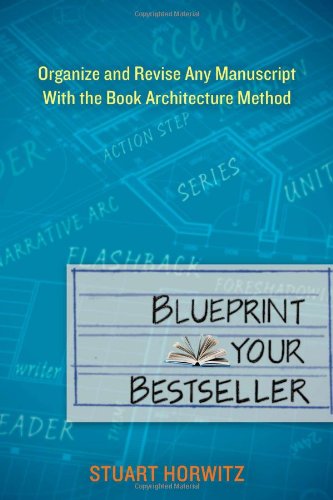
In my post called Target My Structure, I talked about how Stuart Horwitz’s book Blueprint Your Bestseller is helping me organize my memoir.

One of the most important steps of structuring a book, according to Horwitz, is to identify the series in your book. As I mentioned in that post, “a series is anything that has ‘iterations.’ Repetitions, a pattern. But not just any pattern–a pattern where the series “undergoes a clear evolution.” It happens or shows up more than once and changes a bit? It’s probably a series.”

There is no set number of series a book should have, but 12 is a reasonable number.  By happenstance, I have 12 series. Most of mine have to do with emotions, which is something that surprised me a great deal. I like imagery and metaphorical language, so I kind of thought I would find series with certain central metaphors or images. But when I did find iterations (repetitions) of an image, I would see that the image fit squarely within certain emotions that repeat throughout the book.

For instance, the image of a gun shows up in several scenes. In one scene, it’s a rifle. In another, it’s a pistol. In yet another, it’s a shotgun. But what is more important than the guns is that they represent the emotions fear and anger. Fear and anger are represented in different ways in many scenes. Guns are just one way they manifest themselves. But these emotions also show up in verbal arguments, physical abuse, and hiding/secrecy.

Once I had a list of my scenes in hand, I noticed that they correspond fairly well to the major emotions as identified by Pia Mellody.

ANGER

FEAR

PAIN

JOY

PASSION

LOVE

SHAME

GUILT

I also have a few other series in addition to these emotions, but I might add a 13th.  And it would be called THERAPISTS ;).


Do emotions show up often in your writing?

40 Comments

Filed under Books, Creative Nonfiction, Essay, Memoir, Memoir writing theory, Nonfiction, Research and prep for writing, Writing, Writing goals

Hop On Board: Writing Process

She’s gone and done it! Yup, I’ve been drafted into a blog hop by Caitlin over at The Siren’s Tale. And it’s a topic dear to my heart: My Writing Process. As you know, I am always trying to figure out about my process and that of others.

I’m going to follow Caitlin’s lead and answer the same questions she did on her blog. Then I’m going to tag someone else so more writing secrets are shared ;).

A little about Caitlin, in case you haven’t made it over to her blog yet.  Caitlin’s blog began as a way for her to “reconnect” with herself. She was a writer, a college student, and more, when she realized through her blogging and writing that happiness for her meant homesteading. Toward that end, she is now learning about “agriculture, beekeeping, herbalism, and organic farming.”  Her blog will give you that feeling of satisfaction that comes with connecting with the land and all that is around you–of really living this life.

What am I working on as a writer?

On Writer Site I’m sharing memoir reviews on Thursdays. My focus is to find something I learned–generally about memoir writing–from reading each book. On Mondays I share stories from my life or posts about writing. I never lack for something to write about. That’s an advantage to having lived long enough that I have to find the positive in aging ;).  I tend not to participate in blog hops and writing prompts and awards (any longer) because I try to keep to this schedule. I made an exception for Caitlin and her great topic.

I am also writing a memoir called Scrap: Salvaging a Family. I like to say it’s about growing up over a bomb shelter and in front of the city dump, but as much of it takes place in the here-and-now as it does in the way-back-when. It’s a bit of a discovery process about family secrets, a bit of a mystery, and all about forgiveness. Also, this past year I put together my first manuscript of poetry, both in book form and in chapbook form. I am starting to send it out to contests, but I want to widen that to sending to publishers outside of the contest arena.

Why do I write what I do?

I write my blog entries because I love the sense of community on WordPress, and I love reading the blogs of others and getting feedback on my writing and my writing analyses from fellow bloggers. Also, blogging is a regular writing exercise that keeps my writing fit and in shape.

My book is a way to understand, discover, and contextualize my experience growing up and living within my family of origin. I hope it helps readers do the same with their own lives–and that they will enjoy reading my family’s odd version of events of the 20th century. My poetry stems from my love of language and sound, the thrill of shaping it, and an appreciation for the magical aspects of life.

How does my writing process look?

For blogging, I usually put the memoir I’m writing about next to my computer and start writing into the white space on the “new post” screen. Or I start writing my story. Or copy and paste a bit of writing I want to revise for a post. Very clean and easy.

Then there is my book writing. I write in Word, one scene at a time. When I feel that I’ve taken a scene as far as I can at that moment, I put it away and move on to another scene. But I always print out drafts, revise by hand, and then make the corrections on the computer. I revise over and over and over again, often times for several little changes each time. It’s a big tree waster, but one I can’t seem to avoid at this point in my writing. However, I do turn the pages over and re-print on the other side.

Poems sometimes start out by hand, but in general, I don’t have an affinity for writing by hand and wonder how Jane Austin ever did it.

 ###

For this blog tour, I’m tagging my two in-person writing buddies. These ladies and I share manuscripts and table goodies (not necessarily in that order).  Rudri at Being Rudri and Renee at Unpacked Writer both write wonderful blogs. I’m thrilled to share in the writing process of both Rudri and Renee!

What does your writing process look like?
What motivates you to write?


27 Comments

Filed under Blogging, Creative Nonfiction, Essay, Memoir, Nonfiction, Research and prep for writing, Writing, Writing goals

Paper Hanging My Book

When we moved into our last house, I had a vision for my kitchen and family room. Those “two” rooms were a large open space, divided by a bar-height counter and a set of upholstered bar stools. Now keep in mind that this was the nineties.To coordinate with my rose and green plaid drapes and couches, I wanted an old-fashioned small print floral wallpaper inside two glass doored cabinets and on the bulkhead above. While I like to design, I am not very good at implementing projects like painting and wallpapering. So I asked around and called the paper hanger that was most highly recommended.

I can no longer remember his name, though “Jim” pops into my head. He was of retirement age with white hair and a nasty case of diabetes, but he was still working full-time. When he arrived in his rusted and dented panel truck, he spent some time examining the wallpaper rolls I had purchased. Then he began hauling out all manner of sawhorses and drop cloths and tools.  By noon he had converted my garage into an elaborate workroom.

By 5PM he had finished measuring and preparing the walls. I figured he would start pasting up the wallpaper the next morning. I was wrong. He did arrive by 8AM, but he still had more prepping to do. I asked him why it was taking him so long to prep. He said, “I’ve been doing this a long time. More’n forty years. If I spend my time prepping, the job will go quickly and there won’t be any mistakes.”

I probably rolled my eyes when I left the room. But once he started putting up the pretty wallpaper, I was able to watch him complete the room, even with a trim border, in an hour. One hour to wallpaper my kitchen. And it looked perfect, with invisible seams and absolutely no bubbles. Clean edges.

Later, I had him wallpaper my kids’ bedrooms, too, and he did the same excellent job by putting the focus on the prep, not on the final step.

Whenever I have a job to do, I tend to think back to Jim and what he taught me with his work technique. His method can be applied to many projects.

In fact, I was thinking today about how writing a book is turning out to be like paper hanging Jim’s way. By writing 200,000 words in scenes ahead of time, and by taking the time to really plan out how to structure it all, I suspect that when I put it all together, that will be the fastest part of the writing.

P.S. I’ve been super busy at work lately, so I am really frustrated that I don’t have time to work on the book, but when you let me chat about it on here, it helps keep me motivated, so thank you!

Have you ever worked using a method like Jim’s–heavy on the prepping, light on the final step?

36 Comments

Filed under Blogging, Creative Nonfiction, Essay, Memoir, Memoir writing theory, Nonfiction, Research and prep for writing, Writing

Target My Structure

I’ve mentioned before that I have had many problems structuring my book. With 200,000 words of memoir already written, I was overwhelmed and confused about how best to structure the story. What to leave in and what to take out. Whether to organize chronologically or thematically.

So I was very happy to find the book, Blueprint Your Bestseller, by Stuart Horwitz. His “architectural” method is really working for me.


In following Horwitz’ plan, some of the first steps include identifying all the series in your book. You can’t know this until you have enough scenes written.  So if you don’t have 50,000 or more words, I would just write out your scenes first. Then find all your series.  A series is anything that has “iterations.” Repetitions, a pattern. But not just any pattern–a pattern where the series “undergoes a clear evolution.” It happens or shows up more than once and changes a bit? It’s probably a series.

Series can be symbols or metaphors like the hat that Holden wears in Catcher in the Rye. They can be characters, objects, phrases, settings, absolutely anything. When I worked on this aspect, I was shocked to discover that many of my series are emotions, such as anger, fear, and shame. Of course, these emotions don’t exist by themselves. They are represented by tangible events or objects, such as locked rooms and guns.

In another early step in this method, I discovered the “One Thing” my book is about. Horwitz took me on a sure path to find this out through a step by step process.

Every time I work on a new step I experience an epiphany about my book.

This past week I accomplished the next step. I created a target for my book, putting my “One Thing” in the center bullseye location. Then I placed post-it notes representing scenes (pink), series (yellow), characters (blue), and settings (green) on the board.  Horwitz says, “The trick of the exercise is to put the narrative element closer to or farther from the bull’s-eye, or theme, depending on the strength of the relationship.” Doing this project, allowed me to see that certain scenes and settings were too far removed, whereas there is a close-knit relationship between everything else.

Caveat: I have so many scenes that I did not place all my scenes on the board. It would have been impossible. I expect to weed out scenes in the next step of the process.


The architecture method is supposed to work with any book, no matter the genre.

As a blogger or a writer, do you ever have problems with structure?

46 Comments

Filed under Books, Creative Nonfiction, Essay, Memoir, Memoir writing theory, Nonfiction, Research and prep for writing, Writing, Writing goals

Why Wait to Publish?

We have a lot of book writers on WordPress–all in various stages of book writin’: thinking about writing a book, actually writing one, talking about writing one, with several finished manuscripts, publishing a first book, many published books on the shelf.

What I hear very little about on WordPress is publishing smaller pieces before the book is finished. Maybe because I started as a poet, this has always been my route.

Poems are arguably the smallest genre of writing, so it made sense to send a few out into the world and see how they fare. Eventually, I had enough poems written and published to pull them together into a manuscript, but it didn’t occur to me that it was time for a book. I had to be reminded about it by a mentor.

When I branched out into writing creative nonfiction, my goal from the beginning was to produce a book. The writers on WordPress and the writers in the memoir-writing classes I’ve taken have been as focused on The Book as I have been.

But my opinion is that it’s just as important to write smaller pieces or to take chapters or smaller portions of the book-in-progress and revise into stand-alones. These pieces can be submitted to magazines and journals. Maybe you are thinking, “Well, I am writing a novel, so there is no way to send out part of this baby!”  I searched Duotrope (search site for writing submissions) for “novel excerpts” and over 100 places are accepting submissions of novel excerpts currently. Once you weed through them, you might find only a dozen are a good fit, but hey, maybe that’s 12 more than you realized were out there!

What I am trying to do is figure out what kind of market is best for each short piece and then revise each one until it sparkles before sending it out to editors of the “right fits.”

I try to think of my short works as canaries in the coal mine of the literary world. Either they make it or they don’t.

Here is some great advice given by the character Christmas Eve in the Tony award-winning musical Avenue Q:

from a wonderful Tumblr site called “Things Musicals Taught Me”


Do you submit your writing in less-than-book-length form?


39 Comments

Filed under Blogging, Creative Nonfiction, Essay, Memoir, Nonfiction, WordPress, Writing

Getting a Little Help With My Grammar

I use Grammarly to check plagiarism online because I want to find out if somebody’s pilfered something from my head before I can use it.

Yes, sometimes I feel as if somebody gets the ideas out before I get a chance.

Seriously, though, if you’re wondering why I wrote that first sentence it’s because I got a nice present from Grammarly for linking to them. But the truth is that I like Grammarly and that’s the only reason I am writing this post. I wouldn’t do it if I didn’t think the product had value.

I used to teach college, and there were always those papers. “Those papers” came in different forms.

  • There were the well-written papers by people who can’t string two sentences together for a quiz.
  • There were the well-written papers that were definitely not written to fulfill the writing prompt.
  • There were the very awful papers with a big patch of grammatical writing smack in the middle of sentence fragments and misspellings.
  • There were the papers that sounded like a review on Amazon (and were).
  • There was the papers like the one I got from a white female about the experience of a black male from a previous generation (turned out to be Langston Hughes).

You get the idea. They were plagiarized papers.  You know, the ones where I spent a lot more time grading them than the students spent “writing” them.

I wish I’d had Grammarly to use for these papers.  So what do I like it for now that I am no longer teaching? It’s a quick fix that tells me if a piece of writing has grammar issues or if it accidentally cribs somebody without giving credit.  My daughter and I have been working on her acting and music website, and we used Grammarly to help smooth out the text.

I’m not an expert on grammar because my training in teaching English was in reading and analyzing literature and in writing fiction and poetry. And I’m not a grammar snob either, although I have some friends who are (they are the ones who make grammar jokes on Facebook).

My students used to ask me if there was something like “spell check” for grammar. There wasn’t anything that worked well.

But now there is Grammarly.

So I ran the above through Grammarly.  The results were 21 errors and a score of 56 out of 100!  Huh? For an ex-teacher of–wait for it–English?!

I proceeded to use Grammarly the way it is intended: as a little nag that makes you stop and look at a variety of possible errors.  The first few errors were related to the name Grammarly. Because it ends with an -ly it read the word as an adverb. That’s understandable. But it shows that you have to use Grammarly as a guide, not as a model.

Another error was that I began the third sentence with the conjunction “but.” This usage is not proper for formal writing, but hey, this is a blog post, and I like it to be more conversational. Don’t you? But I appreciate the reminder.

Grammarly didn’t like my first sentence because it is wordy. Thanks, Grammarly :).

Now look at the second item in my list.  It reads: “There were the well-written papers that were definitely not written to fulfill the writing prompt.” Grammarly advises me that I do not necessarily need the modifier “definitely.” I sure don’t. But I like it because it adds emphasis. Oops, I just started a sentence with a conjunction again. Actually, I am really glad it pointed out the “definitely” though because I am prone to overusing modifiers.

Overall, a lot of the errors Grammarly found were because I wrote the blog post in a conversational style, using informal grammar. But for more formal purposes, like my daughter’s website or professional writing, these prompts from Grammarly are invaluable.  Also, there are two explanations for each error–a long one and a short one!

WOW, LOOK AT THIS!

But wait. There are different formats to use for reviewing your writing! I was running my blog post through “General.” They also offer Business, Academic, Technical, Creative, and Casual.

I ran the above section of this post through Creative and got only 5 errors, and through Casual I received 4. Most of these were stop-and-consider notices, not true errors.

One caveat . . .

Up above, I wrote this sentence: “There was the papers like the one I got from a white female about the experience of a black male from a previous generation (turned out to be Langston Hughes).”

Do you notice the error? There was  should be There were.  But Grammarly didn’t catch it the first time or the second or the third. Then I isolated the sentence and tried it alone, and Grammarly told me I had zero errors.

Bottom line is this

I really like Grammarly. I’ve been waiting for it for a long time. It performs some of the same functions as the WordPress proofreader, but is much more elaborate and specific.  It’s not meant to be used on its own to edit your writing. It’s meant to be your partner in the process. You need some knowledge of English grammar and punctuation to get the most out of the program.

And for some reason running text through the review is almost as addictive as Candy Crush.

Here’s a little image for my grammar snob friends:

34 Comments

Filed under Editing, Nonfiction, Writing

What the Blueprint Your Bestseller Process Looks Like

Renee is one of my in-person writing buddies. Look what she’s doing with her lovely book! This book she recommends by Stuart Horwitz is already winging its way to me so that I can do the same thing with mine. Best of luck, Renee!! xo

Photo by Renee

Photo by Renee

9 Comments

Filed under Books, Creative Nonfiction, Essay, Memoir, Memoir writing theory, Nonfiction, Research and prep for writing, Writing, Writing goals

Mary Oliver on Free Verse

Now that the writing contest is over and Fall is upon us (or we’re smack in the middle of it, whichever makes more sense), I am hitting the computer for work on my poetry manuscript and my memoir and won’t be spending as much time blogging.

Since I’ve been working with my poetry manuscript, I’ve been thinking a lot about poetry, and I like what Mary Oliver says about “free verse” in A Poetry Handbook:

Free verse is not, of course, free. It is free from formal metrical design, but it certainly isn’t free from some kind of design. Is poetry language that is spontaneous, impulsive? Yes, it is. Is it also language that is composed, considered, appropriate, and effective, though you read the poem a hundred times? Yes, it is. And this is as true of free verse as it is of metrical verse.

Merely hacking sentences into short lines because they look pretty and allow the reader to consider the words more carefully isn’t creating “composed, considered” free verse.

Deciding how to break up lines in poetry is the most difficult part.

For all of us buckling down to writing this fall:

Get to work and have fun!!

18 Comments

Filed under Blogging, Nonfiction, Poetry, Writing

Do You Free Write?

Are you a journal keeper? A note taker? A free writer? I jot down a few writing ideas here and there, but I don’t keep a journal. The thought of journal keeping makes my pulse race from the stress.

But I think free writing is a neglected step in writing.

Today I stumbled on a timed “free write” from 1996. It amazed me how the seeds for my Freshly Pressed post “How and Why I Don’t Know Science”  were all there 17 years ago.

Here’s part of the free write, unrevised:

I begin with thinking of the Peter, Paul, and Mary song, “That Marvelous Toy,” and until I write about this I’ll remember nothing else.  That mechanical, marvelous toy.  My grandfather’s love of gadget toys.  When I was a child, we used to give him toys for Christmas.

Then I think of having to take earth science in 10th grade because I refused to dissect animals.  Earth science was so boring, taught by a beige boring person, and I was stuck at a table with kids who sat in the back of other classes.  Therefore, I learned nothing.  I yearned for chemistry and physics.

I loved 7th grade science where we saw anti-drug propaganda films and brought in chocolate colored ants.  We kept track of what we ate, to add up calories.  I ate 2nd most in the class by far.  Metabolism? In college I loved Aims and Achievements of Science which was taught like a biography class!

None of these memories 3:09/3:12 (phone/bathroom) though is the tangible revelation of science, is it?  Punished in 3rd grade, desk in hall to record roman numerals as high as I could, when the punishment was over, I kept going to see how far I could go.  But this was easy, a challenge, no revelation.

The dead squirrel in the front year–the squirrel whose mouth crawled with maggots?  Cutting the fish open?  They bleed?  Studying clouds in 5/6th grades?  Buying those science books at the grocery store and studying aspects of science, doing experiments, the Mich. State channel on Sat. afternoon–potato experiments, etc.  Seeing magic performed with science.  Seeing the birth of a baby on a movie at the world’s fair at Expo 67 (I was 12 and terrified, so very much bleeding, bleeding).

I blank.  Science?  What?  Making crystals on a string.  My shell collection.  Rock collection.  Dead leaves.  Pine cones.  Tadpoles in the stream behind Stonehenge.  Putting caterpillar in a jar and letting him cocoon all winter.  Forgetting to take him out when he turns into a butterfly–he dies in the jar.

My guinea pig babies dying–every single litter of them, until I couldn’t stand to go near the guinea pigs.  Leaving the birds too long without food or fresh water.

photo from Wikipedia

Reading over this collection of run-on memories, I can see a lot of different story seeds. A few I have already written about. The first litter of guinea pigs is a scene in my book. I’ve touched on the butterfly, but that is just another step until I write the actual piece about it.

I’m taking two projects away from finding this old free writing.

One is that I can write about my grandfather’s love of mechanical toys. On my genealogy blog I have been serializing an interview of my grandfather which was conducted in 1994—when he was elderly, but still healthy. I could post a story about Grandpa’s toys on that website. Or I could write it for this one.

The other project is that I ought to be doing a lot more of these timed free writes. They allow little memories to pop up, one after another, as I am pressured by the time deadline and freed from the pressure of having to write well ;).

Do you do free writing? If so, is it timed? What do you find helpful about it?

39 Comments

Filed under Blogging, Creative Nonfiction, Essay, Interview, Memoir, Nonfiction, Research and prep for writing, Writing

Turning My Book on End

I’ve heard some good exercises to improve plot or structure, but I read a book recently that gave me a new notion—a notion that threatens to turn my book upside down.

David Ball, in his “Technical Manual for Reading Plays,” called Backwards & Forwards argues that the way to read a play for meaning on stage is backwards, not just forwards.

He says that the play is “a series of dominoes: one event triggers the next, and so on.” He invites the reader to think of arranging dominoes on end, close enough together, so that if one is knocked over it knocks over the next and then the next.

If you read a good play forwards, you won’t notice this causality. That’s because if Event A triggers Event B, you know moving forward, that Event A could have triggered a whole array of other things.  But it didn’t—it triggered Event B.

If you start reading from the end—the last event (let’s call it Event Z), then the event which caused it (Event Y), then the event which caused it (Event X), you can see that you couldn’t have Event Z without Event Y occurring, and you couldn’t have Event X without Event Y.  So while reading forwards gives you a variety of options and thus adds mystery to the story, reading backwards is a series of “of courses” as you trace the play backwards.

While Ball makes a distinction between reading a play for performing on stage and reading a play as literature, I would suggest that his method for reading works for writing a story.  One caveat is that more unique and unusual variations on chronology make it more difficult to understand Ball’s point, but I think his argument is valid at heart of any story.

So why does it turn my book upside down? To analyze my structure backwards, I have to start with the end. But I don’t have an ending yet!  Since it’s not a novel, I can’t manufacture an ending. I haven’t decided if I’ve lived the last event or if it is still in my future. Until I do live it or decide I have already lived it and know what it is, I can’t work backwards on structure!

However, I can take the last event I’ve written and read backward from there, searching for cause and effect and revising where needed.

Have you ever read or analyzed your own or someone else’s story backwards?

###

Just a reminder that I have a story in the Midlife Collage contest this week.  To find my story go to Midlife Collage  OR Facebook page.  Remember: it’s “Still Photo” by Luanne Castle.  Please comment after my story and “like” it with the Facebook link if you have a Facebook account.  You can tell them which story you want to win in “closing arguments.”

16 Comments

Filed under Creative Nonfiction, Essay, Memoir, Memoir writing theory, Nonfiction, Research and prep for writing, Writing