A Baker’s Dozen?

In my post called Target My Structure, I talked about how Stuart Horwitz’s book Blueprint Your Bestseller is helping me organize my memoir.

One of the most important steps of structuring a book, according to Horwitz, is to identify the series in your book. As I mentioned in that post, “a series is anything that has ‘iterations.’ Repetitions, a pattern. But not just any pattern–a pattern where the series “undergoes a clear evolution.” It happens or shows up more than once and changes a bit? It’s probably a series.”

There is no set number of series a book should have, but 12 is a reasonable number.  By happenstance, I have 12 series. Most of mine have to do with emotions, which is something that surprised me a great deal. I like imagery and metaphorical language, so I kind of thought I would find series with certain central metaphors or images. But when I did find iterations (repetitions) of an image, I would see that the image fit squarely within certain emotions that repeat throughout the book.

For instance, the image of a gun shows up in several scenes. In one scene, it’s a rifle. In another, it’s a pistol. In yet another, it’s a shotgun. But what is more important than the guns is that they represent the emotions fear and anger. Fear and anger are represented in different ways in many scenes. Guns are just one way they manifest themselves. But these emotions also show up in verbal arguments, physical abuse, and hiding/secrecy.

Once I had a list of my scenes in hand, I noticed that they correspond fairly well to the major emotions as identified by Pia Mellody.

ANGER

FEAR

PAIN

JOY

PASSION

LOVE

SHAME

GUILT

I also have a few other series in addition to these emotions, but I might add a 13th.  And it would be called THERAPISTS ;).


Do emotions show up often in your writing?

40 Comments

Filed under Books, Creative Nonfiction, Essay, Memoir, Memoir writing theory, Nonfiction, Research and prep for writing, Writing, Writing goals

Does Short Form Memoir Count?

Lately I’ve been reading shorter memoir pieces in back issues of literary journals, rather than book-length memoirs. I’ve noticed a few things by reading stories in journals:

  1. I don’t know what I’m going to get ahead of time. These pieces are usually listed until the category of “nonfiction.” A story might be a memoir, but it also might be a political essay or a lyrical essay. I’m more likely to find an experimental piece than if I read a book. Whether that matters or not is another issue. But I have long suspected that the reason we have “genres” is that we know how to “take” something when we read it.
  2. The piece is more likely to have some contemporary slant to it than if it were part of a book. These essays tend to be more “timely,” but sometimes that feels like a magazine trying to be trendy.
  3. I don’t become as obsessed with any of these short stories as I do when I read a book. I am less invested. Are the writers less invested, too? Nevertheless, some of the short pieces are thrilling in their brilliance.
  4. I am exposed to a wider range of thoughts and emotions by reading a variety of essays by a variety of writers.
  5. By reading many writing styles, I learn more about writing at the sentence and paragraph level. By reading books, I learn more about structure.
  6. I can read one short piece at each sitting, so I feel as if I’ve accomplished something.
  7. BUT I am not drawn back to the story as I am when I have to take a reading break during a book.
  8. I can learn a lot about where to submit stories by reading the journals.


Click on this link to order back issues of Plougshares

How often do you read literary journals?

53 Comments

Filed under Creative Nonfiction, Literary Journals, Memoir, Memoir writing theory, Nonfiction, Research and prep for writing, Writing

All Our Masks

One of the fun things about writing a blog is being able to write about whatever I want to write about ;). Today it’s poetry. Specifically the poetry of Muriel Rukeyser (1913-1980).

Muriel Rukeyser

Muriel Rukeyser (Photo credit: Wikipedia)

She’s one of my favorite poets.  Her most famous poem ended up creating a rallying cry for feminist scholars and women writers.

 The Poem as Mask

Orpheus

When I wrote of the women in their dances and
wildness, it was a mask,
on their mountain, gold-hunting, singing, in orgy,
it was a mask; when I wrote of the god,
fragmented, exiled from himself, his life, the love gone
down with song,
it was myself, split open, unable to speak, in exile from
myself.

There is no mountain, there is no god, there is memory
of my torn life, myself split open in sleep, the rescued
child
beside me among the doctors, and a word
of rescue from the great eyes.

No more masks! No more mythologies!

Now, for the first time, the god lifts his hand,
the fragments join in me with their own music.

Once, Rukeyser wrote about herself under the mask of myth. But now Rukeyser was throwing off the mask. She (and by extension, all women) could now show herself in print and in real life without masks.

Women no longer had to pretend to be what they were not.

Unfortunately, I think people are still wearing masks.

Today, it might be easier to have masks. We lurk behind social media, cell phones, and, yes, blogs, never fully showing ourselves without masks.

I will say that I think some masks are necessary, and that we have to protect ourselves.

But the masks Rukeyser is referring to are masks that deny who we truly are. For instance, she was a lesbian, and in a time when it was considered abnormal to be gay, homosexuality was one identity that many people felt forced to deny. A good mask to abandon.

In trying to figure out what masks I’ve worn, I think too often I have been in social settings where I didn’t feel comfortable being the nerd that I really am and have pretended to be more conventional and modulated, hiding my passions for nerdy pursuits like scholarship, writing, and poetry.

What masks have you worn that you have abandoned or want to abandon?

Enhanced by Zemanta

45 Comments

Filed under Blogging, Poetry, Writing

A Slut’s Story: Review of “Loose Girl”

Ever call someone a slut? Or a ho?

You might think twice about the object (not subject since we objectify when we call someone names) of your label after reading Kerry Cohen’s memoir Loose Girl: A Memoir of Promiscuity.

Sex addiction is a real disorder–and treated by therapists and in rehab facilities around the country. This is the first book I’ve read about a girl who has this addiction. Her self-worth is completely connected to getting attention from guys. I use the word “guys,” rather than men, because at the end of the book, in an interview of Cohen, she explains that men have feelings and needs of their own, but that a “loose girl” doesn’t view males that way. She uses them for her own overpowering needs.

In this book, the reader is brought into the mindset of a teen girl and, later, young woman who is a sex addict. For me, this book was horrifying to read. Cohen knew intellectually the dangers of having unprotected sex, and yet she did, with guys she barely knew–one after another after another.

I suspect there are women and young women I know who have engaged in this kind of behavior.  There might be many women like this.

The book is an engaging read, although the subject was disturbing. I stayed up too late finishing it as I wanted to have things set right for me at the end. I don’t want to include any spoilers here as I want you to have the same suspenseful read I had, so I will just say that the ending surprised me.

From this book I learned that in memoir the most critical scenes and shifts or turns in the plot don’t have to be earth-shattering. They can be more subtle, as often happens in life. In fact, in this book sometimes the most dramatic events don’t trigger any change in the narrative, whereas something almost invisible can trigger more change.

I did notice a couple of places where, if the book was in my group’s critique session, readers would demand something more. For instance, after Cohen develops a medical problem, readers don’t get to see how this affects her relationship with her boyfriend at the time. Instead, we jump ahead to “summer.”

Another opportunity missed might actually be intentional and part of the design of the book. Most of the characters, other than the male sex objects, are barely described. I don’t really have a good idea of how Cohen looks (other than her photo at the back of the book). Or her parents or therapist or best friends. The only exception is her sister Tyler, another victim of their neglectful upbringing. I suspect Cohen wants the reader to see the world as she saw it–cute boys with straight or curly hair and pretty eyes that single her out with their gaze. She may have described Tyler as a nod to Tyler’s shared family experience.

This book can benefit society by showing us what’s at stake when we just call someone a slut in a derisive way and don’t examine the root causes of her behavior.


35 Comments

Filed under Book Review, Creative Nonfiction, Memoir, Memoir writing theory, Nonfiction, Research and prep for writing, Writing

One Naughty Rabbit

It’s that bunny time of year! Every time I step outside I disturb a young rabbit feasting on my plants.

This slideshow requires JavaScript.

I’m going to take you back to 1959 today. (Yikes, how did today get so far away from then?) I have a certain quantity of very clear memories from the age of just before two to age four. This event happened in the spring, about three or four months before I turned four.

What I am searching for today is why this is one of those important early memories.  According to  Sven Birkerts, we have memories which are involuntary.  Memoirists, he argues, “need to investigate why a particular memory of a seemingly meaningless moment has such power that it still calls to us through decades.” I wrote about this theory when I first started this blog in a post called “Breaking the Codes of Childhood.”

My parents took me on a trip far from our Michigan home–to New Orleans. On the last day, we went on a boat ride along the Mississippi River. In the restaurant, the ship’s captain introduced himself to me, then hoisted me up and tousled my hair. He placed his captain’s cap on my head. The hat fit me perfectly.

Maybe it was not really his hat, but one he meant to give me all along, like a souvenir. He and his men fussed over me, and I thought I knew what it felt like to be a princess.

Mom and I went for a walk on the deck. Somehow my thin summer coat sailed over the side of the ship into the giant net that encircled the craft. Sailors tried to fish out the jacket, but they couldn’t reach it.

“Lulu, you need to learn to be more careful,” Mom said.

I hung my head. “Peter Rabbit.”

“What?”

“Peter Rabbit lost his jacket.”

Mom said, “Yes, you lost your jacket just like Peter Rabbit. He’s a naughty rabbit.”

I stood at the guard rail and stared at my little blue jacket, so recently wrapped around me, lying forlorn in the netting, so close and yet unreachable.

Peter’s jacket ended up as a scarecrow, whereas mine became fish bait

Why do I remember this memory so often? Any ideas?

* At home I had a 45 (record) with a narration of Beatrix Potter’s “The Tale of Peter Rabbit,” so I was very familiar with the story.

65 Comments

Filed under Creative Nonfiction, Essay, Memoir, Memoir writing theory, Nonfiction, Research and prep for writing, Writing

A Story of Grief

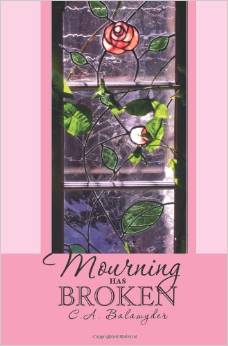
WordPress blogger Carol Balawyder‘s book Mourning Has Broken explores her grieving process after the death of her sister.

As with many griefs, Carol’s is entangled with her mourning over losing other relatives and friends and even her retirement. She writes:

I try to separate my sister’s loss from that of my mother, who died nine months before Diana. Daughter. Sister. They weave into each other by stitches on a quilt. To grieve the loss of a mother and a sister at the same time is more than the sum of the two parts.

Carol identifies her book as a memoir, but it’s not a memoir in the usual sense. Instead, it’s written in the form of lyrical essays. They are all stand-alone pieces, but together they function to give the book an arc, thereby making it a memoir in a nontraditional sense.

The journey of Carol’s grieving takes place against a spiritual landscape, but Carol herself is not a particularly religious person. That she keeps searching in religious and spiritual arenas shows me that she is a very spiritual person.  She refers to herself as an immature person on more than one occasion, but I found her to be a wise person in many respects.

The high point, or climax, of the book’s plot arc, occurs in the title essay “Mourning Has Broken.” In this piece, Carol’s new Reiki Master tells her that at the commemorative for Diana, Diana will give Carol a sign if Carol asks for one. When Carol’s sister gives her a sign it’s more powerful than imagined and has a profoundly healing effect on both Carol and on the reader going on this journey with Carol (the book’s protagonist I refer to here, rather than the actual Carol).

The writing style of the book is beautiful and distinctive, but I felt as if my best friend was sharing with me. I found myself very charmed by the book. I also made notes throughout the book, so that I can refer back to passages later.

All memoirs are part reflection and part storytelling, but the majority are heavier on the storytelling than the reflection. Lyrical essays tend to be heavier on reflection. In this book, Carol creates a perfect balance of the two (50-50? maybe), which I find fitting for the subject of living through grieving.

Carol’s book is the loveliest book about grief and mourning that I’ve read.

###

There are a few typos Carol’s editor left in the book, but Carol is cleaning them up in the Kindle edition. If you’re interested in reading Carol’s fiction, she has a story online at the literary journal carte blanche. You can find “The Witness” here. 

28 Comments

Filed under Book Review, Creative Nonfiction, Memoir, Memoir writing theory, Nonfiction, Research and prep for writing, Writing

The End of a Special Time

My daughter leaves for her home today. She’s been with me for the past few months because she was performing in a show at a regional theatre here.

I don’t want her to leave. She’s a calm, generous spirit, and it’s been such a pleasure to spend time with her. We’ve done things I would never have done if she wasn’t with me.

We cleaned some dandelion greens . . .

and made a tart.

She scanned old family photos for me.

Ten years ago her paternal grandmother passed away on my daughter’s 16th birthday. As we went through a few of Grammy’s belongings, my daughter selected a vintage 1960s Le Monde bracelet watch to remember her by.

This slideshow requires JavaScript.

And I went to see my daughter’s show. A lot.

This was a little souvenir. Can you tell what show she was in?

58 Comments

Filed under Memoir, Nonfiction

Secret War Hero: One Woman’s Story (A Memoir)

Years ago, my friend, Lisa Ercolano, urged me to read a memoir by a friend of hers who had passed away. This is how she describes her friend for this post:

Over the quarter of a century that I worked as a newspaper reporter, I met and interviewed a lot of interesting people. There was treasure hunter Mel Fisher, famous for finding the 1622 wreck of the Spanish galleon Nuestra Señora de Atocha at the bottom of the sea; “The Amazing Kreskin,” a mentalist who flabbergasted me with his seeming ability to read my mind; comedian Professor Irwin Corey, “the world’s foremost authority,” whose conversation was so off-color that I left blushing to the roots of my hair; and a Wiccan priestess and her son, Merlin, who frightened me out of my wits by “calling the wind” and making things blow off the family’s living room shelves. I have interviewed survivors of Iwo Jima, hypnotists, Native American shamans, nudists, actors, musicians, poets (including Allen Ginsberg), children’s author Maurice Sendak and a woman who believed that the spirit of Elvis Presley visited her as she was baking in her modest kitchen. And I enjoyed (almost) every minute of those interviews.

But my interview with a tiny, white-haired woman named Hiltgunt Zassenhaus changed my life. I knocked at her door one spring day in 1993 looking for nothing more than a good story for my newspaper, and I came out with a friend. I cannot remember any other interview in which I connected so instantly to another person, nor that person to me. It was like we had known each other our whole lives. From then on, I visited her several times a week, sitting among the potted plants in her little backyard, hearing not just about her harrowing life during World War II (which she writes about in her memoir, Walls) but discussing the books we had read, her life as a doctor and mine as a reporter, our families, politics and more. No matter how varied her opinions and experiences, what came through loud and clear was her strong, unbending and unwavering lifelong commitment to helping other people and, as she put it, “serving life.” She told me, “We all have to do what we can, every day, to serve life and help others. People who hear my story are always saying ‘Oh, I cannot imagine what I would have done in your place going through all that.’ I tell them ‘You don’t have to wait — you shouldn’t wait — for some big, dramatic thing to happen. You have to act now.” Her words have echoed through my life ever since, informing decisions big and small.

Since reading Hiltgunt Zassenhaus’ book,  Walls: Resisting the Third Reich–One Woman’s Story, I have also felt inspired to live my life in a better way.

I’ve read many memoirs by Jewish survivors of the Holocaust, but this one is by a German woman, a Gentile, who decided not to play it safe, but to “fight back” against the Nazis.

Her story reads like an adventure tale. I became caught up in the danger that Zassenhaus put herself through to save Scandinavian political prisoners. I learned what it was like for her and for her family, living in Germany during the war. Although she does anything but draw attention to it, Zassenhaus’ strong ethics and sense of honor inform the book. She refused to compromise these codes when her resulting actions put her life in danger.

The main theme seems to be how important it is to speak up or act in resistance against dangers to freedom like Nazism. Her clearly written scenes allowed me to envision how and why an entire nation was caught up in Hitler’s madness. As an example, one character, her neighbor Mr. Braun, is an angry man who doesn’t get along with any of the neighbors. There is something a little “off” about him. But as the Nazi movement takes over the country, Mr. Braun becomes  the Warden of the precinct that Zassenhaus and her family live in. This gives him control over their freedom and their lives. By transferring control to “small” and dangerous people like Mr. Braun, Nazism was able to create a net (network) that captured all of Germany in its mesh.

I had to force myself to consider what I learned about writing memoir from this book. After all, I didn’t read it for analysis, but was caught up in the events of Zassenhaus’s life during the war and how she would survive. After I finished, I was overwhelmed with feelings of inadequacy and admiration for such a brave and honorable woman.

But then I remembered what Lisa had told me: that Zassenhaus told her not to wait for a dramatic event in life, to step up now and perform an act that makes a difference. In memoir writing this advice could translate this way: Those of us with less horrific or courageous stories might discover that there are others who find our stories important, even inspirational.

Psst: about Lisa. She’s in China right now, helping take care of babies in an orphanage, thanks to Hiltgunt’s inspiration.

28 Comments

Filed under Book Review, Creative Nonfiction, Memoir, Memoir writing theory, Nonfiction, Research and prep for writing, Writing

Confession: I’m a Snoop

I guess that’s why I like to read memoirs.

My husband always drives the car when we are together. I like being the passenger because I look into every window that has a curtain open or shade up. I don’t really want to visit the house or the business. I just want that quick exciting glimpse into some place I have never been. Then a story or character description flashes through my mind before I look into the next window!

Another way I know that I’m a snoop is how fascinated I get by even the most distantly connected ancestors on my family tree. When I see an antique photograph or locate a document or bit of information for the family tree, I get incredibly nosy about the lives of the people involved.

For instance, I noticed that my great-great-grandmother’s brother’s middle daughter lost her mother when she was 6, and I began imagining what it was like to be a 6-year-old in 1900 whose mother has just died. I found out through a newspaper article in 1902, that their house burned down that year. In the article it said that the oldest girl ran the household and took care of the kids.  In 1902, the oldest was 14, so she would have taken on those duties at the age of 12. That means that the middle child had her mother “replaced” by a 12-year-old sister. All the ramifications of that began to set up a storyline in my mind.

It gets worse. I am addicted to reading other genealogy blogs where I get fascinated by the lives of other people’s distant relatives.

When I read a novel, I am taken away on an enjoyable experience, but when I read a memoir I am satisfying a craving for spying. Am I Gladys Kravitz, spying at Darrin and Samantha’s window on Bewitched?

 Anybody else want to ‘fess up to being a snoop?

51 Comments

Filed under Creative Nonfiction, Memoir, Nonfiction, Research and prep for writing, Writing

I Found A Memoir About Loss

The book is called Found. And I am so glad I did. I have been searching like mad through my brain trying to remember who recommended this book so I can thank her.

Found is actually a sequel to a memoir called Blackbird, which I have not read. There was no need to read it first, although I plan to search for it.

Jennifer Lauck is an award-winning journalist, a skilled memoir writer, teacher, and speaker. But before she was those things she was a newborn never touched by her biological mother, a baby adopted by a sickly woman and her husband who both died by the time Jennifer was seven, and a little girl sent to live with various relatives of the adoptive parents. Later she was adopted by relatives who were inadequate and abusive. She knew they didn’t love her and wanted her social security money.

Apparently Blackbird is the story of her childhood, but in Found, Lauck gives the reader enough scenes of that childhood to understand the woman Lauck became. Found is the story of that woman.

Lauck presents herself as a “tough cookie” who goes after her education and a career as a reporter with determination. At the same time, the reader learns that there is a gaping abyss of loss and crushing feelings of abandonment at her very core. When she begins to search for what is wrong, she ends up at a Buddhist retreat, and for years, she commutes between the retreat and her home. But it’s a long time before she realizes that she needs to search for her birth mother. The irony of the seasoned reporter not realizing she had the tools necessary to search indicates how far down Lauck had suppressed her real feelings.

There is so much about Lauck’s story that is tragic. In the midst of the trail of tragedy the reader follows Lauck on, guide posts are placed. These guide posts are clues back to, or threads leading from, her original identity. They also add suspense and tension to the story.

Where this book moved beyond other adoption stories I’ve read is that Lauck allows the reader to explore with her the complexity of her feelings about her losses, about adoption, and about her family members, especially her birth mother.  There are so many emotion-filled scenes, but a quiet moment that really touched my heart was when Lauck agrees to be the mommy driver for two of her daughter’s classmates. She recognizes them as fellow adoptees. In their case, they are international adoptees, from Vietnam and India, whereas Lauck’s adoption was domestic (and private, not through the state, which made her search more difficult). With this one expert move, Lauck shows the reader her growing awareness of how the trauma of adoption has affected her personality, that she has learned compassion for others (yes, others have gone through this early abandonment and loss, too), and that some of the same problems of adoption still exist today.

As an adoptive mother and sibling, I feel so strongly that anybody considering adoption today needs to read accounts by adult adoptees and make sure she pursues adoption for the right reasons and in a manner that is set up 100% to benefit the child (and maybe not even just that one child, but children in general).

Although this book focuses on adoption, most people have experienced or will experience losses in their life, and this book will resonate triumphantly within the heart and soul of any reader.

28 Comments

Filed under Book Review, Creative Nonfiction, Memoir, Memoir writing theory, Nonfiction, Research and prep for writing, Writing