Category Archives: #bloggingcommunity

A Tanka for #TankaTuesday Poetry Challenge, Holidays

For Robbie Cheadle’s challenge at #TankaTuesday challenge I’ve written a double tanka about my childhood Christmas Eves.

###

Church bells ring-a-linged

We walked through the candy canes

in the crisp-aired park

Flakes coating our hair and coats

Sliding ourselves to the first house

*

Progressive dinners

Mom’s aunt’s house, then her uncle’s

Grandma baked desserts

Worst part was the oyster stew

Now my fondest memory

###

Eight years ago I decided to investigate this Christmas eve oyster stew phenomenon for my family history blog. My mother’s maternal family were the ones who celebrated with the progressive dinners and the oyster stew (a pan of milk and oysters essentially until my husband joined the family and added spices and seasonings). That family was half Dutch and half Pomeranian (an area on the Baltic that was part of Prussia, although the genetics of the German-speaking people (before WWII when they were kicked out of Poland) was actually Slavic. Anyway, the Pomeranian “half” was through the women, so that’s where I thought the tradition must come from. Here is the link to my post. Keep in mind one of the links within the article is now dead. A Christmas Tradition from the Old Country

To my knowledge nobody in the family carries on this tradition. We have all created new holiday traditions with our children.

Did your family have a tradition that seemed to pull the family together like this that is now nearly forgotten?

45 Comments

Filed under #bloggingcommunity, #poetrycommunity, #TankaTuesday, Poetry, Syllabic Poetry

Elizabeth Gauffreau’s Masterful New Novel, A Review

Liz Gauffreau is a master of historical fiction. And rather than creating a series (so far), she has written completely different books with different historical settings. I loved Telling Sonny, and now I love The Weight of Snow and Regret.

Here is my review of the latter. At the end I’ll share with you how you can purchase the book!

***

Elizabeth Gauffreau’s new novel, The Weight of Snow and Regret, is a tribute to the residents of the Sheldon Poor Farm in Sheldon Springs, Vermont, as well as testament to the harsh lives of society’s disadvantaged. The novel takes place in 1967-68, the last year of the tenure of the poorhouse. But the plight of the poor and culture-rocking events of that year resonate with familiarity with contemporary readers.

The first part of the story weaves in the life of Louisianian Claire and how she falls from her place in middle-class society to living in the poorhouse far from home. In this way, the reader is drawn into the novel through the perspective of this mysterious woman, then the reader is delivered into the capable hands of Hazel, a sympathetic foster child grown into a compassionate woman who now runs the home itself while her husband manages the associated farm. Through Hazel’s kindness and perspective, we meet the other residents of the poorhouse.

The place hasn’t always been run as Hazel manages it. Before her hard work, dedication, and home management skills, the neglect was extreme. Every surface was filthy, with trash strewn about. The residents’ clothing was in desperate need of laundering. In fact, Hazel believes that the men’s underwear had never been cleaned. Hazel cleans the home immaculately, creates wholesome meals with a tiny budget, and gives the residents the care and understanding that they need.

These residents range from the forgotten elderly to the mentally ill to those with intellectual disabilities. Although they respond differently to events, and their interactions with each other can be fraught, Gauffreau’s exploration of their behavior and treatment rings true. One twist is that Hazel herself lived in this poorhouse at one time. A couple of the residents from her childhood time at the shelter are still living there when Hazel takes over. This feels like a gut punch to her to think of them still living in the conditions she and her family had undergone.

Gauffreau meticulously researched the history of the home, poor farm life in the sixties and before, the blues music that spoke to Claire’s troubled and depressed soul, the national and world headlines of the time, and local history. Her painstaking implementation of her research with her compassionate feel for the characters, and her excellent storytelling senses makes this an engrossing read. I read far into the night, without being able to put down the book.

***

Help Meals on Wheels!

Purchase the paperback from the publisher, and $5.00 of the purchase price will be donated to AgeWell Meals on wheels of Franklin County, Vermont.


47 Comments

Filed under #amreading, #bloggingcommunity, Book Review, Fiction, History, Novel

Book Tour Stop: Book Review of Deborah Brasket’s When Things Go Missing

I’m thrilled to be part of the blog tour for the new novel written by Deborah Brasket whose blog Writing on the Edge of the Wild  I’ve been reading almost as long as I have been blogging.  I’ve reviewed this very special book, and I’d love for you to read the review, hoping that will motivate you to pick it up for yourself.

EBOOK GIVEAWAY The top 3 people who leave the most likes and comments on the participating blogs will be emailed a free eBook of When Things Go Missing (epub or mobi) PLUS two extra chapters (pdf or doc file)

***

REVIEW

As I began reading Deborah Brasket’s debut novel, When Things Go Missing, I was expecting a smart and well-written story since I had been reading Brasket’s thoughtful blog for at least ten years. What I didn’t expect was such gorgeous writing, significant and densely woven themes and images, or how strongly the book would make me feel.

This novel is the story of a traditionally structured family of four and how the pieces that are the individuals fit together—smoothly, imperfectly, and jaggedly. The mother leaves one day without saying goodbye or providing a destination. At that point, daughter, son, and husband all respond differently, depending on their relationship with Mom/Frannie. As might be expected, they feel as if the center of the family is gone, leaving them with only tenuous connections to each other.

When Franny leaves town, her son, Cal, is a heroin addict who relies on the help of a rotating roster of enablers—including his mother—to give him money or a place to stay. The younger child, Kay, is a graduate student in archaeology, focused on finding a place for herself in her field. They both rely on their mother emotionally, but with the maternal tenderness spigot suddenly all but closed tight, they struggle to discover who they are and how they can succeed in life whether their mother is a part of their day-to-day lives or not.

The character portraits are carefully drawn. Brasket captures not only Cal’s addictive personality, but his sister’s love wrapped in resentment for the way he siphons attention for negative reasons. Even if the characters and their fascinating evolution throughout the book were all When Things Go Missing has to offer, it would be enough. I couldn’t look away for an instant. Every moment was a surprise and yet each new action made absolute sense for these people and their troubles and their conflicted emotions for each other.

Anyone who has an addict in their lives will be able to relate to this book at a profound level. Anyone who is part of a dysfunctional family group will be compelled to learn from the psychology at work here. And, finally, any parent who ever wanted to just get away from everyone and everything to search for peace and to find themselves, will feel a connection with the character who is missing throughout the novel—Franny herself. Where Franny finds herself will surprise and please you. The character her husband and children find within themselves will gratify you. I promise.

When Things Go Missing made me cry. I could not stop thinking about it when I finished reading. Frankly, I was stunned by the beauty and the brilliance.

***

Following you will find the book information, description, and author bio–as well as the blog tour schedule.

PUBLISHER: Sea Stone Press
PUB DATE: September 22, 2025
PAGE COUNT: 352
FORMAT: E-book $8.99, paperback $14,95, hardback $21.95
AVAILABLE NOW at Amazon, Bookshop, Barnes & Noble, and all major retailers.

ABOUT WHEN THINGS GO MISSING
When Fran Albright turns fifty, she heads to the grocery store and keeps going until she reached the tip of South America, leaving behind an empty hole in the lives of her bewildered family. Her daughter Kay scrambles to finish her master’s degree while trying to glue the family back together. Her son Cal is torn between grief and rage as he fights his own addictions and demons without her there to help. And Walter tracks his wife’s journey southward with her credit card purchases, continuing to care for her as he always has, before heading north to Alaska. Adding to the mystery of the mother’s disappearance are the elated messages she leaves on Kay’s phone and the strange photos she sends Cal, who studies them like hieroglyphs he must decipher to save her and save himself.

When Things Go Missing is a masterful exploration of loss, loyalty, and self-renewal. Told through the viewpoints of Kay, Cal, and Walter, this emotionally rich, mystery-driven family drama is wrapped up in a propulsive page-turner you cannot help getting swept up in.

GENRES: Book Club Fiction, Literary Fiction, Family Saga, Women’s Fiction, Sibling
Fiction, Addiction Fiction, Introspective Family Drama, Healing and Self-Renewal


ABOUT THE AUTHOR

After sailing around the world with her husband and children, teaching literature to college students, and fighting for affordable housing as the leader of a nonprofit, Deborah J Brasket finally settled down among the golden hills and vineyards of California’s central coast to write the kinds of novels she loves to read.
http://www.deborahjbrasket.com
seastonepress@gmail.com

WEBSITES AND SOCIAL MEDIA
Author website and blog, Deborah J. Brasket, Author ~ Writing on the Edge of the Wild –

Novels

Substack Newsletter, https://deborahbrasket.substack.com/

Facebook, Deborah J. Brasket, Writer –  https://www.facebook.com/DeborahJBrasket/

Goodreads, https://www.goodreads.com/author/show/55448191.Deborah_J_Brasket

Instagram, https://www.instagram.com/dbrasket/

LinkedIn, https://www.linkedin.com/in/deborah-brasket-39384370/


BOOK BLOG PARTICIPANTS

18 Comments

Filed under #amreading, #bloggingcommunity, Book promotion, Book Review, Books, Flash Fiction, Nonfiction, Reading

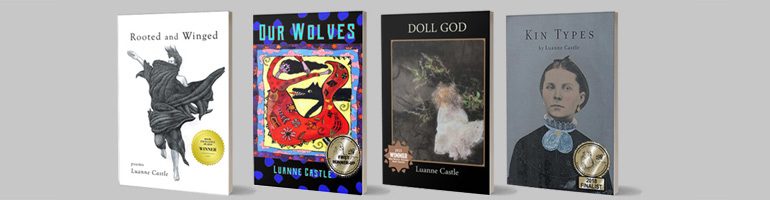
Interviewed by LatinosUSA about Poetry and Our Wolves

I’m thrilled that Editor Juan Re Crivello has interviewed me for LatinosUSA-English Edition’s. Hope you like it! Here’s a link:

https://latinosenglishedition.wordpress.com/2025/06/27/the-internet-has-given-new-life-to-poetry-luanne-castle/


19 Comments

Filed under #AmWriting, #bloggingcommunity, #poetrycommunity, #writerlife, Interview

Five Things You Never Knew About Me

I started writing this blog over 12 years ago. Some of you might remember me back then. But the blog has new readers and even with 12 years I think there are things I’ve never talked about. So here are FIVE THINGS YOU NEVER KNEW ABOUT ME.

  1. When I was ten, my brownies won a blue ribbon at the county fair.

  2. I’m not that great at sports, but I used to love water skiing and cross-country skiing.

  3. I don’t drink coffee, and that seems to be a genetic anomaly because my aunt and my uncle are the same.

  4. When my kids were young, I got them to clean the kitchen floor by letting them slide across the floor with a bucket and rags.

  5. My favorite movie is Babe. My second favorite is Beetlejuice (the original one). #3 is Sitting Pretty (1948). #4 is Mr. Blandings Builds His Dream House (1948). I love the Batman movies. Lots of Bs there!

Seriously, if you’ve never seen those two 1948 movies you are really missing some hysterical comedy.

Tag, you’re it. What are five things I don’t know about you?

62 Comments

Filed under #bloggingcommunity, #writerlife, #writerslife, #writingcommunity, Memoir

Review of Robert Okaji’s Our Loveliest Bruises

Robert Okaji’s new poetry collection Our Loveliest Bruises can be considered his greatest work, truly a magnum opus. The spare language belies the beautiful compelling imagery as it probes the depths of emotion.

Some of the poems have been published in various literary journals and anthologies, but the book is a tightly woven project of loss and grief. Okaji uses the Japanese bamboo flute shakuhachi as a metaphor for these emotions. Throughout the book, in various poems, the poet breathes his life force into the holes of the instrument, producing notes which are akin to his poems. The holes represent the absences of loss. Eventually, in “Self-Portrait as Shakuhachi,” the poet becomes the flute: “How easy to let air / slide through oneself.”

The poet’s mother’s ghost is a recurring character. She does not communicate, but there is a sense of competition between the two. The imagery in these poems is rough and realistic. There is a sense of profound regret, but also of love. From “Ghost, with a Line from Porchia”:

Your battle with language, with silence, invoked.
I stretch the word and weave this dirge for you.

Some poems address a “you,” and I believe in many cases this person is his mother’s ghost. But it could mean the poet himself. There are instances in some poems that point out the brief nature of life itself or are a merging of mother and self and perhaps even a universal human message. “Each day lived is one less to live,” Okaji writes in “Mother’s Day.”

Robert Okaji has written an extraordinary account of the “loveliest bruises” we experience from the love we have for loved ones, of self, of life itself.

***

Bob Okaji blogs at O at the Edges. If you haven’t read his blog you might not realize that Bob was diagnosed with late stage metastatic lung cancer. He has posted a couple of times on his blog about his illness. He continues to do well, although he doesn’t always feel that great.

Bob is the person who first introduced me to the Tupelo 30/30 poem challenge. I think that challenge really motivated me into writing more and more poetry.

Click the link to Bob’s blog so you can send him some good vibes. And then, if you can, click the link to his gorgeous book.

Our Loveliest Bruises

18 Comments

Filed under #amreading, #bloggingcommunity, #poetrycommunity, #poetswithcats, Book Review, Poetry, Poetry book, Poetry Collection

Making a Collage My Way

Colleen Chesebro asked me to post the process for my collages. I started “art journaling” during the pandemic, watching online videos to learn many different mixed media techniques. I was quite taken with junk journaling. Finally, I settled on mixed media collages as the medium I wanted to submit to literature and art journals.

My published art can be found through this link on my website: Luanne Castle Art. Pieces were published by Mad Swirl, Raw Lit, and Thimble Lit. I also have some art forthcoming in other journals.

I couldn’t make a video for you because I am not that coordinated. Also, I make a lot of small steps when I work because my time is broken into tiny fragments. So I am posting photos with commentary. I hope it’s easy enough to follow.

Art supplies are the first consideration. While I’ve managed to collect an embarrassing quantity in four years, I’ll post the main ones I use for almost all collages. Some collages also have an additional weird item, such as a feather, a jewel, etc. but here are the basics.

I’ll share the supplies in the order of the process. First you want to have paper that is thick enough and with the right finish/tooth to it. Try thicker weight watercolor paper or mixed media art paper. It usually comes in 8 or 9 inches by 11 or 12 inches. Let me jump ahead here by saying I do a weird thing that might be frowned upon in art classes. I let the collage form the way it wants to. Then I crop the background to fit the collage. I hate the idea of making the collage fit the size/shape of the paper.

Sometimes I prepare the paper by collaging scrap paper and then covering it with white gesso. Sometimes I only use white gesso. And sometimes I don’t prep it at all. Notice in the photo I have the matte version of Mod Podge to use as glue. I am starting to think I only want to use glue sticks instead of Mod Podge. The torn edges stay down better.  Here’s a photo of the glue stick that I prefer. Then after that are the photos of the initial collage bits.

Here are photos from applying the bottom layer of collage. Remember that you don’t have to do this stage. It’s just to give more texture and depth to the piece.

When the gesso is wet, you can create a design or not. Here I used something designed for that purpose, but you can use your fingernails, a fork, anything your imagination can come up with.

Now we move to the creation of the backdrop that will be seen. Soft, dry pastels. Yum. Here I have some sticks and some “pan pastels.” What I love about this type of pastels is that I can apply them haphazardly and then wet them (with a spray bottle of water) and sponge or baby wipe them in whatever chaos I like. Beware that there are other types of pastels that are impervious to water and cannot be smeared around like this.

So why do I prefer pastels to paints? For the purpose of making backdrops to collages I like the way I can layer muted colors. I prefer to choose several colors that are close together for highlights and low lights. The idea is to create layers. I apply a color and then go back later and apply another color. Then another–or even the first one over again.

An aside: I do sometimes use paints, usually acrylics. Often times I have a paper that I’ve used to clean off a brush or to put excess paint. Then I paint or smear pastels over the top of the paint. The paint underneath adds another layer for color and texture.  Here’s an example of a paint I use.

Once I get a background the way I like, I’m not done. Then I like to add something else. Often times it’s just a touch (in places) of this little shiny treasure, Lunar Paste.

Occasionally, I like to build up texture using this Texture Paste. I used this on my piece “Found Sound,” which was nominated for a Best of the Net. You can find it on the link at the top of this post. In that collage I stuck to the off-white of the product, but Texture Paste can be painted over. Pastels will not work properly.

Here are some backgrounds in process.

After I have the background ready, I am ready to collage.

To create the collage, I like to cut out images from vintage issues of Life Magazine. I am starting to like vintage McCall’s, as well. I purchase these in lots from Ebay.


Once I amass enough photos that I like together to create a theme or story, even in a surreal way, I arrange them before I start to glue them down with the glue stick.

I may add stamping, pencil or pen marks, even a title.

When I get the collage finished, I trim the edges of the piece so that the balance is the way I want it.

This is a finished piece that was just in Thimble. Notice the sheen. That’s from Lunar Paste. Notice the stamping and pen marks.

Some people like to create collages that are “all collage,” meaning there isn’t a background that shows. I prefer this style for the focus. I love color, but want the collage to be the star, so I haven’t used bright colors for backgrounds. Besides color and making a mess :), my favorite part of art is composition. I love experimenting with how to arrange the collage to make the best composition I can think of.

STILL LEARNING. If you decide to try a collage, I would LOVE to see it!!!!

51 Comments

Filed under #bloggingcommunity, Art and Music, art journaling

Buy Yourself a Gift of Sunflower Tanka!!!

Lily is enjoying her new anthology, Sunflower Tanka. These are wonderful examples of tanka and tanka prose. There are even some unusual tanka forms. I’m so blessed to have four tanka prose in the book. A huge thanks to the contributing editors, Colleen Chesebro and Robbie Cheadle.

Isn’t the art on the cover gorgeous? It’s by Robbie.

I sent a copy to my mom and suspect she’s going to love it!

You can pick up your own copy here: https://shorturl.at/XEKLb

You can also purchase a Kindle version.

Blurb

Sunflower Tanka, edited by Robbie Cheadle & Colleen M. Chesebro, is an annual anthology of contemporary tanka, tanka prose, & experimental tanka from a broad mix of new and established poetic voices from across the world.

Our theme, “Into the Light,” draws inspiration from the way a young sunflower bud constantly turns to face the sun. Poets delved into the realms of death, love, and the natural world, capturing their human experiences in the timeless form of syllabic poetry.

Contributors to the first edition of the Sunflower Tanka: Suzanne Brace, Yvette Calleiro, Kay Castenada, Luanne Castle, Robbie Cheadle, Colleen M. Chesebro, E.A. Colquitt, Melissa Davilio, Destiny, Tamiko Dooley, Lisa Fox, Cindy Georgakas, Chris Hall, Franci Hoffman, Marsha Ingrao, Jude Itakali, Jules Paige, Kenneth, MJ Mallon, Brenda Marie, Selma Martin, Michelle Ayon Navajas, Lisa Nelson, D. Wallace Peach, Freya Pickard, Dawn Pisturino, Gwen M. Plano, Jennifer Russo, Aishwarya Saby, Reena Saxena, Merril D. Smith, Nicole Smith, Ivor Steven, Ben Tonkin, Trilce Marsh Vazquez, Cheryl Wood.

Get yourself a holiday gift of Sunflower Tanka!

HAPPY HOLIDAYS TO ALL!!!

Leave a comment

Filed under #amreading, #bloggingcommunity, #poetrycommunity, #TankaTuesday, Poetry, Poetry book, Poetry Collection, Syllabic Poetry, Writing

Mourning a Courageous Spirit

I spoke too soon in my Kitty Cat Update post last week. Sadly, one of my cats has passed away. Here is my eulogy about Kana.

Our girl Kana has gone to meet her furfam over the rainbow: Pear Blossom, Felix, Tiger, and Isabella Rose. The first night in early 2015 when the Gardener and I started volunteering in the cat room at the shelter, Kana was in a cage and pushed herself into the front corner, against the wires, begging me to take her home. At the time, I couldn’t do that because Mac was sick and needed a lot of care, and we had other cats as well. Kana waited for us for months because the progression of Mac’s illnesses dragged on. Nobody asked to spend any time with her. The shelter sent her to PetSmart, hoping someone would take an interest in her. Nobody wanted an 8-year-old black cat, and I saw her get more and more depressed. As soon as Mac passed, I picked up Kana from the shelter. By this time, she was very cantankerous and didn’t even want to go home with me any longer. We discovered that she not only had IBD, but the ultrasound showed that at one point her back had been broken. She lived with chronic pain. After a few months, Kana realized that she was home, and that she could relax. Her final illnesses really took a lot out of her. We now realize she was in a LOT of pain and feeling very sick, but she was always brave and fierce, a real hero.

Leave a comment

Filed under #bloggingcommunity, #poetswithcats, Cats and Other Animals

Kitty Cat Update

Since I haven’t been able to blog much because of caring for grandbaby (missing you all!!!!) I know I haven’t blogged about my cats in a long time. So time for a cat update!

I still have five cats: Perry, Kana, Lily, Sloopy Anne, and Meesker.

Perry, of course, is the closest to the grandbaby, but he’s also the one that gets the most jealous. Therefore, I often have my arms full of baby and cat at the same time! Say hi, Perry!

Perry is still on his meds for GI and heart and getting lots of hugs. His ruff looks greasy because his medicine is oil-based. He’s the youngest, but even Perry is a senior. All my cats are old.

Kana is at least 17 and has failing health. She has kidney disease. She has a hard time walking. I have to lift her up on the couch when she wants to lie next to me at night–and lift her down again. She spends her days in a kitty playpen (not zipped in—it’s by choice) near the sunlight.

Lily is Lily. She’s the worst cat I’ve ever had. She’s also the most beautiful (long-haired orange and white), vain, and we love her a lot. Hah. She’s the reason we had to build a gate in the middle of our house, to protect Sloopy Anne and Meesker from her. And when she feels like it she pees on the living room drapes and kitchen rugs. She needs lots of attention, whether from us or anyone who stops over.

Sloopy Anne lives in the back of the house, an independent tortico (tortoiseshell and calico markings), and she is the cat who sleeps with us. In that way we make up to her for giving her the least attention during the day.

Meesker lives in the back of the house, but has his own room that he can be in when he needs to feel secure. It has a gate on the door (open most of the time during the day), which he could jump over if he realized it. We’ve never told him about that fact though, so he doesn’t even try. The gardener spends some time with him almost every afternoon and almost every evening. My physical therapist (don’t ask–another mobility issue) wants me to lie on my stomach for five minutes a couple times a day, so I started doing it in Meesker’s room. He lies next to me in the same position, just like a little copycat.

Lily and Sloopy Anne prefer the gardener. Kana and Perry much prefer me. Meesker is a happy bouncy guy and likes us both the same.

Here’s a pic of the baby who refused a nap all afternoon and then conked out the second he went into his jumper.

I’m closing comments because the little time I have for blogging today I would rather spend it reading some of your blogs.

Leave a comment

Filed under #bloggingcommunity, #poetswithcats, Cats and Other Animals, Grandparenting