Category Archives: Book Review

Review of Merril D. Smith’s HELD INSIDE THE FOLDS OF TIME

Here is my book review of Merril D. Smith‘s beautiful new poetry collection. I hope it makes you want to order a copy!

Merril D. Smith’s new poetry collection, Held Inside the Folds of Time, is a testament to Smith’s background as a historian. But what is more important is Smith’s sensitivity to previous generations. She opens the collection with a poem about a cave painting. By doing so, he connects us with all who have come before.

She recognizes what she’s learned from her ancestors, who–in “How I Learned”–“showed me that I have my own wings– / unfold them, fly. This, too, is part of the pattern.” The poet can’t or won’t get away from them: “My dead follow me through every timeline” (“Suspended, Surrounded”).

Smith’s ancestors who immigrated to the United States, her own family of origin, even the soldiers who died in a Revolutionary War battle are all subjects of the book. “In Memorium: For the Unknown Soldiers at Red Bank Battlefield” asserts “their ghosts roam the battlefield / settling their bones, unsettled in time.”

Nature features prominently in Smith’s poetry, and this is where the lyrical beauty of her writing is best displayed. She uses many poetic techniques, particularly variations of rhyme, such as off rhyme, end rhyme, and internal rhyme. These lines are from “Cross-Quarter Days”:

The blooms have browned,

blossoms scattered to the wind

now snow veils the ground,

there above, one bony root unpinned.”

While the poems contain examples of the beauty of life, the overall tone of the book is a lovely mournfulness. As Smith writes in “Winter Birches,” “there is no happily ever, only after.”

Held Inside the Folds of Time demonstrates the potential gorgeousness of language as it mourns and celebrates the poet’s world.

34 Comments

Filed under #amreading, #poetrycommunity, Book Review, Poetry, Poetry book, Poetry Collection

Elizabeth Gauffreau’s Masterful New Novel, A Review

Liz Gauffreau is a master of historical fiction. And rather than creating a series (so far), she has written completely different books with different historical settings. I loved Telling Sonny, and now I love The Weight of Snow and Regret.

Here is my review of the latter. At the end I’ll share with you how you can purchase the book!

***

Elizabeth Gauffreau’s new novel, The Weight of Snow and Regret, is a tribute to the residents of the Sheldon Poor Farm in Sheldon Springs, Vermont, as well as testament to the harsh lives of society’s disadvantaged. The novel takes place in 1967-68, the last year of the tenure of the poorhouse. But the plight of the poor and culture-rocking events of that year resonate with familiarity with contemporary readers.

The first part of the story weaves in the life of Louisianian Claire and how she falls from her place in middle-class society to living in the poorhouse far from home. In this way, the reader is drawn into the novel through the perspective of this mysterious woman, then the reader is delivered into the capable hands of Hazel, a sympathetic foster child grown into a compassionate woman who now runs the home itself while her husband manages the associated farm. Through Hazel’s kindness and perspective, we meet the other residents of the poorhouse.

The place hasn’t always been run as Hazel manages it. Before her hard work, dedication, and home management skills, the neglect was extreme. Every surface was filthy, with trash strewn about. The residents’ clothing was in desperate need of laundering. In fact, Hazel believes that the men’s underwear had never been cleaned. Hazel cleans the home immaculately, creates wholesome meals with a tiny budget, and gives the residents the care and understanding that they need.

These residents range from the forgotten elderly to the mentally ill to those with intellectual disabilities. Although they respond differently to events, and their interactions with each other can be fraught, Gauffreau’s exploration of their behavior and treatment rings true. One twist is that Hazel herself lived in this poorhouse at one time. A couple of the residents from her childhood time at the shelter are still living there when Hazel takes over. This feels like a gut punch to her to think of them still living in the conditions she and her family had undergone.

Gauffreau meticulously researched the history of the home, poor farm life in the sixties and before, the blues music that spoke to Claire’s troubled and depressed soul, the national and world headlines of the time, and local history. Her painstaking implementation of her research with her compassionate feel for the characters, and her excellent storytelling senses makes this an engrossing read. I read far into the night, without being able to put down the book.

***

Help Meals on Wheels!

Purchase the paperback from the publisher, and $5.00 of the purchase price will be donated to AgeWell Meals on wheels of Franklin County, Vermont.


47 Comments

Filed under #amreading, #bloggingcommunity, Book Review, Fiction, History, Novel

Book Tour Stop: Book Review of Deborah Brasket’s When Things Go Missing

I’m thrilled to be part of the blog tour for the new novel written by Deborah Brasket whose blog Writing on the Edge of the Wild  I’ve been reading almost as long as I have been blogging.  I’ve reviewed this very special book, and I’d love for you to read the review, hoping that will motivate you to pick it up for yourself.

EBOOK GIVEAWAY The top 3 people who leave the most likes and comments on the participating blogs will be emailed a free eBook of When Things Go Missing (epub or mobi) PLUS two extra chapters (pdf or doc file)

***

REVIEW

As I began reading Deborah Brasket’s debut novel, When Things Go Missing, I was expecting a smart and well-written story since I had been reading Brasket’s thoughtful blog for at least ten years. What I didn’t expect was such gorgeous writing, significant and densely woven themes and images, or how strongly the book would make me feel.

This novel is the story of a traditionally structured family of four and how the pieces that are the individuals fit together—smoothly, imperfectly, and jaggedly. The mother leaves one day without saying goodbye or providing a destination. At that point, daughter, son, and husband all respond differently, depending on their relationship with Mom/Frannie. As might be expected, they feel as if the center of the family is gone, leaving them with only tenuous connections to each other.

When Franny leaves town, her son, Cal, is a heroin addict who relies on the help of a rotating roster of enablers—including his mother—to give him money or a place to stay. The younger child, Kay, is a graduate student in archaeology, focused on finding a place for herself in her field. They both rely on their mother emotionally, but with the maternal tenderness spigot suddenly all but closed tight, they struggle to discover who they are and how they can succeed in life whether their mother is a part of their day-to-day lives or not.

The character portraits are carefully drawn. Brasket captures not only Cal’s addictive personality, but his sister’s love wrapped in resentment for the way he siphons attention for negative reasons. Even if the characters and their fascinating evolution throughout the book were all When Things Go Missing has to offer, it would be enough. I couldn’t look away for an instant. Every moment was a surprise and yet each new action made absolute sense for these people and their troubles and their conflicted emotions for each other.

Anyone who has an addict in their lives will be able to relate to this book at a profound level. Anyone who is part of a dysfunctional family group will be compelled to learn from the psychology at work here. And, finally, any parent who ever wanted to just get away from everyone and everything to search for peace and to find themselves, will feel a connection with the character who is missing throughout the novel—Franny herself. Where Franny finds herself will surprise and please you. The character her husband and children find within themselves will gratify you. I promise.

When Things Go Missing made me cry. I could not stop thinking about it when I finished reading. Frankly, I was stunned by the beauty and the brilliance.

***

Following you will find the book information, description, and author bio–as well as the blog tour schedule.

PUBLISHER: Sea Stone Press
PUB DATE: September 22, 2025
PAGE COUNT: 352
FORMAT: E-book $8.99, paperback $14,95, hardback $21.95
AVAILABLE NOW at Amazon, Bookshop, Barnes & Noble, and all major retailers.

ABOUT WHEN THINGS GO MISSING
When Fran Albright turns fifty, she heads to the grocery store and keeps going until she reached the tip of South America, leaving behind an empty hole in the lives of her bewildered family. Her daughter Kay scrambles to finish her master’s degree while trying to glue the family back together. Her son Cal is torn between grief and rage as he fights his own addictions and demons without her there to help. And Walter tracks his wife’s journey southward with her credit card purchases, continuing to care for her as he always has, before heading north to Alaska. Adding to the mystery of the mother’s disappearance are the elated messages she leaves on Kay’s phone and the strange photos she sends Cal, who studies them like hieroglyphs he must decipher to save her and save himself.

When Things Go Missing is a masterful exploration of loss, loyalty, and self-renewal. Told through the viewpoints of Kay, Cal, and Walter, this emotionally rich, mystery-driven family drama is wrapped up in a propulsive page-turner you cannot help getting swept up in.

GENRES: Book Club Fiction, Literary Fiction, Family Saga, Women’s Fiction, Sibling
Fiction, Addiction Fiction, Introspective Family Drama, Healing and Self-Renewal


ABOUT THE AUTHOR

After sailing around the world with her husband and children, teaching literature to college students, and fighting for affordable housing as the leader of a nonprofit, Deborah J Brasket finally settled down among the golden hills and vineyards of California’s central coast to write the kinds of novels she loves to read.
http://www.deborahjbrasket.com
seastonepress@gmail.com

WEBSITES AND SOCIAL MEDIA
Author website and blog, Deborah J. Brasket, Author ~ Writing on the Edge of the Wild –

Novels

Substack Newsletter, https://deborahbrasket.substack.com/

Facebook, Deborah J. Brasket, Writer –  https://www.facebook.com/DeborahJBrasket/

Goodreads, https://www.goodreads.com/author/show/55448191.Deborah_J_Brasket

Instagram, https://www.instagram.com/dbrasket/

LinkedIn, https://www.linkedin.com/in/deborah-brasket-39384370/


BOOK BLOG PARTICIPANTS

18 Comments

Filed under #amreading, #bloggingcommunity, Book promotion, Book Review, Books, Flash Fiction, Nonfiction, Reading

A Gorgeous Collection Combining Genres of Poetry, Genealogy, and History

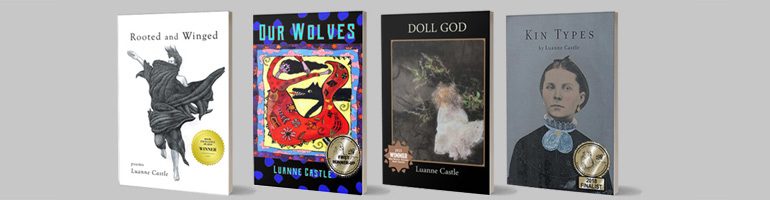
I am guessing that Meadowlark Songs: A Motherline Legacy feels like one of the children of the author Joy Neal Kidney. Writers often feel that way about their creations. If so, I am hoping I can call myself one of the book’s many grandparents. My chapbook Kin Types, a collection of poems and flash prose, reinvented the lives of my female ancestors. Kidney mentions my book as one of her favorite resources, which tickles me more than I can tell you—because the genre seems fresh and new and so dear to my heart. And now I see it reimagined by Kidney who has created a gorgeous, well-researched, and organized delve into the lives of the women of her family who came before her.

Meadowlark Songs is primarily a poetry collection illustrated with family photographs and supplemented with informative prose. Each “mother” before Kidney has her own section, as part of the “motherline.” The cover design by Nelly Murariu beautifully captures the feel of the book.

The ancestors in the book began their lives on the east coast of the United States, but gradually moved farther inland, as far as Nebraska but the family put down deep roots in Iowa. The women’s lives come to life in Kidney’s poetry. These women are strong, resolute, and inspired by their Christian faith.

Family stories and legends are also captured in the poetry. For instance, in “Startled by Santee Sioux,” we read how Laura Goff, Kidney’s great grandmother, was a Nebraska pioneer when a couple of Santee Sioux men walked into her home. She negotiated a trade for dress goods by bartering her chickens to the men. The book is full of fascinating anecdotes such as this.

Probably my favorite part of the book is the last section, about the author herself, “The Memory Keeper,”—and her passion for creating a lasting storyline of her family through this book, as well as her previous books. We read about what formative experiences she had, and how her faith has been her guidance through it all.

I’ve cried and laughed reading Kidney’s other books, but I felt even closer to this book as she connected with the women who made her who she is today. Such a powerful experience for any woman.

You can connect with the author here: https://joynealkidney.com/

Click on the book image above to purchase through Amazon.

Joy Neal Kidney is the oldest granddaughter of Leora Wilson and author of four “Leora books.” She lives in central Iowa with her husband, Guy (an Air Force Veteran of the Vietnam War and retired Air Traffic Controller). Their son and his wife live out-of-state with a daughter named Kate.

A graduate of the University of Northern Iowa, Joy has lived with fibromyalgia for two dozen years, giving her plenty of home-bound days to write blog posts and books.


34 Comments

Filed under #amreading, #writingcommunity, Book Review, Family history, History, Memoir, Nonfiction, Poetry, Poetry book, Poetry Collection

Review of Robert Okaji’s Our Loveliest Bruises

Robert Okaji’s new poetry collection Our Loveliest Bruises can be considered his greatest work, truly a magnum opus. The spare language belies the beautiful compelling imagery as it probes the depths of emotion.

Some of the poems have been published in various literary journals and anthologies, but the book is a tightly woven project of loss and grief. Okaji uses the Japanese bamboo flute shakuhachi as a metaphor for these emotions. Throughout the book, in various poems, the poet breathes his life force into the holes of the instrument, producing notes which are akin to his poems. The holes represent the absences of loss. Eventually, in “Self-Portrait as Shakuhachi,” the poet becomes the flute: “How easy to let air / slide through oneself.”

The poet’s mother’s ghost is a recurring character. She does not communicate, but there is a sense of competition between the two. The imagery in these poems is rough and realistic. There is a sense of profound regret, but also of love. From “Ghost, with a Line from Porchia”:

Your battle with language, with silence, invoked.
I stretch the word and weave this dirge for you.

Some poems address a “you,” and I believe in many cases this person is his mother’s ghost. But it could mean the poet himself. There are instances in some poems that point out the brief nature of life itself or are a merging of mother and self and perhaps even a universal human message. “Each day lived is one less to live,” Okaji writes in “Mother’s Day.”

Robert Okaji has written an extraordinary account of the “loveliest bruises” we experience from the love we have for loved ones, of self, of life itself.

***

Bob Okaji blogs at O at the Edges. If you haven’t read his blog you might not realize that Bob was diagnosed with late stage metastatic lung cancer. He has posted a couple of times on his blog about his illness. He continues to do well, although he doesn’t always feel that great.

Bob is the person who first introduced me to the Tupelo 30/30 poem challenge. I think that challenge really motivated me into writing more and more poetry.

Click the link to Bob’s blog so you can send him some good vibes. And then, if you can, click the link to his gorgeous book.

Our Loveliest Bruises

17 Comments

Filed under #amreading, #bloggingcommunity, #poetrycommunity, #poetswithcats, Book Review, Poetry, Poetry book, Poetry Collection

Exploring the Ekphrastic Poetry of Hedy Habra

I love the work of Hedy Habra, a fabulous ekphrastic poet and painter. She is originally from Egypt and Lebanon and ended up where I grew up–in Kalamazoo, Michigan–, but I think of Hedy as a citizen of the world. She knows several languages perfectly, including but probably not limited to French, Spanish, English, and Arabic. You can find her bio at the end of this post.

Before I move into her poetry, I’d like to share a couple of her gorgeous paintings: “Dancing Egret” and “Woman & Leopard.”

Hedy and I were in the same MFA program at Western Michigan University, but we don’t think we were ever in the same classes. Part of that is because I didn’t strictly focus on poetry as my MFA coursework was divided between fiction and poetry. But the fun thing is that at the end of the program, we gave our final MFA reading together.

You couldn’t ask for a better example of ekphrastic poetry than Hedy’s new book, Or Did You Ever See the Other Side. It became apparent to me in reading this collection that Hedy and I have something else in common: an obsession with the art of Remedios Varo!

I was blessed to offer a blurb for the back of the book. Here is what I wrote:

In this extraordinary new collection, Hedy Habra weaves a marvelous life tapestry through dreams and the language of memory— “the right words thrown / pell-mell in the folds of memory.” These ekphrastic poems are not content to interpret painting and music but transcend the border between poet and art. Habra explores each piece from multiple angles to discover its locked heart: “See how colors arise from heartbeats.” Then she searches for a key, but there is never only one key. Each poem asks a question that invites the reader to see another perspective, then another. This collection is kaleidoscopic, stunning, and wrings a haunting beauty from every brushstroke and musical note. Or Did You Ever See The Other Side? “soars without wings,” taking the reader on a journey into its breathtaking dreamscape.

You can pick up a copy of the book on Amazon: https://www.amazon.com/Did-You-Ever-Other-Side/dp/1950413691

I asked Hedy to write about her work for this blog post:

Trajectory and influences.

I have a passion for art and I’m a visual artist, so art has always been an inherent part of my writing whether it is criticism, fiction, or poetry. I love prose poems but enjoy experimenting with forms, such as haikus, anaphoric poems, abecedarians, found sonnets, haibuns, pantoums, and most recently ghazals. The restrictions of a form call for concision and enable me to discard redundancies when I struggle with drafts.

The stories in Flying Carpets and the poems in Tea in Heliopolis and The Taste of the Earth, focus on my countries of origin, Egypt and Lebanon, weaving linguistic, historical, and mythical components with personal memories. I have also lived in Greece and Belgium and developed a sense of belonging encompassing cultural influences.

Even my ‘memoirs in verse’ are instilled with art. My mother was an artist and I grew up surrounded by her artworks. As a child, I imagined stories about the characters in her paintings and lived vicariously within this alternate world. Oftentimes, some elements from a painting would trigger deep emotions and revive memories or lead me to recreate imaginary worlds. For the past fifteen years, I studied Chinese Ink brush painting on rice paper, which enabled me to paint the covers of my poetry collections.

My first ekphrastic poetry collection, Under Brushstrokes (Press 53 2015) was inspired by artists of different genders, styles, and periods, whereas my most recent ekphrastic collection, Or Did You Ever See The Other Side? (Press 53 2023) is mainly inspired by contemporary and surrealist women artists. Spanish-Mexican surrealist, Remedios Varo is a primary influence, but I draw inspiration from other surrealists, such as Juanita Guccione, Leonor Fini, Deborah Tanning, and Leonora Carrington. I love surrealism because of its connection with the world of dreams and the unconscious.

When I write ekphrastic poetry, I don’t aim at depicting a work of art, but rather my response to it. I love to engage in a dialogue with the artwork itself, with one of the characters in the paintings, or at times with the artist. Often verbal images provide a sequel to the scene portrayed or another version of the original, adding a new dynamic life to the artwork. Even when verbal images coincide synchronously with the artwork, words stand on their own, creating a new world. As a result, after having written or read an ekphrastic poem, we can’t look back at the source of inspiration in the same way because the artwork will retain traces of the verbal images projected onto it in an inter-artistic dialogue.

 Here are two poems from Or Did You Ever See the Other Side?

Or Can’t You See How We’re Weaving Ourselves Tight?

After Three Women and Three Owls by Juanita Guccione


Didn’t you think you’d soar high up when you wore a miniskirt?

I lowered my hemline, surrendering to ghost owls’ hoots

Following the rhythm of my elder’s everlasting refrains

When she visited the Louvre she wanted to wear her skin bare


I lowered my hemline, surrendering to ghost owls’ hoots

Wore a key chain around my wrist that didn’t open any doors

When she visited the Louvre she wanted to wear her skin bare

Chest open to the drifts of wind as she’d march with Delacroix’s banner


Wore a key chain around my wrist that didn’t open any doors

Afraid to face the black sun of Melancholy sung by Gerard de Nerval

Chest open to the drifts of wind as she’d march with Delacroix’s banner

She enters the triple dance, a sarong loosely wrapped around her hips


Afraid to face the black sun of Melancholy sung by Gerard de Nerval

I conjure my younger self’s steps eager to unlock the darkness

She enters the triple dance, a sarong loosely wrapped around her hips

The three of us dive into the emerald waters under the blackened sun


I conjure my younger self’s steps eager to unlock the darkness

You didn’t soar high up still unable to satisfy your hunger

The three of us dive into the emerald waters under the blackened sun

United at last in our quest for meaning, weaving ourselves tight


First published by SLANT

From Or Did You Ever See The Other Side? (Press 53 2023)

The inspiring art for this poem:


Note for the following poem: WordPress does not allow the longer lines to be all on one line, but the idea is each line gets longer than the one before.

Or How Do You Keep Track of All the Keys You Once Owned?

After Chiharu Shiota’s The Locked Room


keys to unlock one’s buried memories

keys to the family cottage you had to sell

keys that once opened different-sized locks

keys that had to be changed after an effraction

keys that yearn for the doors they used to open

keys thrown into a deep well, still oozing blood

keys to the palaces King Farouk owned in Egypt

keys to learning how to deal with oneself and others

keys to the meaning of feelings that you kept losing

keys to the safes holding papers that ruled your lives

keys kept in a jewelry box that must have mattered once

keys, lost, forgotten or treasured as a possible come back

keys to the wrought-iron patio gate half-covered with jasmine

keys that opened the car door that led you straight to the beach

keys to dream’s horned and ivory gates that keep getting mixed up

keys meant to reach the heart of a man before he’d change the locks

keys you hold in your palm and run your fingers over and over again

keys to an old friend’s house who once relied upon you to water her plants

keys passed on from generation to generation to reclaim the ancestral home

keys that you had to return to the hotel where you wished you’d spend a lifetime

keys to all the cars you’ve ever owned and led you through long-forgotten crossroads

keys to the office you left carrying a cardboard box filled with what seemed important

keys to the wooden-carved secretary your mother handed down to you that held no secret to her

keys to the homes you kept leaving, from country to country, from one neighborhood to the next


First published by MockingHeart Review

From Or Did You Ever See The Other Side? (Press 53 2023)

This is the inspiring art:

Bio

Hedy Habra’s fourth poetry collection, Or Did You Ever See The Other Side? (Press 53 2023), won the 2024 International Poetry Book Awards and was a finalist for the Eric Hoffer Award; The Taste of the Earth won the Silver Nautilus Book Award and Honorable Mention for the Eric Hoffer Award; Tea in Heliopolis won the USA Best Poetry Book Award and Under Brushstrokes was a finalist for the International Book Award. Her story collection, Flying Carpets, won the Arab American Book Award’s Honorable Mention. Her book of criticism, Mundos alternos y artísticos en Vargas Llosa, focuses on the visual aspects of the Peruvian Nobel Laureate’s narrative. She holds a BS in Pharmacy from the French St Joseph University. Habra earned an MA in English, an MFA, and an MA and PhD in Spanish from Western Michigan University where she taught for over three decades. She is a twenty-two-time nominee for the Pushcart Prize and Best of the Net. https://www.hedyhabra.com/

30 Comments

Filed under #amreading, #poetrycommunity, #writingcommunity, Art and Music, Book Review, Ekphrastic, Poetry, Poetry book, Poetry Collection

Simple Pleasures: My Review of the New Elizabeth Gauffreau Poetry Collection


What a pleasure to open Elizabeth Gauffreau’s new book, Simple Pleasures: Haiku from the Place Just Right. Every page features a beautiful nature photo with an accompanying haiku. Combining poem with image creates a new art genre, one where each component gives more meaning to the other.

The first page displays a peaceful dirt road surrounded by evergreens. The poet invites the reader to accompany her on this trip through the natural beauty of the northeastern United States:

dirt road adventure

washboard, slapping branches, ruts

GPS turned off

I love that the GPS is turned off so that instead of following technology, we—poet and reader—are opening ourselves to the adventure.

Gauffreau directs us to majestic vistas, but she also points out the small or almost unnoticeable, such as a dappled woods image where you must look carefully or be directed by the poem:

new-growth pines, maples

farmer’s forgotten stone wall

a forest reclaimed

I learned things from the poems, which should not be surprising as Gauffreau seems so at home in the region.

stand of white birches

roots entwined canopy shared

indigenous trees

I hadn’t thought of birches as being Indigenous, so that was a bit of defamiliarizing the familiar, I suppose, as it made me take note. And it reminded me of the Robert Frost (another New England poet) poem, “Birches.”

The book is organized by the seasons of the year and makes a full cycle of the beauty of the area. Simple Pleasures: Haiku from the Place Just Right makes a gorgeous addition to my collection of Elizabeth Gauffreau books, Telling Sonny and Grief Songs. Heads up, though, I would recommend purchasing the paperback version because you will want to flip open the book often.

###

 Author Biography

Elizabeth Gauffreau writes fiction and poetry with a strong connection to family and place. Her work has been widely published in literary magazines, as well as several themed anthologies. Her short story “Henrietta’s Saving Grace” was awarded the 2022 Ben Nyberg  prize for fiction by Choeofpleirn Press.

She has published a novel, Telling Sonny, and a collection of photopoetry, Grief Songs: Poems of Love & Remembrance. She is currently working on a novel, The Weight of Snow and Regret, based on the closing of the last poor farm in Vermont in 1968.

Liz’s professional background is in nontraditional higher education, including academic advising, classroom and online teaching, curriculum development, and program administration. She received the Granite State College Distinguished Faculty Award for Excellence in Teaching in 2018. Liz lives in Nottingham, New Hampshire with her husband. Find her online at https://lizgauffreau.com.

Book2Read Purchase Link: https://books2read.com/SimplePleasures

Print & Fixed EPUB for tablets and Kindle Fire

BookFunnel PDF Purchase Link: https://buy.bookfunnel.com/gef1ili6qd

For any device.

Blog Tour Host Links: https://lizgauffreau.com/simple-pleasures-blog-tour-links/

31 Comments

Filed under #bloggingcommunity, #poetrycommunity, #thesealeychallenge, Book Review, Poetry, Poetry book, Poetry Collection, Syllabic Poetry

Thank you to Dawn Pisturino for Her Review of Poetry Treasures 4

photo of stream during daytime
Photo by Michael Block on Pexels.com

Leave a comment

Filed under #bloggingcommunity, #poetrycommunity, Book Review, Poetry book, Poetry Collection, Writing

Gorgeous Poetry about Being Human on an Endangered Planet

Looking for a new poetry book? Look no further than this beautiful collection by Candice M. Kelsey within this stunning cover.

The chapbook was published in March 2024 by the publisher, boats against the current. The cover art is by Matt Kish.

Find it at Amazon here:

https://shorturl.at/BGPU3

My Review of Postcards from the Masthead

Reading the poems in Candice M. Kelsey’s new chapbook, Postcards from the Masthead, feels a bit like finding your stride on a boat deck, as you learn to move with the waves, enjoying your place upon a vast body of water. The reader must navigate between the life of our planet and the life of the body which “dresses itself in courage / to face the morning / bastard glow.” There is a sense of connection between the larger, public world and the individual. These poems are fraught with angst over the dangers of climate change. At the same time, they investigate corporeal dangers and desires. The striking imagery and perspectives unique to Kelsey are a warning cry against our endangered lives. 

Here is a sample poem:

Meditation on the Pinky Toe, Port Side

Broken again littlest
one throbbing pink
loud the big toe shifts
like my father in a chair
Sunday sessions
mandatory for the EDU
a daughter in treatment
circle of silent frescoes
and he's unhappy as
the third mate's cat

Blue who bounds over
white cedar bulwarks
where I lean with today’s
galley of oranges
halved she capsizes
a feline Michelangelo
painting the Sistine
or God dabs my toe wet
with paint-drop nose

she too knows injury
touches the gnarled-speck
perimeter of my foot
now a flesh canvas
cathedral ceiling scene
where I am broken
by a hundred Adams
awful fools busy naming
the garden of my body—

we catch ourselves
on the world’s harpoons
such sharp edges protrude
to hobble us with small
private dislocations and yet
like this little piggy
some of us make it home
somehow I make it
all the goddamn way

4 Comments

Filed under #amreading, Book Review, Poetry, Poetry book, Poetry Collection, Writing

Review of Britney Spears’ Memoir

The other day I finished reading Britney Spears’ memoir, The Woman in Me. It was my daughter’s book, and she read it first. I have a few thoughts, but first thought I would share the NY Times review. It does a great job of describing the meat of the book–what Britney says she has gone through with her family, career, love life, and mental health. It doesn’t mention the quality of the writing. Leave that to me ;).

If you find a paywall in the following article and would like to read , email me at luanne[dot]castle[at]gmail[dot]com.

***

https://www.nytimes.com/2023/10/19/books/review/britney-spears-woman-in-me.htmlhttps://www.nytimes.com/2023/10/19/books/review/britney-spears-woman-in-me.htmlhttps://www.nytimes.com/2023/10/19/books/review/britney-spears-woman-in-me.html

***

The Woman in Me was actually written by ghostwriter Sam Lansky, a music journalist, along with Britney. So I do think that what is most important about the book is exactly what the NY Times reviewer wrote about: Britney’s life as she sees it.

But let me mention why I was interested in reading about Britney. I’m not a big fan of pop music, especially anything post 70s, but I did like “Toxic” and a few other songs; however, I wasn’t a fan per se. I’ve followed her career because my daughter, who is 5 or 6 years younger than Britney, was a huge fan. Such a big fan that when my daughter, a dancer and singer from a young age, was in callbacks for a regional theatre production (that was local to us) at age fifteen, she ran out in the middle in order to make it in time to a Britney concert.

Since she meant so much to my daughter, I kept up with Britney’s outer world. Britney started her career, truly, with her stint on the Mickey Mouse Club where she met other kids who went on to become famous, such as Justin Timberlake, Christina Aguilera, and Ryan Gosling. My daughter who was very talented at dance from a young age begged me repeatedly to take her to Los Angeles to audition for . . . everything. We lived a couple of hours away, so it wouldn’t have been impossible to do this. But I’ve always thought that we have clear evidence that the life of a child performer is dangerous. It tends to screw up their adult lives. And I think in many cases–and this is true in Britney’s case–it corrupts the adults who are supposed to be safeguarding the child. I (and my daughter’s dad was in complete agreement) would not let her audition for anything out of our local area until she was an adult. By then she was off to college, studying musical theatre.

Reading this memoir confirmed for me that I had made the right decision for my daughter because what she found out as an adult is that the performing world is difficult even for adults. We see Britney now as a vulnerable, mentally ill woman, but what she has gone through has undoubtedly been horrific for her and her mental health. I still believe I was right that the #freeBritney movement was correct. Her imprisonment by her father should have led to his imprisonment in a U.S. prison, in my opinion. I wish there was better mental health care for Britney Spears and the millions of other sufferers, but unfortunately our mental health system is not good. And someone as rich and famous as Britney was a real target–especially by those close to her.

I promised I would address the quality of the writing of the book. Let me put it this way. Last night I asked my daughter what she thought about the book. The first thing she said was that she read it thinking what I, a writer, thought about the writing of it. “It seemed disjointed and choppy. Did you think so?” Yup, I sure did. Events were out of sequence for no good reason. For a ghostwritten book, it could have been so much better. I have no idea how hard it was for Sam Lansky to work with Britney or how much editing she did of the book herself, but the quality of the writing is subpar. Even so, I couldn’t put the book down because I wanted to hear about Britney’s life from her perspective, and that was worth it to me.

39 Comments

Filed under Book Review, Memoir, Writing