Tag Archives: family history

Genealogy Sort Of in Scrap

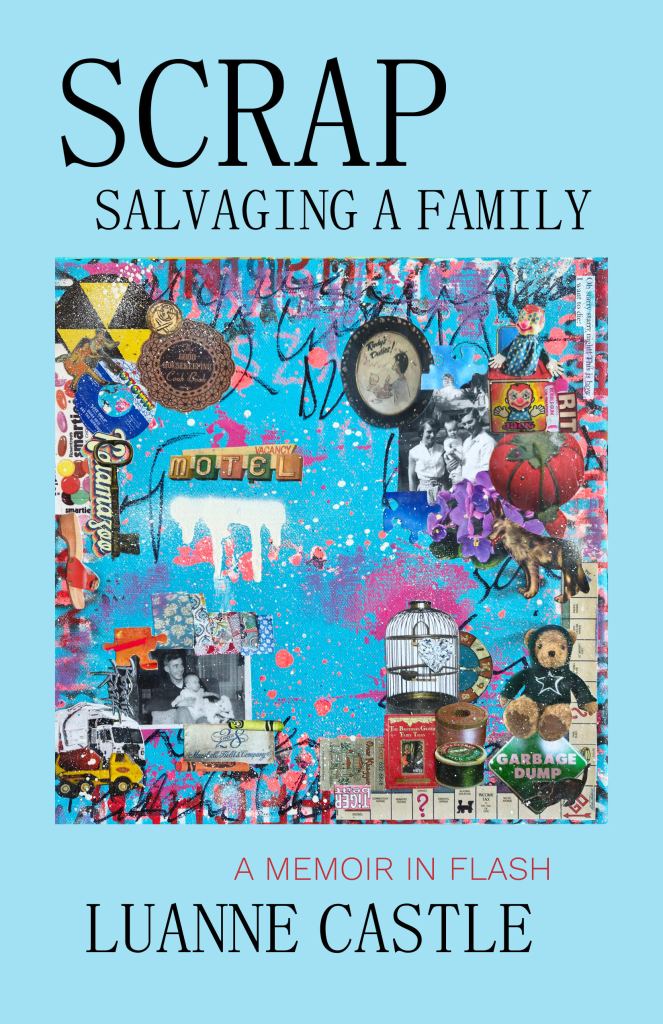
My friend Amy at Brotman Blog who writes engaging and well-researched historical novels has written a fabulous review of Scrap: Salvaging a Family. While you’re over at her blog, check out her in-depth, thorough, and fascinating blog posts constructed through her genealogical research.

Here is an excerpt of Amy’s review:

Have you ever picked up a book, not knowing what to expect, and become so wrapped up in the story and the writing that you just don’t want to put it down? That was my experience  reading Luanne Castle’s newest book Scrap: Salvaging a Family. From the first page until I finished it, I was spellbound.

The link can be found here:

AMY’S BROTMAN BLOG

Amy and I met many years ago on WordPress through her Brotman Blog and my family history blog, The Family Kalamazoo. At the time I began that blog, I had already been doing a lot of genealogical research on my mother’s family. It was fun because my grandfather had given me a large collection of old family photos and also because Dutch records are possibly the easiest ones in the world to research.

It was not at all so easy to research my father’s family. I had no information about my father’s father until Dad finally told me where I could find his name and profession (this is all in Scrap and a lot more interesting haha). Then I could really start to research in earnest. I describe what I know in my memoir. I ended up taking a DNA test to try to match family of my father’s father. Read the book 😉 to see how that went.

My paternal grandfather is well represented in Scrap as a thread of the book really is my “search” for the man. Before he passed away, my father’s twin, my Uncle Frank, gave me a photo of their father that I had never known existed. This image has been colorized by an artist and shows me why my hair began to turn gray when I was 26 . . . .

Tour Schedule:

March 21: Joy Neal Kidney (review)

March 23: Liz Gauffreau, (review)

March 24: Marie Ann Bailey, (review)

March 25: John W. Howell, (excerpt)

March 30: Miriam Hurdle, (companion story)

March 31: Review Tales (review)

April 2: the bookworm (review)

April 9: Ashley’s Books, Cozy Home Delight (review)

April 13: What’s That Book About (guest post)

April 15: Tabi Thoughts(review)

April 23: Lavender Orchids (review)

April 27: The Reading Bud (review)

May 4: Chelsea’s Books (review)

May 4: Smorgasbord (excerpt)

May 6: Brotman Blog (review)

May 7: The Reading Bud (interview)

May 14: True Book Addict (guest post)

May 19: True Book Addict (review)

May 21: The Book Connection (review)

May 26: Author Anthony Avina (review)

May 28: Author Anthony Avina (guest post)

Follow the tour with the hashtag #ScrapSalvagingFamily

11 Comments

Filed under #ScrapSalvagingFamily, Book Review, coming of age, ELJ Editions, Family, Family history, flash memoir, Flash Nonfiction, flash nonfiction, hybrid memoir, Memoir, Nonfiction, SCRAP: SALVAGING A FAMILY, Scrap:Salvaging a Family

SCRAP available at publisher as EBOOK!

Last night the gardener and I got back from visiting my mother in Michigan. As soon as I pull it together and maybe get a little sleep, I’ll letcha all know how it went.

Good news for some, especially if you live outside the United States! SCRAP is now available as an ebook on the publisher’s website.

SCRAP EBOOK


Today, Scrap: Salvaging a Family is featured on Sally Cronin’s Smorgasbord! A huge thank you to Sally!

You can find it here:

SCRAP AT SMORGASBORD

I came home with some more old photos from my mother. Here are pix I found of the cottage that is found in SCRAP. I wrote about it here:

The Cottage in SCRAP

The grass on the ground shows me that this was taken years after we first moved to the lake for the summers. I think this was when the cottage was finally demolished.


Tour Schedule:

March 21: Joy Neal Kidney (review)

March 23: Liz Gauffreau, (review)

March 24: Marie Ann Bailey, (review)

March 25: John W. Howell, (excerpt)

March 30: Miriam Hurdle, (companion story)

March 31: Review Tales (review)

April 2: the bookworm (review)

April 9: Ashley’s Books, Cozy Home Delight (review)

April 13: What’s That Book About (guest post)

April 15: Tabi Thoughts(review)

April 23: Lavender Orchids (review)

April 27: The Reading Bud (review)

May 4: Chelsea’s Books (review)

May 4: Smorgasbord (excerpt)

May 6: Brotman Blog (review)

May 7: The Reading Bud (interview)

May 14: True Book Addict (guest post)

May 19: True Book Addict (review)

May 21: The Book Connection (review)

Follow the tour with the hashtag #ScrapSalvagingFamily

11 Comments

Filed under #ScrapSalvagingFamily, Book Review, ELJ Editions, Family, Family history, flash memoir, flash nonfiction, hybrid memoir, Memoir, Nonfiction, Scrap:Salvaging a Family

The Biggest Historical Event of My Childhood

Lavender Orchids has published a review on Instagram. Here is the start of it:

###

A copy of the newspaper we received at our home about President Kennedy’s assassination


President Kennedy’s assassination was the biggest news of my childhood and happened when I was in third grade. It’s the one event that touched the lives of every child. In my case, we got let out of school early, but didn’t know why. I remember waiting outside for the school bus, wondering what in the world was going on.

On the bus, we got the scoop from the oldest boys on the bus, the older twin brothers of my friend Vivian. They had a transistor radio and were listening to the news. I could see from their excited faces that they loved being the ones to share the awful news with our tender little minds and hearts. After all, they were in SIXTH grade.

At one point in Scrap: Salvaging a Family, I tell the story of what happened when I got home that day, as well as what happened to me on the day of President Kennedy’s funeral.

Tour Schedule:

March 21: Joy Neal Kidney (review)

March 23: Liz Gauffreau, (review)

March 24: Marie Ann Bailey, (review)

March 25: John W. Howell, (excerpt)

March 30: Miriam Hurdle, (companion story)

March 31: Review Tales (review)

April 2: the bookworm (review)

April 9: Ashley’s Books, Cozy Home Delight (review)

April 13: What’s That Book About (guest post)

April 15: Tabi Thoughts(review)

April 23: Lavender Orchids (review)–on Instagram

April ?: The Reading Bud (review)

May 4: Chelsea’s Books (review)

May 4: Smorgasbord (excerpt)

May 6: Brotman Blog (review)

May 7: The Reading Bud (interview)

May 14: True Book Addict (guest post)

May 19: True Book Addict (review)

May 21: The Book Connection (review)

Follow the tour with the hashtag #ScrapSalvagingFamily

44 Comments

Filed under #ScrapSalvagingFamily, Book Review, coming of age, ELJ Editions, Family, Family history, flash memoir, Flash Nonfiction, History, hybrid memoir, Memoir, Nonfiction, SCRAP: SALVAGING A FAMILY

The Little House in Scrap

The website Women Writers, Women’s Books has featured an article I wrote about the process of writing Scrap: Salvaging a Family. Here is a quote:

At least two, if not three, versions of this traditional chapter memoir were completed. By me apparently. But it didn’t feel as if I wrote them. Because I felt strongly that I wanted the distillation of image and experience. Creating chapters meant writing filler language. That felt inauthentic to me.

The Process of Writing SCRAP

###


In Scrap I wrote about the playhouse my father built for me. In 2020,  Twist in Time magazine published my story, “The Changing House,” about the little house. Their website is down, so I suspect the magazine is defunct. The first half of the story is about building the playhouse, which is very similar to the story in Scrap. But the second half of the story follows the little house on its path as long as I knew it.

###

The kids couldn’t wait to play inside the playhouse. Near the ceiling, the rafters formed long wooden pockets where we stored secret agent supplies like decoder rings and invisibility raincoats and private notes listing the boys we liked. Eventually, those things became irretrievable as the wasps set up nests.

We discovered that during the summer, the little house was too hot. We’d haul the child-sized table and chairs out onto the grass. In the winter, the air was as frigid inside as it was outside, but the snow and ice couldn’t get in, so we’d sit in our snow pants and stocking caps and play Candyland. Our fingers froze as we pushed our tokens, but then we’d pull our hands back up into the sleeves of our jackets until it was our turn again.

Eventually, we lost interest in the playhouse and started walking up to the plaza to buy candy and try on lipsticks. The house still stood at the back lot line, an ignored remnant of my childhood, until one fall when we discovered a new use for the little building.

We held sleepovers on Friday nights in the house, away from Mom’s prying eyes. One Friday, my next-door neighbor invited her brother’s friends. Before the boys showed up, we swigged the Grand Marnier I’d pinched from Dad’s bar in the basement. For a few minutes, my neighbor’s brother and I made out on top of my sleeping bag, but the boys didn’t stay long. After they mumbled their goodbyes, we practiced making each other pass out by squeezing our diaphragms. The tender skin on my upper lip burned from the neighbor boy’s stubble. That was one of the last nights we spent in the playhouse.

When we moved away from my favorite neighborhood, Dad strapped the house onto a flatbed truck and hauled it to our newly-purchased rundown summer cottage. My mother christened my playhouse, “The Changing House,” bestowing on it a new identity. Inside we stored stretched out bathing suits, Styrofoam floaties, and boat cushions. Daddy long legs set up residence in there, too, wrapping everything in webs so that when we wanted to use something, we had to make sure our hands were dry enough to wipe them clean or the silk would adhere to our skin until we ran, screaming and shaking our hands, off the dock and plunged into the lake.

One night when I came in from a moonlight swim, I caught my twelve-year-old brother in the little house making out with the fourteen-year-old neighbor girl. Apparently, she didn’t mind that he looked nine, while she could be mistaken for sixteen. My brother grinned when I opened the door on them.

Years later, my father moved the little house—now entirely brindle brown, the crescent moon long ago painted over–across the street, into the woods, where he used it as a storage shed. My brother built my parents a lovely home on the site of the old cottage. After my father’s death, my mother sold the lake property. Last time I drove by, the little house was gone. I imagine the new owners carted it to the junkyard where somebody scavenged it for usable parts.

Tour Schedule:

March 21: Joy Neal Kidney (review)

March 23: Liz Gauffreau, (review)

March 24: Marie Ann Bailey, (review)

March 25: John W. Howell, (excerpt)

March 30: Miriam Hurdle, (companion story)

March 31: Review Tales (review)

April 2: the bookworm (review)

April 9: Ashley’s Books, Cozy Home Delight (review)

April 13: What’s That Book About (guest post)

April 15: Tabi Thoughts(review)

April 23: Lavender Orchids (review)

April 27: The Reading Bud (review)

May 4: Chelsea’s Books (review)

May 4: Smorgasbord (excerpt)

May 6: Brotman Blog (review)

May 7: The Reading Bud (interview)

May 14: True Book Addict (guest post)

May 19: True Book Addict (review)

May 21: The Book Connection (review)

Follow the tour with the hashtag #ScrapSalvagingFamily

28 Comments

Filed under #ScrapSalvagingFamily, Book Review, coming of age, ELJ Editions, Family, Family history, flash memoir, Flash Nonfiction, hybrid memoir, Memoir, Nonfiction, SCRAP: SALVAGING A FAMILY, Scrap:Salvaging a Family

New Book Review and My Little Cat Toby

There is a lovely new review by Tabi on “Tabi Thoughts.” Here is a quote:

Scrap is a story of forgiveness and making peace with the past. It will resonate with readers who appreciate introspective writing, stories about healing and complicated family relationships.

You can read it here:

Tabi thoughts about SCRAP

One of the characters of Scrap is my little cat Toby. He was an all black cat, and the story is bittersweet, especially bitter. It also is one of the memories that I choose to “interrogate” in the book. Because my cat Meesker was very reminiscent of Toby in looks and personality, and I just lost Meesker when he passed away in the bathroom while I was out of town and the pet sitter was here, it’s an old wound rubbed a little raw. Here is a pic of Toby.


Tour Schedule:

March 21: Joy Neal Kidney (review)

March 23: Liz Gauffreau, (review)

March 24: Marie Ann Bailey, (review)

March 25: John W. Howell, (excerpt)

March 30: Miriam Hurdle, (companion story)

March 31: Review Tales (review)

April 2: the bookworm (review)

April 9: Ashley’s Books, Cozy Home Delight (review)

April 13: What’s That Book About (guest post)

April 15: Tabi Thoughts(review)

April 23: Lavender Orchids (review)

April 27: The Reading Bud (review)

May 4: Chelsea’s Books (review)

May 4: Smorgasbord (excerpt)

May 6: Brotman Blog (review)

May 7: The Reading Bud (interview)

May 14: True Book Addict (guest post)

May 19: True Book Addict (review)

May 21: The Book Connection (review)

Follow the tour with the hashtag #ScrapSalvagingFamily

10 Comments

Filed under #ScrapSalvagingFamily, Book Review, Cats and Other Animals, ELJ Editions, Family, Family history, flash memoir, Flash Nonfiction, hybrid memoir, Memoir, SCRAP: SALVAGING A FAMILY, Scrap:Salvaging a Family

Are Those Fairy Tale Monsters in SCRAP: SALVAGING A FAMILY?

I wrote a guest post, “From Grimm to Golden Books: Writing Myself Out of the Fairy Tale,” for What’s That Book About–about the fairy tale influence on my new memoir Scrap: Salvaging a Family. 

You can read it here:

From Grimm to Golden Books


Illustration by Walter Crane for “The Almond Tree” (or “The Juniper Tree”)

I would love it if you could leave even a 2 or 3+sentence review of Scrap at Amazon and/or Goodreads if you give it a read!


Tour Schedule:

March 21: Joy Neal Kidney (review)

March 23: Liz Gauffreau, (review)

March 24: Marie Ann Bailey, (review)

March 25: John W. Howell, (excerpt)

March 30: Miriam Hurdle, (companion story)

March 31: Review Tales (review)

April 2: the bookworm (review)

April 9: Ashley’s Books, Cozy Home Delight (review)

April 13: What’s That Book About (guest post)

April 15: Tabi’s Thoughts (review)

April 23: Lavender Orchids (review)

April 27: The Reading Bud (review)

May 4: Chelsea’s Books (review)

May 4: Smorgasbord (excerpt)

May 6: Brotman Blog (review)

May 7: The Reading Bud (interview)

May 14: True Book Addict (guest post)

May 19: True Book Addict (review)

May 21: The Book Connection (review)

Follow the tour with the hashtag #ScrapSalvagingFamily

Leave a comment

Filed under #ScrapSalvagingFamily, Book Review, ELJ Editions, Family, Family history, flash memoir, Flash Nonfiction, flash nonfiction, hybrid memoir, Memoir, SCRAP: SALVAGING A FAMILY, Scrap:Salvaging a Family

The “Cottage” in Scrap

This week, Ashley at Cozy Home Delight reviewed Scrap: Salvaging a Family. 

[The book] brings up that complicated space where grief, resentment, anger, love, and even forgiveness all exist at the same time. The book does not try to simplify those feelings or resolve them neatly. It allows them to exist together, which felt very honest.

I thought I’d share a photo related to my memoir. I write about the cottage my father bought for us to reburbish. This is what it looked like near the beginning, although you really can’t see some of the details I describe in the book. But it gives you what I saw when we first pulled up outside it.

This cottage came with a dirt floor which had been applied over the old linoleum. And yet somehow my father supposedly found a pair of pristine white ice skates with red pompoms in my size in the dirt crawl space (Michigan cellar) underneath.

Tour Schedule:

March 21: Joy Neal Kidney (review)

March 23: Liz Gauffreau, (review)

March 24: Marie Ann Bailey, (review)

March 25: John W. Howell, (excerpt)

March 30: Miriam Hurdle, (companion story)

March 31: Review Tales (review)

April 2: the bookworm (review)

April 9: Ashley’s Books, Cozy Home Delight (review)

April 13: What’s That Book About (guest post)

April 15: Tabi’s Thoughts (review)

April 23: Lavender Orchids (review)

April 27: The Reading Bud (review)

May 4: Chelsea’s Books (review)

Mary 4: Smorgasbord (excerpt)

May 7: The Reading Bud (interview)

May 14: True Book Addict (guest post)

May 19: True Book Addict (review)

May 21: The Book Connection (review)

Follow the tour with the hashtag #ScrapSalvagingFamily

11 Comments

Filed under #ScrapSalvagingFamily, Book Review, ELJ Editions, Family, Family history, Flash Nonfiction, flash nonfiction, hybrid memoir, Memoir, Nonfiction, SCRAP: SALVAGING A FAMILY, Scrap:Salvaging a Family, Writing

A Gorgeous Collection Combining Genres of Poetry, Genealogy, and History

I am guessing that Meadowlark Songs: A Motherline Legacy feels like one of the children of the author Joy Neal Kidney. Writers often feel that way about their creations. If so, I am hoping I can call myself one of the book’s many grandparents. My chapbook Kin Types, a collection of poems and flash prose, reinvented the lives of my female ancestors. Kidney mentions my book as one of her favorite resources, which tickles me more than I can tell you—because the genre seems fresh and new and so dear to my heart. And now I see it reimagined by Kidney who has created a gorgeous, well-researched, and organized delve into the lives of the women of her family who came before her.

Meadowlark Songs is primarily a poetry collection illustrated with family photographs and supplemented with informative prose. Each “mother” before Kidney has her own section, as part of the “motherline.” The cover design by Nelly Murariu beautifully captures the feel of the book.

The ancestors in the book began their lives on the east coast of the United States, but gradually moved farther inland, as far as Nebraska but the family put down deep roots in Iowa. The women’s lives come to life in Kidney’s poetry. These women are strong, resolute, and inspired by their Christian faith.

Family stories and legends are also captured in the poetry. For instance, in “Startled by Santee Sioux,” we read how Laura Goff, Kidney’s great grandmother, was a Nebraska pioneer when a couple of Santee Sioux men walked into her home. She negotiated a trade for dress goods by bartering her chickens to the men. The book is full of fascinating anecdotes such as this.

Probably my favorite part of the book is the last section, about the author herself, “The Memory Keeper,”—and her passion for creating a lasting storyline of her family through this book, as well as her previous books. We read about what formative experiences she had, and how her faith has been her guidance through it all.

I’ve cried and laughed reading Kidney’s other books, but I felt even closer to this book as she connected with the women who made her who she is today. Such a powerful experience for any woman.

You can connect with the author here: https://joynealkidney.com/

Click on the book image above to purchase through Amazon.

Joy Neal Kidney is the oldest granddaughter of Leora Wilson and author of four “Leora books.” She lives in central Iowa with her husband, Guy (an Air Force Veteran of the Vietnam War and retired Air Traffic Controller). Their son and his wife live out-of-state with a daughter named Kate.

A graduate of the University of Northern Iowa, Joy has lived with fibromyalgia for two dozen years, giving her plenty of home-bound days to write blog posts and books.


35 Comments

Filed under #amreading, #writingcommunity, Book Review, Family history, History, Memoir, Nonfiction, Poetry, Poetry book, Poetry Collection

Joy Neal Kidney’s Latest Leora Book in the Wilson Family Saga

Joy Neale Kidney has documented an American saga of hard work, dedication, patriotism, and above all, sacrifice with her four Leora Books. I have reviewed Leora’s Dexter Stories, Leora’s Letters, and Leora’s Early Years previously.These first three volumes tell the Wilson family history and the tragedy of losing three sons to WWII through the mother, Leora’s, perspective. The fourth book in the series, What Leora Never Knew: A Granddaughter’s Quest for Answers, describes Kidney’s own search for more answers about her uncles’ military careers.

The book contains heartbreaking information, such as Leora receiving news of Dale being MIA on her birthday. Dale’s sister Doris was pregnant and had only told Dale in a letter. But the letter was returned to her, “marked ‘Missing in Action.’” Kidney puts together information and shares it in an easy-to-read style. For instance, the Wilsons received three notes from radio operators that Dale had been taken POW by the Japanese, but this was never confirmed. The information included personal identity info that was not on their ID tags. Where would the Japanese have gotten this information if they didn’t have Dale?

I love that Kidney included images of documentation and letters. The visuals help to connect the reader to these difficult days that her family went through. A poignant section is when Kidney realizes that Dale had a diary and how it was separated from his other belongings. I could tell you more, but why don’t you just read the book? You might want to read the other three before you get to this one or if you want to get right to this one, consider at least reading Leora’s Letters, the first book, the one where I learned that all three men had died during the war, a book that reduced me to tears in a doctor’s waiting room.

Instead of commenting here, feel free to head on over to Joy’s blog and comment over there if you want to say hi! https://joynealkidney.com/

Leave a comment

Filed under #writerlife, Book Review, Cats and Other Animals, Family history, History, Memoir, Reading

Interview with Eilene Lyon, Author of a Groundbreaking and Exciting Account of the California Gold Rush

I’ve pursued family history research for probably fifteen years and have been reading Eilene Lyon’s fascinating blog Myricopia about her own research for a long time as well. Therefore, I had an inkling of what her new book was going to be about. But I had no idea how thoroughly researched and well-structured Fortune’s Frenzy would be. Nor did I realize how engaging a story she would create about the California gold rush.

Eilene’s perspective, like mine, is that the history of ordinary Americans is important and fascinating. When she discovered that some of her ancestors had been involved in the gold rush—and that their story was something brand new to our traditional historical vision of that event—it was a fabulous starting point for her project.

PLOT SUMMARY PROVIDED BY EILENE LYON

In this true story, Henry Z. Jenkins and a group of Indiana farmers use shady financing to make their way to California during the gold rush, causing devastating impacts to their families and their futures. Fortune’s Frenzy relates previously untold aspects of the gold rush: how the wealthy took advantage of gold fever by offering usurious loans, and how the cold calculus of transporting people to California became a deadly game for profit.

Eilene Lyon immersed herself in American history from an early age,
when her parents took her to iconic sites such as Williamsburg, Philadelphia,
and Gettysburg. She has been putting history into context through
studying the lives of her ancestors for over twenty years. Her work has
appeared in various history journals and can be found on her blog at
Myricopia.com. She speaks on genealogy and family history writing at
regional and national conferences. Eilene lives in Durango, Colorado,
with her husband and husky-lab Sterling (named for a great-grandfather,
naturally).

INTERVIEW OF EILENE LYON

Eilene has agreed to respond to interview questions about her beautiful book.

  • Your book tells the story of previously unknown ramifications of the gold rush as it affected countless Americans, but your story begins and ends with the story of Henry and Abby Jenkins. How are you related to them? Can you please describe these two characters to give prospective readers an idea of who these people were?

They are my 3rd great-grandparents (maternal). At this time there are no known images of Henry and Abby, so I can’t provide a physical description. Both of them have a family background in the Quaker tradition, having been born and reared in Philadelphia. Henry, though, was never a member of the Society of Friends, but his mother was for most her life. Both were well educated—Abby sometimes stepped up to teach her children and others. Henry and Abby had a strong religious faith, but they spent much of their marriage struggling to make ends meet, which added strain to their marriage. I get a sense they were very loving to each other and to their children.

  • Your book cover provides a startling look at one of the new ways of looking at the gold rush that you provide: a 19th century ship on a choppy sea! All this time I thought that men traveled from the eastern U.S. to California by land—on their horses or with buggies or covered wagons. But your book presents a completely new vision. Can you explain a little about why some people would have traveled on water—and do you have any statistics on how many traveled by water versus overland?

The sea route to California was a principal one from the very beginning, even though it had its own dangers. It actually cost less and involved fewer logistics than overland travel. People living on the east coast rounded up any vessel that would float (and some that didn’t) and went around the horn of South America.

Even in 1849, some went across Mexico from Vera Cruz, or across the isthmus at Panama or Nicaragua. Unfortunately, in the early years of the rush, there were few ships available on the Pacific coast of these countries. The isthmus route became favored by 1851, both going to and coming back from California. If you factor in the people who went there from other countries, the majority of people heading to the gold rush arrived by sea, landing in San Francisco. There aren’t any accurate statistics, though.

A detail about the cover image I’d like to note is the early steamship in the background. This painting was done in 1838, but these old ships were very much still in use during the gold rush years.

  • I was very taken by your writing style. You give beautiful descriptive details of time and place that can only have come from very intensive research. You also tie in what happens in the book with larger financial and political events that really made me feel that I was “there.” What types of sources did you use and how did you find them? And how did you find primary sources, such as letters?

Thank you! I spent eight years researching and writing this book. It began with a collection of Jenkins family letters that I’ve had in transcript form for decades, passed on to me by my grandmother. The problem with letters is that the people writing and reading them know the context, but from a 170-year remove, all of that is missing and has to be reconstructed. I was fortunate that I also found a Liestenfeltz family descendant who had a memoir written by another character in the book, and a Lowry descendant with another letter. I combed archives, partly using ArchiveGrid and the Online Archive of California. Some records I could obtain via email, but much of it was collected by visiting places such as the Huntington Library and Bancroft Library in California. I also visited the places in Indiana and Ohio where my characters lived.

  • There is a character in the book called Allen Makepeace. How would you describe him and how he made a living? Did he perform any vital role in life in those days or was he merely a parasite?

That’s an interesting characterization for Makepeace—parasite! He got into the merchandise business as a teen, bringing wagon-loads of goods from Ohio to Native Americans and early settlers in the undeveloped areas of eastern Indiana. He and his extended family were responsible for creating the town of Chesterfield and developing the Madison County seat of Anderson. Once he became wealthy, he served as community banker, because there were no banks at the time. He was not a benevolent lender, though.

  • I don’t think this is really a question, but I must comment that Fortune’s Frenzy made me imagine that the United States of this time period was really the beginning of the way things are run today by financial movers and shakers and by the legal system. People certainly seemed to take advantage of litigation. If you would like to comment on that, it would be wonderful, but not necessary.

It’s actually fair to say that the gold rush helped usher in modern financial practices. Companies like Adams Express and Wells Fargo got their start there and the need to be able to send money to families in eastern states drove the development of money transfer certificates and such. I actually find all the financial aspects of this story quite fascinating. It may seem tedious to others. For a time there were fears that all this gold coming from California would disrupt global finances and markets, causing runaway inflation. Those fears generally weren’t realized.  

  • Eilene, nothing about your book was tedious! What motivated Indiana farmers to leave home and go to California? I imagine the draw of becoming rich overnight was huge, but why leave where they were?

You know the acronym FOMO (fear of missing out). Very real back then, too! Indiana in the mid-19th century was nothing like it is today. It was covered in dense, swampy forests. Clearing and draining it to create farms was incredibly difficult, back-breaking work. The pioneer farmers were actually better equipped physically to endure the rigors of mining than the doctors, lawyers, and shopkeepers—once they figured out what to look for and how to extract the gold.

  • What is the most important idea(s) or feeling(s) you would like your readers to come away with after finishing Fortune’s Frenzy?

In one sense, I wanted this work to stand as a valuable piece of historical research. But I did not want it to read like an academic book. I wanted to create a story that anyone could enjoy reading. Hopefully I have managed to meet both of those goals.

I’ve read a lot of gold rush literature—fiction and nonfiction—in the course of researching the book. I think it’s fair to say that even scholars of the era will find new information that will be surprising.

It isn’t important that this is a story about my ancestors and their network, per se. I hope everyone will get a sense that their family history is important. Their ancestors lived through historic events and even created them. History is not just about famous people, politicians, wars, etc. I think the everyday life events in Indiana, as depicted in this book, are fascinating, too.

WHERE TO GET A COPY OF EILENE’S NEW BOOK

40 Comments

Filed under #writingcommunity, Book Review, Family history, History, Interview, Writing