Tag Archives: Family memories

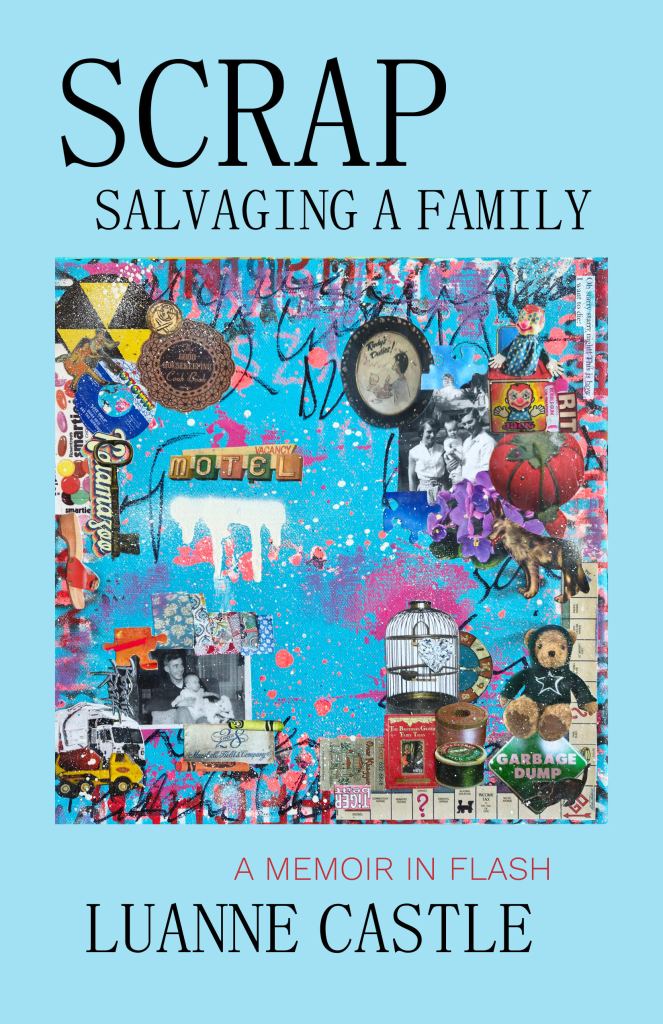
Coming Soon from Finishing Line Press

Maybe you thought I am only interested in cats and books and writing and wine food, but my love of local history was fueled by the vintage photographs (that are now antiques) and glass negatives my grandfather gave me. Many of them are interesting shots of locations and people in actions, but more of them are portraits and Grandpa assigned names for every person he knew. Another thing that reinforced my history interest was that my father was a “collector” of old buildings, especially downtown. He would buy old unloved commercial properties and rent them out, usually to young people who wanted a start in business. Since my mother’s great-grandfather had built some of the old buildings in our city, I came to believe that I was meant to coordinate the family photos and documents and to see where the family fit into our hometown.  I’ve documented some of the information I’ve uncovered on my other blog.

But you know I’m also a poet and writer of the more lyrical sort. So it wasn’t enough for me to write blog posts about people long dead. Where the more typical family history research left off, I wanted to add the power of imaginative research. That’s when I started writing my Kin Types poems. These poems are meant to uncover and reveal the lives of women in my family who are long gone. But they could be women in anybody’s family. That’s what family history really should be: the history of the world as seen through the lives of “regular” individuals. The women in these poems endure difficulties and tragedies: the death of an infant, waiting to hear about the fate of a soldier brother, a clandestine abortion, emotional illness, inability to pursue art, a mysterious death, a horrific fire, and more.

My chapbook also contains two prose pieces–flash nonfiction–and, strangely since all the poems are about women, the viewpoint of both these stories is from two men in my family. They are men who, in some ways, lived the male American immigrant story of the late 19th century. But they also had their own troubles and tragedies, and they too cried out (in my head, at least) to have their stories told.

So it’s super exciting to announce that Finishing Line Press is publishing my book, and the stories of the people who have come before us will be available in poems and lyrical prose. Kin Types will be available for pre-order soon, so stay tuned!

My great-grandmother with Grandpa

circa 1910

(yes, she’s in the book)

61 Comments

Filed under #AmWriting, Book promotion, Books, Creative Nonfiction, Family history, Flash Nonfiction, History, Poetry, Poetry book, Poetry Collection, Publishing, Research and prep for writing, Writing

A Matter of Taste

When I was in 3rd grade, my father built us a new house across town. At the time we lived in a small bungaranch (or it is ranchalow?) with a bomb shelter in the basement. In 2014 I wrote a post telling a bit about that bomb shelter.

But this post is about our next house, sort of. My parents pored over architectural plans and made changes so that the house would be exactly what they wanted. It was a very well-constructed white aluminum siding and pink brick ranch with a full basement. My bedroom had a built-in desk, vanity, and bookshelves. We had a wood-paneled family room with fire place, and the living room had a wall of glass looking out to the woods behind. The house was 1,787 square feet (thanks, Trulia), which seemed of castle-like dimensions to me, particularly since I had most of that big basement to play in.

My father had some help from subcontractors, but all the framing, the masonry, and extras like concrete walks and patio were done by my father. With me watching and fetching.

When the house was almost completed, my father said my mother could choose the finishing touch. She could select the color of the front door.

This is where I wish I could put a little cardboard swinging door over the answer so that you would have to guess first. Then you’d pull open the door (like on a page of a child’s cardbook book) and look in shock at the color.

I remembered this story because I read Joey’s red door post on Thursday.

But our door wasn’t red (which is always striking on white or gray houses). Our door was turquoise. Yup. Gulp.

Maybe you love blue for decorating (I generally don’t as I prefer warmer colors). Or even turquoise. Or think it’s teal.

But it’s not. Turquoise is turquoise, and I’m sorry but it is not an appropriate color for a door, even if the rest of the house is lovely.

Flash forward. I moved into my house in Phoenix with its gold-tan stucco walls and dark brown trim–both in a sort of mottled faux finish. The colors suit the landscape here. And they are “house colors.”

After we moved in, I noticed that the faux brown around my windows and doors had started to peel. I went up to the door and pulled at a paint shred that was just hanging. As I ripped it up, I saw the color underneath.

It was turquoise. I am NOT kidding. The whole dang house is trimmed in store-bought turquoise trim. It’s not painted, but permanently coated with turquoise. And it defies paint on the top of it, which is why it peels all the time.

###

When the gardener and I visited Michigan just before my father got sick, we went to see our old houses, schools, and haunts. This is a pic of the pretty house that no longer has a turquoise door. The only thing is, the house was more distinctive looking with the turquoise door. So maybe it’s all a matter of taste–not good or bad–but individual. Sadly, we only lived here for a year and a half because, even after all my father’s work on the house, we couldn’t afford to keep it.

house

I’ve been really busy preparing everything the publisher needs for my chapbook, as well as doing a little work on the memoir. Fingers crossed on how all this goes . . . .

I hope your Valentine’s Day is lovely even if you don’t have a special love. Find someone who would be warmed by a valentine–and deliver. Word of warning if you plan on a bouquet: if they have cats, try to stay away from lilies and carnations, which are toxic to cats. Roses and orchids are safe. And the fewer greens the better because nobody ever seems to know which ones are toxic and which ones aren’t.

Muah!!! xo <3

27 Comments

Filed under #AmWriting, #writerlife, Arizona, Family history, Memoir, Nonfiction, Poetry Collection, Writing

Fresh Air for Cats and Writers

Did you watch that Bowl game yesterday? I sure did. The important one–the Kitten Bowl. (Yes, I saw the other crazy game, too!)

After I bought a cat stroller last summer (see here) it was too hot (for them) for walks or just to get some air, then it was too rainy and cool (for me). This weekend it was just right.

Because I don’t have a catio (a screened-in porch for cats) I don’t like to frustrate the cats that would take most quickly to outdoor life. We are a strictly indoor cat household–for the safety of our cats, the safety of the neighborhood birds, and for my mental health. So I don’t want anybody to get any big ideas.

But Tiger has a very constricted life. She finds Kana and Sloopy Anne very annoying. They like to chase her, and Tiger likes to flee. So she needs little events that make her feel special. Therefore, she was the one who was chosen to go out in the stroller in this beautiful weather.  I put down a wee-wee pad (Chux underpad), just in case she got too excited. But she didn’t have an accident. She felt the breeze on her face and smelled the odors on that breeze. She watched for tiny movements I couldn’t even see. And she listened for her dad’s voice since he was close by.

When she came back in the house, she was thorough about checking out the stroller for the smells it brought back into the house. And she stood her ground afterward, giving Sloopy Anne a nice long smirk.

A writer friend asked me what writing project I’m working on now. I had to admit I feel a little at odds. I have a draft of my memoir completed, but am doing some thinking about it. I have a publisher interested in my poetry/prose chapbook that is based on the lives of women in my family history. I’m not jumping back into poetry or into creative nonfiction right now. Partly, I would like to focus on wrapping up these two projects. But maybe it’s also that I feel a little singed by these genres.  I’ve been working in them for a long time, and they take a lot of emotional strength.

My friend asked me if I was going to work on fiction now. It was her idea, not mine. She might do it herself. I think it’s an idea well worth thinkin’ on pondering. Maybe I could use some “fresh air.”


53 Comments

Filed under #AmWriting, Arizona, Cats and Other Animals, Creative Nonfiction, Family history, Fiction, Memoir, Nonfiction, Poetry, Poetry Collection, Publishing, Writing

Mom Made Me

I’m sorry this post turned out so long. My back has been out for days, so I probably am not thinking clearly. I’m taking Advil, but it isn’t touching the pain. (Hidden subtext: feel sorry for me, please).

LESSONS

My parents struggled financially when I was a kid, but I still got weekly lessons in one or more of the arts.

When I was about seven, my mother started me in ballet school. Mrs. B had been trained in the Royal Academy style of ballet and had been a member of Canada’s Royal Winnipeg Ballet. I wasn’t very talented, but I tried (I really did) and managed ok. My favorite part of Royal Ballet training were the folk dances because they were a release of emotion, whereas you had to suck it all in for ballet. Not just the emotions, but also the derriere, as Mrs. B called it.

By third grade, I wanted to tap dance. Tapping seemed more outgoing and forgiving of mediocre talent than ballet. As a guest student one Saturday morning, I watched kids pull their shoes out of their little pink or black dance bags. They all had black patent-leather shoes with single ribbons across the arches and silver taps screwed on the fronts and backs of the soles. When the kids lined up in rows across the wooden floor, I tried to copy, but was several steps behind, which confused me.  I knew there was no use as Mom wouldn’t let me join the class permanently.

What I had already learned by then was that ballet was “good” for me, and tap wasn’t enriching, so there wasn’t extra money for it.

A couple years later, I fell in love with the Scottish highland dancing that Mrs. B taught in the class after mine. It’s related to Irish dancing with a stiff upper body and strong legs. Unfortunately, you need expensive kilts, knee socks, and black lace-up shoes even for class. Mom said NO.

hs-16

A few years later, I was reminded again that Mom knew best about what lessons I needed. It was important that I learn to play the spinet piano that my parents had purchased.  But there was no money for voice lessons, drama class at the Civic Theatre, or riding lessons (or a horse ;)).

A few years later, Mom decided that art lessons were important, so I went to art class at the art museum.

HOW DID I FEEL ABOUT THESE LESSONS AT THE TIME?

Sometimes I cried myself to sleep on Friday nights, filled with anxiety over the ballet class to come next day. I didn’t cry because I didn’t want to dance, but because the older girls were “mean girls,” and they treated my friend and I with condescension and nasty comments.

Sometimes I fooled around on the piano between lessons, but I never practiced. Right before my lesson each week–if I had a few minutes–I would pull out last week’s assignment and read it over, maybe plunk a few keys. Then I went into class and played better than I had the week before. Not well. Just better. After all, it was my second time playing the pieces. I didn’t realize my piano teacher knew I didn’t practice until one day when tears came to her eyes as she chastised me. “You could play quite well if you would just take the time to practice.”

Ahem. That was my modus operandi for a lot of things, let me tell you. That’s probably why art lessons went well. There was no homework. We did our work in class and then didn’t think about it again until the following week.

WHAT DO I THINK ABOUT THE LESSONS NOW?

I learned a lot from taking ballet for years. As a young adult, I even went back to ballet class on my own–and searched out Mrs. B. More recently, Mom attended a lecture on Swan Lake by my old teacher who still looks marvelous (yes, Mom sent a picture).

I loved art class and it gave me an advantage in art classes in public school.

Piano taught me about music in a general sense. It also taught me that I was a disorganized and lazy fool who threw away opportunities.

My parents found it hard to carve out money for these lessons. I felt ungrateful.

Now I’m kind of winded with guilt when I think of how many kids would have loved these lessons and they received none.

Sometimes I wonder if I would have become a more outgoing person if I’d been allowed to pursue the arts that appealed to my child sense of fun–tap dance, highland dancing, singing, acting, and riding (which I tend to think of as an art as well as a sport)–rather than pursuing the more introverted endeavors of ballet (huge focus on barre work), piano, and art.


Did I learn any parenting lessons from my experience? Hahaha. No. And yes.

When my daughter was little, she showed singing talent by age four. I thought I would ignore that and encourage her in sports, rather than the “typical” lessons for little girls. I went on and on  yadda yadda how I would put her in soccer and roller hockey and keep her away from the “expected” activities for girls.

But when she was six, she begged for shoes that make noise, and I knew I couldn’t force her in a direction I thought was correct. The way she could get shoes that made noise was to take tap lessons.  Now, after years of dance, voice, and acting lessons (that cost me buckets of money) and years of experience in those areas, my daughter is able to go after her own interests–as she says, she follows her dream. For full disclosure, by age nine, she had the makings of a talented athlete according to her PE teacher, but she had to decide between performing lessons and sports because there is only so much time and money, and she had religious classes as well. She chose performing.

If you think I’m writing this to point out that my mother was wrong to choose my lessons and that I was right to let my daughter’s interests call the shots, I’m not. Well, maybe I thought that once, but not any more. I was a lucky duck for my lessons and my teachers, and my daughter was also blessed to have the lessons and teachers she had. I’m not sure either philosophy is right. Training and experiences do help guide our paths in life. Maybe I would be more outgoing if I’d had tap and voice lessons, but then it’s less likely that I would be a writer. If my daughter had been persuaded to pursue soccer at a certain point in her life, who knows where her life would be today? She wouldn’t be the brilliant performer she is, though, that I believe.

If neither of us had had these lessons at all, our paths would have been still different. Different, not necessarily worse or better. That’s just my opinion. But I can almost hear other opinions clamoring out there. Maybe you had lessons you hated? Or lessons you couldn’t have that you wanted so bad you still feel resentful? Maybe you think kids shouldn’t have lessons at all until they prove themselves worthy of them?

What is your opinion of supplemental art and music (type) lessons for kids?

One last thing: I feel very very strongly that art and music (and dance and drama) should be offered in public school for children of all ages. This is a different subject than after-school lessons, but obviously related.

36 Comments

Filed under #writerlife, Art and Music, Essay, Family history, Nonfiction, Writing

Who Can Put Humpty Together Again? (Hint: We Can)

When I was a teen, it was popular to believe that nurture was far superior to nature–and that almost anything in nature could be overcome. I took that with me into parenting when we adopted our children as babies from Korea. Even if my kids were to come with problems, my love and care and brains would allow them to thrive. (Don’t judge me–it was the 80s).

Hahahaha. My kids are wonderful people, both because of their upbringing (I hope) and most definitely because of their genes. But this isn’t actually about them.

I was so stupid  naive.

One reason I was naive is that I didn’t realize that my own genes were so flawed. After obtaining 23andme medical information for my daughter and me, I can tell you that my daughter’s genes are far less saddled with disease than mine. That goes for physical and mental diseases.

Another reason for my  naïveté lay in my supposition that nature and nurture can be taken apart.  Is behavior caused by nature or nurture? It’s caused by both and they are more closely tied together than you can imagine.

The experimental field of science that deals with this stuff is called behavioral epigenetics. What behaviorial epigeneticists have discovered is that our genes have been altered and coded by the experiences of our parents, grandparents, great-grandparents, and so on. WOWSA. This is so cool. Sometimes science blows my mind.

If your grandfather was ignored left to his own devices by his parents, as I suspect mine was, it not only had an effect on his personality, but it probably changed his DNA–and he passed those altered genes on to my mother who then passed them on to me!!!

So experiences in pogrom-ravaged shtetls, potato famines, slavery, and alcoholic families have encoded our genes for anxiety, depression, and a whole host of other problems.

Don’t think this only works in the negative. Positive adventures in life and strong support and love experienced in childhood encode genes in good ways, as well.

From a writer’s perspective, the new field validates the work I’m doing in Kin Types, my poetry chapbook based on family history research.  All the experiences of my ancestors have influenced (or have had the opportunity to influence) who I am today.  I always felt this was true, but had no idea how it worked and no proof that my hunch was correct. I had a hard time even assuring myself that my studies into my ancestors had any importance other than how it brought details of history alive to me.  But family history done right (it shouldn’t be a study in dates and places) actually teaches a person about him or herself.

Does any of my family history have meaning for my kids? Or my brother (who was also adopted) and his children? The meaning it has is that the people who have made me who I am have contributed to their lives. They don’t have genes encoded with the same adventures and tragedies that mine are, but they have reaped the benefits and drawbacks of being raised by or with someone who has.

Think of the power of this knowledge. New ways of treating mental illness can be developed. And we can take negatively encoded genes and, over generations, change them for the future as we provide positive NURTURING, support, and love to others. It’s not true about Humpty Dumpty. All the pieces can be put back together because genes can be improved — and not through Frankenstein-type science, but through our actions in this world.

51 Comments

Filed under #AmWriting, Essay, Family history, History, Inspiration, Nonfiction, Poetry, Poetry Collection, Writing

“And So It Goes”

I mentioned some time back that I had a flash nonfiction piece coming out in a journal called Toasted Cheese. There aren’t a lot of places that publish flash nonfiction (as opposed to flash fiction like my “Parking Lot Superhero” story). At least I haven’t found too many.

Here is the latest issue of Toasted Cheese, and in it is my story “And So It Goes.” I believe that if my name was taken off this and Superhero that nobody would guess the same person wrote both of them.  The only thing in common is that both have an experimental quality to them. In the Story Shack piece, I used a structural twist to get to the essence of the story. In this new story, I begin at both the beginning and the end and then move through the story forward and backward.

“And So It Goes” is about my great-great-grandfather Pieter Mulder and my great-great-grandmother Neeltje Gorsse Mulder.

You can find the story here at “And So It Goes.”


“And So It Goes” is prose, but it will be in my chapbook collection based on my genealogical research. I expect to have two or three prose pieces, as well as poetry and prose poems.

###

Remember that Toasted Cheese provides writing prompts and creative blog posts about writing.

On February 29, I posted this sample from December 15, 2015. You can find April’s writing prompts here.

What Do You Recommend?


By Baker

  1. Recommend on social media at least one thing you’ve read this year. If you don’t use social media, recommend in person. Independent authors are particularly grateful for recommendations.
  2. Create some recommendation business cards and leave them with your favorite works in the bookstore. You can print them at home. They could be as simple as the word “recommended” with a thumbs-up or a shelf card that lists why you recommend the book. Don’t put stickers on or in the books.
  3. Ask for recommendations at a used book store and/or independent bookstore. If you’re lucky, your local chain bookstore will have fellow book lovers who are well-versed enough to recommend as well.
  4. Recommend a book to a friend on Goodreads.
  5. While you’re there, write a recommendation of a book. If you’re stuck for one, think of a book you discovered on your own and write the review as though you’re speaking to your younger self.


I’d like to remind you that today is Holocaust Remembrance Day (began last evening) and Cinco de Mayo. Two completely different events to ponder, both related to war.  Look at how much one day can contain. It reminds me that in writing it’s important to think small to go big.


37 Comments

Filed under #AmWriting, Creative Nonfiction, Essay, Family history, Flash Nonfiction, History, Literary Journals, Nonfiction, Poetry Collection, Writing

A Truck to Remember

When I was just past thirty,  I wrote a poem about my father. It took an Honorable Mention in a contest sponsored by The MacGuffin literary journal and judged by Diane Wakoski.  I gave him a copy of the journal after it was published, and he acted like he always did when he didn’t know if he was being subtly criticized or if he should be flattered. I told him to be flattered.

“Little old ladies” (his term) always loved my father. And I think that’s how he found some of his treasures. Maybe that is where my trunk came from, now that I think of it!

A Scout Truck Grows Older


The only time my father did not bury

himself with obsolete and imperfect things–

rice-paper widows with old iceboxes and documents

to give away to someone who cherished them

for their age–was when he loved a ‘sixty-four

gray-green Scout, still toddler-new and shiny.

I took this as an omen of better times;

not knowing he wanted to see the decay of beauty.


My father and I travelled long and alone

in that truck that was not really a truck–

no caked mud flaps, corroded door frames,

three-year-old garbage under cab seats.

In January he cranked its heavy plow,

flexing the biceps of the Scout’s compact body.

It whined and startled from the weight

of Kalamazoo’s heavy winter, my father

pushing it on and on way into dark.


That summer he steered us bouncing across

the spongy edge of Long Lake, passing closest

when breath-near the bottomless drop-off.

I imagined the truck tipping and me

with no orange life jacket to endure

the cold whirlpool, those obsidian depths.

But we spun on, tilting, along that damp sand,

crushing the last fishtail-smelly driftwood

and snail shells that lake would ever spew out.


The Scout began aging–coughing and slowing.

When it held enough soiled shirts and rusty tools–

things not new, too common to call antiques–

I was too grownup to dress in boy clothes

and pretend to be my father’s son, loving

the feel of destruction beneath our wheels.

The MacGuffin 5.3 (1988): 18

I couldn’t find an old photograph of the truck. I realized I don’t have many photos of those years.

I’m not sure if my dad’s truck was #1 or #3 in the ad. I remember running away and getting out to the garage and seeing the Scout sitting there. The world looked exhausting from the garage, so I hauled my little laundry bag of clothes into the truck and fell asleep.


43 Comments

Filed under #AmWriting, Family history, Literary Journals, Memoir, Nonfiction, Poetry, Publishing, Writing, Writing contest

Where Do You Store Your Treasures?

I store photographs and documents in a fire safe in hopes that if there was a fire, they would be safe, but from what I’ve read, it depends on how hot and how long the fire lasts whether even a fire safe can save them.

Other treasures I store in an antique trunk I stole received from my father years ago. He gave it to me to use because he didn’t have room for it, so I got it refinished because I was 25 (many people would say I should not have done that), and I’ve loved it ever since.

The furniture restorer followed the original look of the trunk–with the alternating light and dark oak stripes. It’s an antique dome-top steamer trunk that would have been used for travel.

antique trunk

The pictures inside are classic Victoriana.

Here are some close-ups.

So what do I store in my antique trunk?

I store holidays decorations, including Hanukkah decorations and my grandmother’s vintage glass Christmas decorations.

Where do you store your treasures?

66 Comments

Filed under #AmWriting, Family history, History, Nonfiction, Vintage American culture, Writing

Poetry Potpourri

the museum of americana is a literary magazine with a mission close to my heart:

the museum of americana is an online literary review dedicated to fiction, poetry, nonfiction, photography, and artwork that revives or repurposes the old, the dying, the forgotten, or the almost entirely unknown aspects of Americana. It is published purely out of fascination with the big, weird, wildly contradictory collage that is our nation’s cultural history.

They’ve published two of the poems I intend for my chapbook of poems based on my family history. You can read them here.

Two poems by Luanne Castle

I love how my interest in family history and genealogy and research connects with my partnership with poetry in these poems.

On another note, if you bought a copy of Doll Godsend me your address and I will mail you a sticker to complete your book cover.

If you haven’t bought a copy, please consider it if your finances allow–either for yourself or if you think you’ll hate it (gotta allow for that) as a gift for someone you think will enjoy it. Amazon says it will arrive before Christmas.

Have I ever told you what book existed before Doll God? It’s a scrapbook my daughter made for me two years ago. In it, she hand wrote many of my poems and she included posts from the adoption blog, Don’t We Look Alike, that we worked on together.

In the slideshow you can see a sample of the scrapbook. Note the subtle cat-themed touches. And if you see a pic of a high school couple just remember that it’s easy to find stock pix online (big winky face).

This slideshow requires JavaScript.

30 Comments

Filed under Book Award, Book contest, Book promotion, Books, Doll God, Family history, Literary Journals, poems about dolls, Poetry, Poetry book, Poetry Collection, Publishing, Research and prep for writing, Vintage American culture, Writing

What Is It About Black Cats?

After my oldest cat Mac died, there was no question of “replacing” him with another cat. He had a large and impressive personality and nobody will ever take his place. But I’ve been volunteering at a local no kill shelter for six months now, and since the first night I’ve wanted to make 8-year-old all-black Nakana part of our family.

The moment we “locked eyes,” it was love at first sight—at least on my part. Soon after I began to work with the cats in the cat roaming room, Nakana developed ringworm and had to be isolated. I don’t work with the cats in isolation because I don’t want to risk bringing home an illness to my elderly cats. For months she stayed in that room because she just couldn’t shake the ringworm. Apparently, stress makes the ringworm more difficult to eradicate.


After she recovered, she was taken to PetSmart, in hopes that she would be adopted. But there she sat for another couple of months! This was at least Nakana’s second time around at the shelter (after having been returned by someone). I started stopping by PetSmart to wave at Nakana. She would reach her paw toward me. One time I told a couple looking how I have worked with the cats at the shelter, and that Nakana has a marvelous disposition. You see, if I could find her a good home, I wasn’t going to keep her from being adopted just because I wanted her. She needed a home as soon as possible and I couldn’t bring her home with sick Mac taking up so much of my time and energy. The couple took one look at her and shrugged, turning toward the pretty light-colored and patterned kittens and cats.

After I adopted Nakana and brought her to see a vet at the shelter, the vet told me that she has had three black cats and they were her favorites, but that the reason Nakana wasn’t adopted before I took her was because “a lot of people don’t like black cats.”

WHAT?!! HOW CAN PEOPLE JUST NOT LIKE CATS BECAUSE OF THEIR COLOR?

Is this because of superstitions that exist in the United States about black cats? According to Wikipedia, black cats are good luck in Great Britain and in Japan.

By the way, superstitions about cats can be good or bad and can affect more than black cats. If you want to read a wonderful children’s book that tries to subvert superstition about cats (in this case, a white cat) read The Cat Who Went to Heaven by Elizabeth Coatsworth.

Sorry for that tangent.

In America and much of Europe, superstitions about black cats tend to be negative. The Pilgrims brought this attitude to this continent. This is where the notion of the black cat as a witch’s familiar comes from and why some people believe black cats are bad luck, especially when they cross one’s path.

How silly is that? They are just like all other cats: in need of loving homes and families. Although all cats have different personalities, it is true that many cat people declare with certainty that orange cats are almost as outgoing and verbal as dogs and that black cats have independent, curious, and friendly natures. I would agree with this assessment! Not all, certainly, but many.

Because we grow so many wackos and because of these preposterous superstitions (which could put ideas in the mind of wackos), Halloween is seen as a dangerous time for black cats. While there is disagreement about just how dangerous, why not just be on the safe side and keep all black cats indoors and protected through the fall? My cats are strictly indoor anyway (for their own sakes and for the sake of the wildlife), but I am particularly careful around Halloween.

But is it true that some people just don’t like black cats? Shelters have a more difficult time finding homes for black cats. My son knew this and when he went to adopt a cat two years ago, he purposely took a black kitten he named Meesker.

Meesker is one of my three grandcats!

Mac was 17 ½ when he died. He was an orange and white tabby, with a true orange tabby personality. I found him in my yard all those years ago. Fifteen years ago I found another cat in my yard—a black and white tuxedo cat I named Pear Blossom. She is now my grand lady cat. She’s black, but unlike a black cat, she has white whiskers and almost perfect tuxedo markings. Then we found Felix, a brown tabby, in our same yard, and he became our third cat. Tiger is a calico with tabby markings—maybe a patched tabby would be more accurate? Not one of them is a solid black cat, but then I didn’t choose these cats. They chose me.

But I have had a black cat before. When I was a little girl, the cat across the street had kittens, and I whined and cried enough that I was allowed to pick out a little black kitten my mother named Toby.  I hope Toby’s life eventually turned out better than it was at my house. He was afraid of so much. He was afraid to go outside. He was afraid to be any place except under my bed or hiding in the basement. And when my parents adopted my baby brother, my mother was afraid of having a cat in the house with a baby. She actually thought a cat might kill the baby!

TALK ABOUT SUPERSTITION!!!

So one day while I was at school, my parents took Toby to a farm to live out his life. And I never got to say goodbye to him. Then my father took me to an expensive toy store to pick out any toy I wanted. I had never picked out a toy I wanted before. In the midst of my tears over Toby, I selected an empty black patent leather Barbie case.  And have felt guilty my whole life that I chose a toy to make my father feel better about stealing my cat.

CATS AND DOLLS. Is that all you can write about?

Now I have a black cat again. Nakana is not Toby. She’s not anything like Toby. In fact, Nakana is a mature, good-natured, curious, calm female cat. One that all those people choosing kittens over her missed out on.


I’m having a hard time taking new photos of Nakana because she keeps moving toward me to rub against me for petting. What a hardship ;).

CHECK OUT MY PINTEREST BOARD:  BLACK CATS RULE!!!

Have you ever had a black cat?

79 Comments

Filed under #AmWriting, Cats and Other Animals, Memoir, Nonfiction, Writing