Category Archives: Nonfiction

Book Tour Stop: Book Review of Deborah Brasket’s When Things Go Missing

I’m thrilled to be part of the blog tour for the new novel written by Deborah Brasket whose blog Writing on the Edge of the Wild  I’ve been reading almost as long as I have been blogging.  I’ve reviewed this very special book, and I’d love for you to read the review, hoping that will motivate you to pick it up for yourself.

EBOOK GIVEAWAY The top 3 people who leave the most likes and comments on the participating blogs will be emailed a free eBook of When Things Go Missing (epub or mobi) PLUS two extra chapters (pdf or doc file)

***

REVIEW

As I began reading Deborah Brasket’s debut novel, When Things Go Missing, I was expecting a smart and well-written story since I had been reading Brasket’s thoughtful blog for at least ten years. What I didn’t expect was such gorgeous writing, significant and densely woven themes and images, or how strongly the book would make me feel.

This novel is the story of a traditionally structured family of four and how the pieces that are the individuals fit together—smoothly, imperfectly, and jaggedly. The mother leaves one day without saying goodbye or providing a destination. At that point, daughter, son, and husband all respond differently, depending on their relationship with Mom/Frannie. As might be expected, they feel as if the center of the family is gone, leaving them with only tenuous connections to each other.

When Franny leaves town, her son, Cal, is a heroin addict who relies on the help of a rotating roster of enablers—including his mother—to give him money or a place to stay. The younger child, Kay, is a graduate student in archaeology, focused on finding a place for herself in her field. They both rely on their mother emotionally, but with the maternal tenderness spigot suddenly all but closed tight, they struggle to discover who they are and how they can succeed in life whether their mother is a part of their day-to-day lives or not.

The character portraits are carefully drawn. Brasket captures not only Cal’s addictive personality, but his sister’s love wrapped in resentment for the way he siphons attention for negative reasons. Even if the characters and their fascinating evolution throughout the book were all When Things Go Missing has to offer, it would be enough. I couldn’t look away for an instant. Every moment was a surprise and yet each new action made absolute sense for these people and their troubles and their conflicted emotions for each other.

Anyone who has an addict in their lives will be able to relate to this book at a profound level. Anyone who is part of a dysfunctional family group will be compelled to learn from the psychology at work here. And, finally, any parent who ever wanted to just get away from everyone and everything to search for peace and to find themselves, will feel a connection with the character who is missing throughout the novel—Franny herself. Where Franny finds herself will surprise and please you. The character her husband and children find within themselves will gratify you. I promise.

When Things Go Missing made me cry. I could not stop thinking about it when I finished reading. Frankly, I was stunned by the beauty and the brilliance.

***

Following you will find the book information, description, and author bio–as well as the blog tour schedule.

PUBLISHER: Sea Stone Press
PUB DATE: September 22, 2025
PAGE COUNT: 352
FORMAT: E-book $8.99, paperback $14,95, hardback $21.95
AVAILABLE NOW at Amazon, Bookshop, Barnes & Noble, and all major retailers.

ABOUT WHEN THINGS GO MISSING
When Fran Albright turns fifty, she heads to the grocery store and keeps going until she reached the tip of South America, leaving behind an empty hole in the lives of her bewildered family. Her daughter Kay scrambles to finish her master’s degree while trying to glue the family back together. Her son Cal is torn between grief and rage as he fights his own addictions and demons without her there to help. And Walter tracks his wife’s journey southward with her credit card purchases, continuing to care for her as he always has, before heading north to Alaska. Adding to the mystery of the mother’s disappearance are the elated messages she leaves on Kay’s phone and the strange photos she sends Cal, who studies them like hieroglyphs he must decipher to save her and save himself.

When Things Go Missing is a masterful exploration of loss, loyalty, and self-renewal. Told through the viewpoints of Kay, Cal, and Walter, this emotionally rich, mystery-driven family drama is wrapped up in a propulsive page-turner you cannot help getting swept up in.

GENRES: Book Club Fiction, Literary Fiction, Family Saga, Women’s Fiction, Sibling
Fiction, Addiction Fiction, Introspective Family Drama, Healing and Self-Renewal


ABOUT THE AUTHOR

After sailing around the world with her husband and children, teaching literature to college students, and fighting for affordable housing as the leader of a nonprofit, Deborah J Brasket finally settled down among the golden hills and vineyards of California’s central coast to write the kinds of novels she loves to read.
http://www.deborahjbrasket.com
seastonepress@gmail.com

WEBSITES AND SOCIAL MEDIA
Author website and blog, Deborah J. Brasket, Author ~ Writing on the Edge of the Wild –

Novels

Substack Newsletter, https://deborahbrasket.substack.com/

Facebook, Deborah J. Brasket, Writer –  https://www.facebook.com/DeborahJBrasket/

Goodreads, https://www.goodreads.com/author/show/55448191.Deborah_J_Brasket

Instagram, https://www.instagram.com/dbrasket/

LinkedIn, https://www.linkedin.com/in/deborah-brasket-39384370/


BOOK BLOG PARTICIPANTS

18 Comments

Filed under #amreading, #bloggingcommunity, Book promotion, Book Review, Books, Flash Fiction, Nonfiction, Reading

A Gorgeous Collection Combining Genres of Poetry, Genealogy, and History

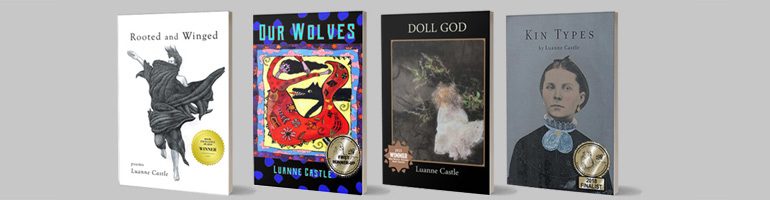
I am guessing that Meadowlark Songs: A Motherline Legacy feels like one of the children of the author Joy Neal Kidney. Writers often feel that way about their creations. If so, I am hoping I can call myself one of the book’s many grandparents. My chapbook Kin Types, a collection of poems and flash prose, reinvented the lives of my female ancestors. Kidney mentions my book as one of her favorite resources, which tickles me more than I can tell you—because the genre seems fresh and new and so dear to my heart. And now I see it reimagined by Kidney who has created a gorgeous, well-researched, and organized delve into the lives of the women of her family who came before her.

Meadowlark Songs is primarily a poetry collection illustrated with family photographs and supplemented with informative prose. Each “mother” before Kidney has her own section, as part of the “motherline.” The cover design by Nelly Murariu beautifully captures the feel of the book.

The ancestors in the book began their lives on the east coast of the United States, but gradually moved farther inland, as far as Nebraska but the family put down deep roots in Iowa. The women’s lives come to life in Kidney’s poetry. These women are strong, resolute, and inspired by their Christian faith.

Family stories and legends are also captured in the poetry. For instance, in “Startled by Santee Sioux,” we read how Laura Goff, Kidney’s great grandmother, was a Nebraska pioneer when a couple of Santee Sioux men walked into her home. She negotiated a trade for dress goods by bartering her chickens to the men. The book is full of fascinating anecdotes such as this.

Probably my favorite part of the book is the last section, about the author herself, “The Memory Keeper,”—and her passion for creating a lasting storyline of her family through this book, as well as her previous books. We read about what formative experiences she had, and how her faith has been her guidance through it all.

I’ve cried and laughed reading Kidney’s other books, but I felt even closer to this book as she connected with the women who made her who she is today. Such a powerful experience for any woman.

You can connect with the author here: https://joynealkidney.com/

Click on the book image above to purchase through Amazon.

Joy Neal Kidney is the oldest granddaughter of Leora Wilson and author of four “Leora books.” She lives in central Iowa with her husband, Guy (an Air Force Veteran of the Vietnam War and retired Air Traffic Controller). Their son and his wife live out-of-state with a daughter named Kate.

A graduate of the University of Northern Iowa, Joy has lived with fibromyalgia for two dozen years, giving her plenty of home-bound days to write blog posts and books.


34 Comments

Filed under #amreading, #writingcommunity, Book Review, Family history, History, Memoir, Nonfiction, Poetry, Poetry book, Poetry Collection

Botox the Hard Way

I was Botoxed! In a way . . . since I had BOTULISM POISONING!

Originally, the gardener and I were invited to a Halloween party for this past weekend but had to turn it down because we planned to be out of town. It turned out that we couldn’t go away because I’ve been having a lot of trouble with a very painful leg (a whole ‘nother story) and had a bad cold.

Maybe if I’d been out of town I wouldn’t have gotten Botoxed.

Have you noticed how lots of food, especially chicken, fish, and meat, come packaged in vacuum seal these days? I don’t remember when it all changed, but I know it hasn’t been too many years.

I must have been absent the day the memo went out about this new type of packaging for fish—which is a totally different story from other foods. Did you know that when you buy seafood products in vacuum seal packaging you have to take them out of the package to thaw in the refrigerator? When I thaw salmon fillets, I usually do it because the instructions tell me to. But I never really thought about the WHY of it.

I bought salmon patties at a store I don’t usually shop at, and although I read the directions for cooking, I didn’t notice anything about thawing. So, I threw the package from freezer into refrigerator to thaw.

Apparently (and I only play a scientist in my writing sometimes) without oxygen Clostridium botulinum type E grows rapidly on seafood.

There were two patties, and because the gardener was eating burgers instead, I had 1 ½ patties (no buns) and gave him ½ a salmon patty. I ate three times what he did, therefore. And he weighs about 40 pounds more than I do.

I was terribly sick all night. The whole next day I slept and occasionally woke up to stay hydrated. That was Saturday. I still don’t feel great, although I’m no longer sick-sick. I realize that, as bad as I felt, this was a mild case because botulism can be fatal or cause paralysis. On a side note, the gardener did end up getting part of the illness a bit belatedly and although obviously food poisoning, he wasn’t nearly as sick as I was.

At first, I felt stupid after I realized what I had done. But after talking to some people, WOW. None of them knew that you must take seafood out of the vacuum seal packaging to thaw!!!!!!!!!! Many of them either cook frozen fish or thaw it under water. I’m not advocating either of those cooking methods, but at least they didn’t let bacteria grow for hours and hours.

Bottom line: always take seafood out of vacuum seal packaging before thawing!!!! And let others know!!!!!

On a related note, when I called the store to talk to the lady about the salmon patties before I really had what happened locked down, she let me know there is a huge listeria recall right now on a wide range of brands, stores, and products—generally frozen foods that have chicken in them. I called my regular supermarket, and this is their stupid comment:

The minute we get word of a recall we pull all the products from our shelves. And when you go to ring up your groceries if something has been recalled it will show up as recalled on your receipt and on the screen.

HELP!!! I am finding it too hard to live among such illogical people. If they pull the food, how can I be paying for it?!

Also, the store knows every detail of everything I’ve ever purchased there, but they can’t EMAIL me? Good grief.

I know Food Safety has a very boring sound to it, but my goodness it’s as important as Road Safety and Workplace Safety.

###

On the subject of illness (sorry), a nonfiction flash story I wrote about migraines was published by Libre, thanks to EIC Mary B. It’s a little brutal. My Avatar Lives My Life 

If you have ever had migraines or know somebody who does, you might find some similarities.

The one thing that makes me feel better no matter what is going on: my kitties. Here’s Sloopy Anne!

36 Comments

Filed under #writingcommunity, Flash Nonfiction, Health, Literary Journals, Nonfiction, Writing

Mama Isn’t Always Right: 2-minute podcast

Gosh, it’s been a month or more since I’ve posted on here. That’s because it’s now been five months that I have been taking care of the baby like a full-time daycare :). I am dropping down to part-time in a week (also :)) because he’s getting heavy for me, and I need to catch up on stuff.

Before I’m back to blogging regularly, I thought you might enjoy hearing me read a two-minute flash memoir story on Guerrilla Podcast. There are two other writers reading as well, Ethan Goffman and John Stanizzi. My story is in between theirs. Hope you like them all!

https://thesongis.blogspot.com/2024/07/podcasts-bite-sized-nutrition-for-mind.html

In case you’re in doubt of where to go, once you click the link you should see this view (my screen shot). The podcast is right below the titles of the stories and the author names.

The image is from a later era than my story, but it’s the same park as in the story. About ten years after the events of this story occurred, Kalamazoo was hit with a tornado that took out a lot of the gorgeous old trees that had been there in Lincoln’s day. Since this photo was taken at a date after the tornado, you can’t see how thick the trees were “back in my day.”

27 Comments

Filed under Flash Nonfiction, Memoir, Nonfiction, Podcasts and readings, Writing

Should You or Should You Not Attend Your High School Reunion?

Photo is Detroit sunrise from Windsor, Canada.

My #TankaTuesday is at end of the post.

This past week I was in Michigan and Ontario (Canada). I got to see my mother, as well as some other relatives who I also saw in April. The main reason we chose last week to travel was to attend our high school reunion. Have you ever done that? This was my first one. The gardener and I went to the same high school, although he had been with those classmates for elementary and junior high, whereas I was the new girl in 10th grade.

Our reunion was put together sort of last minute by mainly one person who was helped by a few others. It was casual, held at a lakeside park. And maybe 15-20% of graduates attended. Although it would have been fun to have a big dressup party, I think this turned out best because people could move around easily–and best yet, we could hear each other talk. A dinner-dance isn’t the best place to catch up with people.

Although everyone there (except for two people who looked as if they have a nasty portrait of themselves hidden in the attic) looked older and in some cases unrecognizable, in general, I think my class has done pretty well with their appearances. It was really fun to catch up with some old friends and to talk to others I wasn’t as close to. In high school, it seems people rarely talk except to close friends.

An upside of going was that it was fun to “catch up,” and I realized I really care about the welfare of everyone I went to school with. We had a good time, and it was especially fun for the gardener to see people he went to school with for so many years. We also had a memory board with names and a memory candle so we could spend some brain and heart cells on those who are no longer with us.

A downside for me was that I didn’t know so many of the people we went to high school with. High school is not the best time to really get to know a large group of people. It’s also hard to see how old we have all become, although that is also an upside because it made me realize that these people are no longer the 17-year-olds I remember, but have had full lives with ups and downs just as I have had.

I’m not sure if this is a positive or negative, but I learned something about myself. Maybe that is really good, although it feels sad. When I was in school, I was quite shy, though not in a classic “quiet” way, but rather I found it very difficult to have poise in social situations. I didn’t have the confidence to participate in the activities I would have liked to, such as yearbook, journalism, and auditioning for plays. I would be too quiet when I should be more open to talking to others, and I would be noisy when with close friends. When I had openings or opportunities to do more, I assumed deer-in-headlights stance. Starting a new high school was very difficult for me, and add to that I had a lot of problems at home with my father during that time.

So what did I learn about myself from attending the reunion? Although I’ve gained in maturity, compassion, and confidence, I am still the same dummy in social situations. Too scared to initiate conversations, mind empty when I should have spoken, etc. Ugh. So, no, I guess people don’t really change although I thought I had.

My high school was known for being very cliquish, and we had a fair share of “mean girls” (not one of them was at the reunion). I only bring that up because my mother has her own social situation. She lives in a retirement community, in a large independent apartment building, and it too is cliquish. My mother is also an introvert (I think this gene is rampant on my maternal side). Is this what tends to happen in large social groups? Is it only the women or do men feel this, too?

On another note, I have a micro up at Scribes *MICRO* Fiction, thanks to Managing Editor Edward Ahern . It’s a surreal drabble (100 words). This link is for the whole issue, which is full of fun stories and poem. https://www.fairfieldscribes.com/issue-32.html/ My story is about 3/4 through the issue–if it were in pages it would be page 10 out of 13.

Here is how it begins:

These Days
​by Luanne Castle

​​​​I look over at the white Waymo as it pulls up next to us. The giant stuffed bear in the driver’s seat, its googly eyes stubbornly facing forward, refuses to glance at me.

For Colleen Chesebro’s weekly #TankaTuesday prompt about sunflowers, I offer this shadorma. The prompt includes a beautiful photo, but I couldn’t download it to use over here.

Garden Protection

Old-fashioned

gardens with bean plants,

corn, and squash,

tomatoes,

bloom with sunflower beauty,

cunning insect traps.

sunflowers and trees
Photo by Luca Barth on Pexels.com

70 Comments

Filed under #amwriting, #poetrycommunity, #TankaTuesday, Flash Fiction, Microfiction, Nonfiction, Poetry, Writing

One of the Most Important Books You Will Read

Lion Scream by Robbie Cheadle is not a poetry collection or an expository nonfiction book about African animals. It’s not a memoir of personal encounters with wild animals or a picture book of animal photography and video links. The book is not a cautionary tale about the harm that humans are doing to our world’s animal populations. At least, it’s not just any one of the above—Lion Scream is all of these at once and is the most important book I’ve read this year.

By writing this book as an interactive casebook, alternating various approaches to the subject of wild animals and mass extinction, Cheadle grabs and holds the reader’s attention. She structures the book by the multitude of animals found in South Africa, from dung beetles to hippos. Within each short section are various brief approaches to the subject. Sometimes a poem that might be written “in character” as an individual animal introduces the topic and is followed by a knowledgeable description of the animal, its habitat, and some unique features.

In this way, I learned so much that I did not know. For instance, cheetahs are the fastest land animals in the world, but there are only 7,000 of them left in the wild! And a real dilemma is that they are in great danger in protected lands because they are prey to lions and other animals. Still, in unprotected land, they are under threat from the most dangerous, worst animals on the planet—humans. Likewise, I learned that wild dogs are very endangered animals. Cheadle says leopards are already “extinct in 67% of the country.” The information includes details such as that female hyenas have a penis-like appendage, and sometimes their babies suffocate in the birth canal. In addition, the female and infant hyenas eat before the males.

ROBBIE’S AMAZING WILDLIFE VIDEOS

Underlying the book is a premise that makes this such an important book: we live in a time of the Sixth Mass Extinction. A mass extinction is when a large portion of biodiversity dies out. Natural events have caused previous extinctions, but the Sixth Mass Extinction is caused by human activity. If we think of what is happening with so many species endangered or becoming extinct in this long-view lens, we can see that this is a huge subject and one that we all have a hand in. If we are causing it, we ought to be able to fix it. The time to change this trend toward extinction is yesterday, but since we’ve already gone past that, it’s NOW.

Cheadle concludes the book with a short story, “The Nutcracker,” about a girl with extreme anxiety and depression over the Sixth Mass Extinction. The story is well-told and thoughtful. But Cheadle’s analysis of the story that comes afterward is particularly fascinating as both a push to the reader to read deeply into the story and as a summary of the importance of the book itself.

I am so glad I read this book, and now I want to make some changes in my life!

You can purchase Lion Scream at Amazon in either paperback or Kindle version. Note that there are photographs and links to videos in the book. I hope that will help you decide which version to go with. Here is the link: LION SCREAM AT AMAZON

I discovered Robbie because I started participating in Colleen Chesebro’s #TankaTuesday syllabic poetry fun, and I am amazed at all Robbie’s talents. In addition to being a prolific writer and baker/cook, she is a beautiful artist as well. Robbie is also a generous spirit to the blogging and writing community. That she also has published this important ecobook in an effort to help save the planet really warms my heart. Thank you, Robbie!

ROBBIE CHEADLE’S BIO

Award-winning, bestselling author, Robbie Cheadle, has published thirteen children’s book and two poetry books. Her work has also appeared in poetry and short story anthologies.

Robbie also has two novels published under the name of Roberta Eaton Cheadle and has horror, paranormal, and fantasy short stories featured in several anthologies under this name.

The ten Sir Chocolate children’s picture books, co-authored by Robbie and Michael Cheadle, are written in sweet, short rhymes which are easy for young children to follow and are illustrated with pictures of delicious cakes and cake decorations. Each book also includes simple recipes or biscuit art directions which children can make under adult supervision.

Robbie’s blog includes recipes, fondant and cake artwork, poetry, and book reviews.

Follow Robbie Cheadle

Robbie Cheadle Amazon Author Page

Robbie Cheadle Goodreads Author Page

TSL Publications Robbie Cheadle Author Page

Twitter

Facebook

YouTube

58 Comments

Filed under #poetrycommunity, #writingcommunity, Book Review, Cats and Other Animals, Flora, Garden, and Landscape, Nonfiction, Photographs, Poetry, Poetry Collection, Writing

Making Space

My mother gave me my baby book which I have started to go through. I found a photo in it that I have never seen of the person who was my favorite when I was a kid: my maternal grandmother. In this image I am 20 months old. I also read in the book that for my first week of life Grandma and her other daughter, my sweet Aunt Alice, stayed with my parents and helped take care of me. She was the best grandmother anyone could ever have. The grandmother poems in Rooted and Winged are about her.

For months now I have been writing this post in my mind. The reason is that the post is meant to help clarify my thinking about a matter.

I grew up in an era where people still believed that it was important to “pull yourself up by your bootstraps” and to “put a good face on.” I also like to be seen as strong or even tough. Most importantly, there are always people worse off than ourselves. Some people have such horrible “roads to hoe” in life. It makes me cry to think of what some people go through.

Further down there is going to be a “but.”

Without boring you with too many details, underneath a lifetime of many and varied illnesses, I have a few chronic conditions that are a bit extraordinary. One of these is primary congenital lymphedema, particularly in the lower extremities. It’s what used to be known as elephantiasis.

Additionally, I have a migraine disorder that for the last 25 years has not (for the most part) been headaches, but a sudden and extreme set of symptoms. Because the symptoms didn’t fit neatly into a specific type of migraine, I was told they were “complicated migraines.” Most recently, the diagnosis is that I have genes for more than one rare type of migraine—and that they work together to give me symptoms of more than one disorder. Most likely these are vestibular and hemiplegic.

An extra issue in the mix, and I’ve written about this before, doctors at Mayo Clinic discovered that I had a very rare tumor in my right foot (rare meaning at that time medical staff couldn’t find any medical literature of a tumor in that particular bone). This was a nightmare that went on for 1 1/2 years and was complicated by my lymphedema. There were only two surgeons in the United States that Mayo considered competent to do surgery on this tumor, and it was performed by the AMAZING Dr. Eckhart at UCLA orthopedic hospital (RIP to a wonderful person and doctor). Five years after the surgery, he told me he never thought the surgery would work but he watched over me so carefully. Since the surgery I am not allowed to run, jump, hike, or do most aerobic activities.

I write about these details to give a little context. Back to putting a good face on and all that. Because I am a writer and keep up with current events in the writing world, I am more aware of new ways of thinking about things than I might be if I weren’t writing and especially reading new work. My view of myself that I have had my whole life has been as a blessed person–certainly privileged in many ways–and that I needed to stay tough and “power through” everything and then set it aside. Another way of putting it is to say burying it down deep. Perhaps what best fits is that I never made space for my health issues. I let everything else in my life intrude and take over the space they needed.

But (I told you there would be a but!) reading young writers, I am beginning to change my view of myself. I am disabled. Any time I go out I must have a hat and sunglasses with me for lighting situations (migraine trigger). I can’t go to concerts or sports games because of flashing lights. I can’t travel alone because it’s become too dangerous with the migraines which occur in a moment and are completely incapacitating. I must bring my lymphedema pump with me to travel–as well as lots of other things for the condition, and it takes a lot of time and energy every day. Most importantly, lymphedema affects much of the rest of my health, and as I age (arthritis and other deteriorations, for instance) it will become more and more of a problem.

So, while I have no ridiculous illusions that my situation is comparable to the tragic illnesses of so many others, I am finally realizing that disability has nothing to do with comparison between one person and another. And it isn’t negative or counter-productive for me to finally understand that it’s ok to admit that I am disabled, that it’s just a useful way to communicate with others. If people don’t realize that I am disabled, how can they be supportive?

I wish I had had this epiphany years ago when my son was still young. He has an exceedingly rare disorder that doctors misdiagnosed for decades. It’s so rare that in the NORD (National Organization for Rare Disorders) list it is lumped in with other disorders and diseases instead of being listed separately. At the most, only a couple thousand people in the U.S. have his disorder. The reason it’s important to note the rareness is because the less others know about your disability, the less helpful they are–even if they want to be!

You see where I am going with this? If I had been better about making space for my disabilities, it might have been easier for my son with his own situation. It’s hard enough when people see you from the outside and say, “Oh, it’s not such a big deal,” with absolutely NO understanding of what it’s like to live that life. So, while the gardener and I always respected the importance of his disorder (which I first noticed when he was nine months old, and the pediatrician practically laughed at me), we didn’t teach him to make space.

Now I see everything differently.

Have you ever had a big shift in how you viewed yourself?

OK, ending on something a little lighter. Perry is very unhappy about the cane I’ve been using since I injured my knee more fully when I got home from Michigan. Yesterday, I was walking in the living room, and Perry came up from behind and crashed into the cane, forcing me down on the bad knee. Yes, it hurt like heck, but it was funny, too, because what cat does something like that? A dog might do that if he’s frustrated enough. But Perry was just being Perry! And then we had the hugging session afterwards where he apologized to me! Sweetest, funniest little goober.

44 Comments

Filed under #amwriting, #poetswithcats, #writerlife, #writingcommunity, Cats and Other Animals, Disabled identity, Family history, Memoir, Nonfiction, Writing

A Ride with Memory

When I first started this blog, near the end of 2012, I posted this blog post. Something Colleen Chesebro wrote reminded me of it, and I thought I would share it again. It’s about memory and how the line can be blurred between fact and fiction in memory.

I have a box of old photographs my grandfather gave me before he died.  They are family portraits and snapshots dating from about 1890 to 1920.  We sat in his living room and wrote names on the ones he could identify.  Dozens of other photographs bear family resemblances, but they remain nameless and can’t assume their positions on the family tree.

My own mind houses memories in the same way.  Many of my memories bear a resemblance to my life and my relationships, and while minute details might be clear, the facts are hazy or forgotten, perhaps unrecoverable.  A memory illustrated by vivid details and accompanied by still-present emotion began on Trimble Street, in front of the next door neighbor’s house.  I was two, almost three.

Mrs. Becker babysat me for my parents that day; she let her girls watch me outside.  The day felt sun-warmed, with a slight cooling breeze rustling through my play clothes.  The oldest girl, Donna, and a teenage boy were the ringleaders of the group.  She wasn’t yet in high school and didn’t have her later characteristic beehive hairdo.

Her younger sisters, Susie and Denise were with us.  All the children ringed a brown horse standing in the street looking very out-of-place.  From my perspective down near the sidewalk, the horse looked like a city square equestrian statue—massive, gigantic, forbidding.  Perhaps the boy had ridden the horse to our street.  Donna turned to me, kneeled down to my level, and said, “How would you like to go for a ride?”

I shivered, though the sun shone down on my honey-colored hair.  “No,” I said.

“Oh, come on,” said Susie.

“No!” I backed away.

“Honey, there’s no need to be afraid,” Donna said.  She scooped me up and plunked me down on the saddle positioned across the back of the horse.  From this height I looked down at the tall teenagers, feeling dizzyingly and irrevocably beyond their reach.

“Put me down,” I said.

The teens giggled and chattered.  Suddenly I heard a loud SMACK, and the horse bolted forward.  I swayed backwards for a moment and then righted myself by grabbing hold of the saddle horn sitting in front of me.  The horse trotted up Trimble Street.  We left the teens behind, just the determined horse and me.   The breeze flew through my flimsy hair.  I held onto the horn with every muscle I could harness to the aid of my hands.  Both my hands and feet tingled and turned numb.  My thoughts condensed into one little pinhole: stop stop stop!  I couldn’t tell the horse to stop because the pinhole only allowed that one thought; I was beyond the power of speech.

The horse trotted up to busy Gull Road, a main artery without sidewalks, where he turned right.  I expected to fall off his back into the path of an uncaring automobile.   I clung on.  He carried me swiftly to Henson Street where he took another right, and then onto Junction and back to Trimble Street.  My powerful hands, drained of blood, were my only compensation for the utter loss of control I felt.

When he trotted to the front of the Becker house, the horse stopped short.   I rocked again and almost tumbled.  The teens laughed, and Donna’s friend tried to lift me off the horse, but my hands would not unclamp from the saddle horn.  I realized then I had been crying; my cheeks, soaked with tears, seem to burn as if the saltwater seared the tender skin.

I couldn’t speak, not even that night when I saw my parents.  All these years later, the details vibrate within me, but I’m missing one fact: I can’t be certain if the horse existed or came to me in a dream.

With my mother and the two younger sisters from next door

The names have been changed to protect people who may or may not have participated in this act of baby abuse.

Are you sure of your memories?  Do you have any like this one, where you aren’t sure if it really happened or if you dreamed it?  How do you handle a hitch like that in writing creative nonfiction?

38 Comments

Filed under Creative Nonfiction, Memoir, Memoir writing theory, Nonfiction, Writing, Writing Talk

2023 Coming In Like a Monster

First an apology: this is not an uplifting inspirational Brand New Year post.

While I was desperately hoping that the new year would bring a lessening of troubles into my life, a couple of days ago I got a call from the veterinarian that told me 2023 is going to be another difficult year.

In my last update about my dear darling Perry’s health, I explained that the results of his abdominal ultrasound showed that he had either IBD (irritable bowel disease) or lymphoma of the GI system. We were going to decide on treatment after he underwent an echocardiogram to make sure his heart was ok. The reason for this was that the vet had noticed that Perry had developed a heart murmur.

Now, going back to 2017-2019, the first three years Perry came into our lives, the gardener and I were concerned about heavy breathing episodes that Perry would have. We worried about his heart or possibly a lung condition. We didn’t get very far with the specialists at the time. In fact, the esteemed cardiologist talked us out of an echo at that time.

For anybody who doesn’t know, by the way, Perry is the kitty who showed up in our yard in spring 2017 seeming completely feral. I worked so closely with him (reading, singing, reciting poetry, holding his food bowl while he ate) that he got over his extreme fear of humans and showed himself to be the most amazing cat EVER (and that is saying something since I was “mom” of the amazing cat Pear Blossom and have been mom to many cats). One of the many Perry highlights: Perry lies on his back nestled in my arm like a napping toddler.

Back to the echo we didn’t have at that time. Sure wish we had done it. Turns out now his heart is very bad. Three of the four heart chambers are enlarged, and he might have a hole in his atrial septum. He is so ill from his heart that the vet says it’s a moot point whether he has IBD or lymphoma. He also tests positive for the feline coronavirus (which causes FIP) so it’s possible it’s behind his illnesses. He will begin two new medications as soon as we receive them from the compounding pharmacy.

I can’t tell you how HEARTsick I am over this turn of events. Perry is seven years old. So far his worst visible symptom is severe diarrhea. Please send healing vibes and, if you pray, pray for my dear catboy.

68 Comments

Filed under #poetswithcats, Cats and Other Animals, Memoir, Nonfiction

Back from Being Gone

The gardener and I got back from Yosemite the other day. We hadn’t gone on vacation since pre-COVID, and had already lost points in the time share thingie that my parents had given us years ago. So we used some points to stay near Bass Lake and go to Yosemite. We’d been to Yellowstone, Glacier National Park, etc, but never Yosemite.

We also wanted to get away from some family troubles, if possible, although that didn’t happen as they followed us there heh. The best part of the vacation was spending some time with the gardener away from our jobs (we work together at home), housework, yardwork, and cat chores. We cooked easy gluten free meals in the kitchen of our condo. Bass Lake was ok, and we had a nice day in a rental boat on the lake, but it’s not a lake like Coeur d’Alene, George, or Tahoe, which are my preferred lakes (spoiled much).

Yosemite had some brilliant granite formations, but the Glacier road is closed all year, so we didn’t get to see everything. And we didn’t hike much (because of my bum foot) or camp (because of my good sense). Yosemite seems to be all about the hiking and camping. For return visits to national parks, Yosemite wouldn’t be near the top of my list, but some of these views were breathtaking.

El Capitan, Clouds Rest, and Half Dome (and the rest)

For some reason I screwed up our flights, probably because of all the family stuff going on this summer. It’s been hard to concentrate. I didn’t realize American had nonstops between Phoenix and Fresno and, instead, booked us on flights with layovers. That turned out to be a big mistake for the trip home. Took us sixteen hours. Then SWA discovered that in Vegas, at the layover, employees neglected to load 2/3 of the baggage! That included ours. We had to stand in first one line, then a second one, until 2AM while daughter waited in the cell lot for 3 hours. She had work next morning at 8. I felt terrible about it. For some reason I felt a little better when the SWA employee womanning the second line declared the whole situation RIDICULOUS!

I hope you’re enjoying the blog tour for Rooted and Winged!

38 Comments

Filed under Nonfiction, Sightseeing & Travel, travel