Category Archives: Reading

Book Tour Stop: Book Review of Deborah Brasket’s When Things Go Missing

I’m thrilled to be part of the blog tour for the new novel written by Deborah Brasket whose blog Writing on the Edge of the Wild  I’ve been reading almost as long as I have been blogging.  I’ve reviewed this very special book, and I’d love for you to read the review, hoping that will motivate you to pick it up for yourself.

EBOOK GIVEAWAY The top 3 people who leave the most likes and comments on the participating blogs will be emailed a free eBook of When Things Go Missing (epub or mobi) PLUS two extra chapters (pdf or doc file)

***

REVIEW

As I began reading Deborah Brasket’s debut novel, When Things Go Missing, I was expecting a smart and well-written story since I had been reading Brasket’s thoughtful blog for at least ten years. What I didn’t expect was such gorgeous writing, significant and densely woven themes and images, or how strongly the book would make me feel.

This novel is the story of a traditionally structured family of four and how the pieces that are the individuals fit together—smoothly, imperfectly, and jaggedly. The mother leaves one day without saying goodbye or providing a destination. At that point, daughter, son, and husband all respond differently, depending on their relationship with Mom/Frannie. As might be expected, they feel as if the center of the family is gone, leaving them with only tenuous connections to each other.

When Franny leaves town, her son, Cal, is a heroin addict who relies on the help of a rotating roster of enablers—including his mother—to give him money or a place to stay. The younger child, Kay, is a graduate student in archaeology, focused on finding a place for herself in her field. They both rely on their mother emotionally, but with the maternal tenderness spigot suddenly all but closed tight, they struggle to discover who they are and how they can succeed in life whether their mother is a part of their day-to-day lives or not.

The character portraits are carefully drawn. Brasket captures not only Cal’s addictive personality, but his sister’s love wrapped in resentment for the way he siphons attention for negative reasons. Even if the characters and their fascinating evolution throughout the book were all When Things Go Missing has to offer, it would be enough. I couldn’t look away for an instant. Every moment was a surprise and yet each new action made absolute sense for these people and their troubles and their conflicted emotions for each other.

Anyone who has an addict in their lives will be able to relate to this book at a profound level. Anyone who is part of a dysfunctional family group will be compelled to learn from the psychology at work here. And, finally, any parent who ever wanted to just get away from everyone and everything to search for peace and to find themselves, will feel a connection with the character who is missing throughout the novel—Franny herself. Where Franny finds herself will surprise and please you. The character her husband and children find within themselves will gratify you. I promise.

When Things Go Missing made me cry. I could not stop thinking about it when I finished reading. Frankly, I was stunned by the beauty and the brilliance.

***

Following you will find the book information, description, and author bio–as well as the blog tour schedule.

PUBLISHER: Sea Stone Press
PUB DATE: September 22, 2025
PAGE COUNT: 352
FORMAT: E-book $8.99, paperback $14,95, hardback $21.95
AVAILABLE NOW at Amazon, Bookshop, Barnes & Noble, and all major retailers.

ABOUT WHEN THINGS GO MISSING
When Fran Albright turns fifty, she heads to the grocery store and keeps going until she reached the tip of South America, leaving behind an empty hole in the lives of her bewildered family. Her daughter Kay scrambles to finish her master’s degree while trying to glue the family back together. Her son Cal is torn between grief and rage as he fights his own addictions and demons without her there to help. And Walter tracks his wife’s journey southward with her credit card purchases, continuing to care for her as he always has, before heading north to Alaska. Adding to the mystery of the mother’s disappearance are the elated messages she leaves on Kay’s phone and the strange photos she sends Cal, who studies them like hieroglyphs he must decipher to save her and save himself.

When Things Go Missing is a masterful exploration of loss, loyalty, and self-renewal. Told through the viewpoints of Kay, Cal, and Walter, this emotionally rich, mystery-driven family drama is wrapped up in a propulsive page-turner you cannot help getting swept up in.

GENRES: Book Club Fiction, Literary Fiction, Family Saga, Women’s Fiction, Sibling
Fiction, Addiction Fiction, Introspective Family Drama, Healing and Self-Renewal


ABOUT THE AUTHOR

After sailing around the world with her husband and children, teaching literature to college students, and fighting for affordable housing as the leader of a nonprofit, Deborah J Brasket finally settled down among the golden hills and vineyards of California’s central coast to write the kinds of novels she loves to read.
http://www.deborahjbrasket.com
seastonepress@gmail.com

WEBSITES AND SOCIAL MEDIA
Author website and blog, Deborah J. Brasket, Author ~ Writing on the Edge of the Wild –

Novels

Substack Newsletter, https://deborahbrasket.substack.com/

Facebook, Deborah J. Brasket, Writer –  https://www.facebook.com/DeborahJBrasket/

Goodreads, https://www.goodreads.com/author/show/55448191.Deborah_J_Brasket

Instagram, https://www.instagram.com/dbrasket/

LinkedIn, https://www.linkedin.com/in/deborah-brasket-39384370/


BOOK BLOG PARTICIPANTS

18 Comments

Filed under #amreading, #bloggingcommunity, Book promotion, Book Review, Books, Flash Fiction, Nonfiction, Reading

Judy Kronenfeld on her Memoir _Apartness_ and Her Identity as a Scholar Poet, Part 1

Today I am introducing poet and writer Judy Kronenfeld. Although we didn’t know each other at the time, Judy and I were at the University of California, Riverside, at the same time–Judy taught there when I was a grad student.

Here is a beautiful poem Judy published in Sheila-Na-Gig, “Blue Corduroy Baseball Cap.”

Judy Kronenfeld

Judy has recently published a wonderful memoir comprised of prose and poetry called Apartness. Here is the book description:

Through a collection of honest yet often humorous essays and complementary poems, Apartness: A Memoir in Essays and Poems grapples with the feeling of unbelonging as a first-generation Jewish-American woman from an immigrant family in a primarily Protestant nation. Kronenfeld illuminates a sense of divide between herself and the world around her with graceful vulnerability and truthful ambivalence as she reckons with religion, social class, and aging.

Apartness is for anyone who has ever felt left out or struggled to find home.

My addition to the above description is that I think it’s a book for everyone.

My interview of Judy is in two parts. Today I am posting part 1 and next Monday I will post part 2 and will link back to this post. My questions are in italics; Judy’s responses are in Roman type. Here is part 1, which consists of two questions and answers:

1: Judy, you are a scholar and a poet/writer, two identities that have often warred with each other. When I was graduating with my PhD a fellow graduate student who knew I wanted to return to poetry told me that Sharon Olds said she was going to forget everything she learned (in grad school) so she could write poetry. The reference I found to a similar quote by Olds is from the Writers Almanac: “So what I said was something like: ‘Give me my own poems and I’ll give up everything that I’ve learned.’” https://writersalmanac.publicradio.org/index.php%3Fdate=2011%252F11%252F19.html  Her point was that she had learned the impersonal New Critical way of reading poetry (aka literature) and wanted to write intimate poetry fresh from personal experience, in other words autobiographical. As you know and write about in your book, New Criticism doesn’t allow the reader to take the writer’s own life into consideration. And this mentality permeated the landscape throughout the 40s, 50s, and 60s when poets like Sylvia Plath began to take it apart. You were steeped in New Criticism, yet you wanted to write poems based on your own emotions and experience. How did you weave those two aspects of yourself—creative and scholar–into one? Or did you have to keep them separate and if so do you feel as if you have two minds?


JK: For much, but far from all of my adult life, I have been involved with producing either scholarship or creative work—most often poetry, but also creative nonfiction and some short fiction. But I have also taught literature and criticism while trying to write creatively, or done scholarly research and writing, while teaching creative writing! Talk about liminality! And yes, it certainly can feel as if one is participating in divided and distinguished worlds. Yet that liminality may also foster “a disinclination to work within institutionalized frameworks of thought,” as I say in the preface to my critical and historical book on King Lear.

 I’ve tended to be something of a muckraker in response to the limitations of various academic approaches to literature. I was shocked at the almost religious “New Critical” shunning of historical and social context in my first English seminar (on the English novel) as an undergraduate, for example, and hoped to correct it in my own critical work. And I was skeptical (in a way that ultimately led to some of the understandings that underpin my book King Lear and the Naked Truth) of the simplistic “old historical” paradigm used as a heuristic for examining 17th century literature by one of my English professors in graduate school. He put “Anglicans” in one box labeled something like “appropriately or decently dressed” and “Puritans” in another labeled “the naked truth.” And this governing polarity was expected to illuminate content and form in a great deal of literature. My lucky New Critically close reading of Saussure in a seminar on Structuralism (taught by my anthropologist husband in 1972) gave me an understanding of contrast and reference in language that illuminated such matters as Reformation controversy on the appropriate “clothing” or “dress” in church services. “In short,” to quote my book, “the Reformation controversialists . . . all claim . . . to be as clothed and naked as they ought to be. . . . [S]hared contrasts and abstractions concerning appropriate and inappropriate uses of clothing permit controversialists to ‘talk the same language,’ even though they may not mean the same things at all” (p.67). Their specific referents for their abstract terms are what one needs to look at. What is an example of “comely” or “decent” clothing in the church? What is not?

To try to summarize a crucial point of my very long and rather complex book of criticism here is a bit insane. But it serves to illustrate, perhaps, that my desire to deeply understand the history, culture, and language in and surrounding literature I love has been important for me, even if I have not written on early modern literature since my book on Lear was published in 1998 (with the exception of a handful of book reviews from 1998 to 2001). So much of my self was deeply invested in criticism; I had to “say goodbye” to it in an emotionally and intellectually meaningful and public way by pushing myself to complete this very comprehensive critical book which makes use of everything I knew and learned about language and the religious culture of Shakespeare’s time. And I must say, to read any part of it again, after many years teaching creative writing until my retirement, and even more years writing poetry, is to acquaint myself with a mind reclaimable but somewhat foreign.

New Criticism, especially when I was an undergraduate, seemed to enshrine a view of creative writing as accomplished quite coolly and impersonally, perhaps best by a social elite, and not by ethnic minorities, or, indeed, very much by women. Yet the secular and religious poetry of John Donne and the religious poetry of George Herbert, for example, were passionate! And New Critical pedagogy also encouraged the student to give herself to such poetry, to live with its sounds and rhythms, to take such poems into herself. At the same time, this Jewish girl had to process such poems intellectually, which meant understanding enough of Christian theology to grasp the speaker’s emotions in a way fully related to his words. I was moved (even if not converted), perhaps because the course I took in the Metaphysicals as an undergraduate allowed me to concentrate fully and thoroughly on lyric poetry of a particular historical moment, for the first time. I was in love with lyric poetry and also with the leap across time involved in understanding it.

This experience of slow emotional processing of poems, combined with analytical and intellectual understanding, deposited the poems in my mind and heart in a lasting way, I found. Something I had deeply felt and analytically absorbed, for example, the sound of a line like “Oh! of thine only worthy blood”—in Donne’s sonnet “If poisonous minerals, and if that tree”—whose rhythm and wailing long o’s contrast with the sound of immediately preceding lines, could subliminally affect something unrelated I was writing years later. I think it’s important for those who want to write poetry to have this combined experience of emotional and intellectual understanding of poems when they begin to study. It was an experience that affected my own teaching of creative writing. I think analysis deposits the words read along with the emotional reaction one has to them in the writer’s mind in a more lasting way than emotional reaction alone.


2: Your essays—and I hate to call them essays because that word has always conjured up the boring genre of literature I didn’t want to read in grad school. Give me poetry, give me novels, or for teaching even give me drama so the class can read aloud. At the time, there was nothing called creative nonfiction, so everything else was called an essay. And I notice you call your pieces essays, but they are exciting and filled with fascinating cultural and historical details, emotional resonance, and an ability to straddle both a perceived mainstream American culture and your own ethnic upbringing that creates a tone of loving humor. Each essay on its own is a wonderful “article” that feels so satisfying to this reader. Taken together, they create an autobiographical feel as they are the archival creation of a life. Have you been writing essays as long as you have poetry? How do you know when a particular image or memory will work best in a poem or an essay? Did writing scholarly essays help you in writing creative essays such as those in the book?

JK: I haven’t been writing personal essays/creative nonfiction as long, or as frequently as I’ve written poetry. But I have kept private diaries or journals intermittently since adolescence and have quite a collection of these. In the last decade or so, I have slacked off. There were never obligatory daily entries (even weekly or monthly ones). I wrote when I needed to describe a new environment, or record a complex, disturbing or confusing experience, or indulge in a fantasy, or release anger or distress—really for any reason involving some sort of burden of emotion and/or thought relieved by the loops and glide of a pen in the hand. It wasn’t until the complex experience recounted in “Death and Belief” that I tried to deal in a public voice with a multi-layered experience that, as it turned out, shined a light on some central conundrums of my life. Once I had done this, it became possible to do it again. Writing scholarly essays was really different from writing these personal memoir essays. One has many sources to organize and credit, an argument to construct that relates to current critical paradigms, i.e. speaks in the current critical language of the academic institution of “English,” so it can be understood by academicians, yet provides something new as well. The task of organizing is definitely labor-intensive. In contrast, writing the essays that comprise Apartness (which I did not originally write with the idea of combining them into a book) was in many ways more spontaneous, indeed, easier (although that definitely does not mean that I did not revise!). I had written stories and published a number of them before I began writing these memoir essays which can share narrative arcs, characters, and dialogue, with fiction. However, the experience of learning to organize a lot of material is always a useful one, whether for the critical or the personal essay, though the materials are different.

Memory has long been an essential aspect of my poetry, perhaps because I returned to writing poetry, and first dedicated myself to the process in early middle age, when I was already able to look back on so much life. I don’t think there’s anything intrinsic to a particular image or memory that makes it work better in a poem or an essay. But essays are, of course, usually more discursive, so there has to be enough meat to the memory and the experience to sustain longer, perhaps more multi-faceted consideration. Both essays and poems have elements of showing, rather than telling, but a poem’s approach to a memory may be more glancing—even if only because it contains fewer words. A few of the shorter pieces included in Apartness, like “Blue Bowl of Sky,” are probably more like what has sometimes been called “lyric essay.” And the line between that and “prose poem” (“Resident Dead,” for example, was originally published in a collection of prose poems) might be pretty fuzzy.

Watch for part 2 on Monday!


Author bio:

Judy Kronenfeld’s six full-length books of poetry include If Only There Were Stations of the Air (Sheila-Na-Gig Editions, 2024), Groaning and Singing (FutureCycle, 2022), Bird Flying through the Banquet (FutureCycle, 2017), Shimmer (WordTech, 2012), and Light Lowering in Diminished Sevenths, 2nd edition (Antrim House, 2012)—winner of the 2007 Litchfield Review Poetry Book Prize. Her third chapbook, Oh Memory, You Unlocked Cabinet of Amazements! was released by Bamboo Dart Press in June, 2024. Her poems have been published by such journals as Cider Press Review, DMQ Review, Gyroscope Review, MacQueen’s Quinterly, New Ohio Review, Offcourse, One (Jacar Press), One Art, Rattle, Sheila-Na-Gig, Valparaiso Poetry Review, and Verdad, and four dozen of them have appeared in anthologies. She is a four-time Pushcart Prize nominee, and has also been nominated for Best of the Net. Judy has also published criticism, including King Lear and the Naked Truth (Duke, 1998), short stories, and creative nonfiction.  Apartness: A Memoir in Essays and Poems, was published by Inlandia Books in February, 2025.
 

24 Comments

Filed under #amreading, Essay, Family history, Interview, Memoir, Poetry, Reading

Prose Garden Reading on June 29

Curious or passionate about Flash Prose and Prose Poetry? Join us on zoom this Saturday, June 29 at 2PM Eastern time to hear some engaging and very brief stories. I’ll be reading two or three of my own. A big thanks to Meg Pokrass and Francine Witte for hosting these Prose Garden readings. Hope to see you there!

Here’s the zoom link: 

https://us02web.zoom.us/meeting/register/tZ0lcuGqpz0jH903sZlmZbuON6MxM6uv8eEy?fbclid=IwZXh0bgNhZW0CMTAAAR3zUiFbHpI2ENtwraaEgaKUJaSzOfRNC6qpUxP8sWcqNHsz-xbzxtLCMvQ_aem_vNZzafOYRve1oNjboNPUxg#/registration


Leave a comment

Filed under #writerlife, #writerslife, #writingcommunity, Flash Fiction, Flash Nonfiction, Reading

Joy Neal Kidney’s Latest Leora Book in the Wilson Family Saga

Joy Neale Kidney has documented an American saga of hard work, dedication, patriotism, and above all, sacrifice with her four Leora Books. I have reviewed Leora’s Dexter Stories, Leora’s Letters, and Leora’s Early Years previously.These first three volumes tell the Wilson family history and the tragedy of losing three sons to WWII through the mother, Leora’s, perspective. The fourth book in the series, What Leora Never Knew: A Granddaughter’s Quest for Answers, describes Kidney’s own search for more answers about her uncles’ military careers.

The book contains heartbreaking information, such as Leora receiving news of Dale being MIA on her birthday. Dale’s sister Doris was pregnant and had only told Dale in a letter. But the letter was returned to her, “marked ‘Missing in Action.’” Kidney puts together information and shares it in an easy-to-read style. For instance, the Wilsons received three notes from radio operators that Dale had been taken POW by the Japanese, but this was never confirmed. The information included personal identity info that was not on their ID tags. Where would the Japanese have gotten this information if they didn’t have Dale?

I love that Kidney included images of documentation and letters. The visuals help to connect the reader to these difficult days that her family went through. A poignant section is when Kidney realizes that Dale had a diary and how it was separated from his other belongings. I could tell you more, but why don’t you just read the book? You might want to read the other three before you get to this one or if you want to get right to this one, consider at least reading Leora’s Letters, the first book, the one where I learned that all three men had died during the war, a book that reduced me to tears in a doctor’s waiting room.

Instead of commenting here, feel free to head on over to Joy’s blog and comment over there if you want to say hi! https://joynealkidney.com/

Leave a comment

Filed under #writerlife, Book Review, Cats and Other Animals, Family history, History, Memoir, Reading

Some More Memoir and Nonfiction Suggestions

In part 3 of my readings, I want to share a few memoirs.

One of my favorite memoir writers is Sheila Morris. She’s witty and smart and involved in social justice issues. She’s also lived a very interesting life as a lesbian who grew up in rural Texas “back in the day” and had to learn how to live her love and her life in a time when people felt they couldn’t be open about their own identities. Furthermore, Sheila was one of the early voices writing about LGBTQ life. Her books are historical landmarks as well as entertaining reads.

Books by Sheila R. Morris (her Amazon profile):

Four Ticket Ride

Short Side of Time

I’ll Call It Like I See It: A Lesbian Speaks Out

Not Quite the Same

Deep in the Heart: A Memoir of Love and Longing

Southern Perspectives on the Queer Movement: Committed to Home – edited by Sheila R.
Morris

Sheila writes about politics, sports, and popular culture on her blog. She also writes about her family, including her loving wife and two adorable granddaughters. Check it out!

SHEILA MORRIS’ WEBSITE

Harlan Greene at the College of Charleston writes this about Sheila Morris: “One wonders what is most impressive about her work–the range of it through various formats (nonfiction, blogging, a compiled collection of oral histories), or the range of topics she covers in those formats. What is most apparent, however, is her voice; it is seductive and trustworthy and never falters no matter what topic she is covering–the joys and sorrows of family life, breaking up or falling in love, the restrictions and consolations of religion, the unfairness of our social systems, marriage, racism, travel, and even corporate life. The reader instantly is taken with a no-nonsense . . . depiction of a complex southern lesbian life; no subject is taboo and the writing never fails in honesty or polish. Many people can write of the ups and downs of their daily lives and the gives and takes necessary to weather them, but few match the commonplace (and the transcendent) with such apparently simple but elegant prose. It’s hard to read a few lines without finding something quote-able.”

###

I recently read two memoirs by writers I had never heard of, books that I had never heard about. They were written by women suffering from chronic medical conditions.

Wired to be Dysfunctional is written by a young woman born with the very rare condition myoclonus dystonia and her mother. They alternate voices in the book, which I found to be very effective. She suffered a lot, not only physically, but emotionally when it took years and years for a diagnosis. My son went through much the same thing. This is the condition that my son has. He was diagnosed in his late 20s although we had taken him to major medical centers since he was a baby.

Drop the Skirt: How My Disability Became My Superpower was written by Amy Rivera. Amy was born with primary lymphedema in one of her legs, which made it huge in comparison with her other leg. She was also blessed with beauty and, as a young person, won a beauty pageant. But that didn’t stop the agony at trying to fit in at school. Amy takes the reader through the process of FINALLY getting diagnosed and finding treatments that would help her. She also became an activist because of her strong personality and what she had gone through, helping to bring about some changes in how insurance companies handle lymphedema claims. Lymphedema is one of the conditions that I was born with. Primary lymphedema like Amy and I have are similar to that brought about by surgery, such as the lymphedema that Kathy Bates, the actor, has, but not exactly the same. And mine is different from Amy’s because she is completely lacking in lymph nodes in that area of her body. Mine are sluggish and my lymph system is tiny. I also have venous insufficiency because, again, the veins are tiny. Mine has plagued me for most of my life, but it’s not as dramatically traumatic as Amy’s is. The title refers to how we all try to wear long flowy dresses and skirts to cover up our legs.

My newest journal page:

18 Comments

Filed under #amreading, #writingcommunity, Book Review, History, Memoir, Reading, Writing

How About Some More Book Suggestions?

Think of this as part 2 of the reviews of some non-poetry books. If you’re one of the authors, feel free to drop your BOOK LINK or website and/or blog links in the comments! That’s because I am too lazy to pull together that information . . . . But if you put book link in the comments, I’ll try to add it to the post. How bout that?

HISTORICAL NOVEL ABOUT WOMAN IN 1920S VERMONT

Elizabeth Gauffreau’s novel Telling Sonny puts a few turbulent months in one woman’s life under the microscope. In doing so, the story captures subtle twists and turns in protagonist Faby Gauthier’s personality, character, and outlook on life. This psychological exploration is most akin to the excavations into the psyche as written by Henry James, but without his complicated sentences and repetitions. Instead, the reader’s attention is less focused on the psychology than on the details of the protagonist, Faby Gauthier’s, experience at home and on the road traveling with her new husband, a vaudeville dancer. Gauffreau manages to recreate a lost world of 1920s small-town New England, Atlantic City, the vaudeville circuit, and rail travel. She obviously painstakingly researched the novel, polishing every detail of each scene until it shines with clarity. Gauffreau’s writing style successfully marries the direct nature of contemporary writing with a more graceful syntax that befits the time period, as well as Faby’s upbringing. When I finished the book, I wanted to talk to other readers about the book, especially my thoughts about Faby and Louis, both micro (such as their choices) and macro (relating to history and sociology). So, please, read it and talk to me about it!

Telling Sonny is on sale right now at Smashwords: https://www.smashwords.com/books/view/1364146

I did read Elizabeth Gauffreau’s novel some time ago, but wanted to post it here since it is on sale and is a personal favorite, plus I don’t believe I ever posted a review of the book on this blog. I’m eagerly awaiting Liz’s next novel . . . .

HISTORICAL NOVEL ABOUT JEWISH PIONEERS TO SANTA FE

Santa Fe Love Song, by Amy Bess Cohen, reads like a valentine from Cohen to her great-great grandparents Bernard and Frances (Nussbaum) Seligmann. The story of Bernard, a young immigrant from a small town in Germany to Philadelphia and Santa Fe, though fictionalized, gives a wonderful account of what it would have been like for a German Jewish young man to travel across the ocean by himself, get a job, learn English, and within a matter of months, move across the country to New Mexico via the grueling Santa Fe Trail to meet up with his brother. It’s fascinating to read about Bernard’s acclimation to living out west just before, during, and after the Civil War.

The story is of Bernard’s development as an important pioneer of Santa Fe, and his search for a Jewish wife to bring to a place where there were very few Jews, no Kosher foods, and no synagogue. When he traveled back to Philadelphia to look for a wife, he fell in love with Frances, but would she move to Santa Fe with him? And, if so, would she stay? The story is engaging and the suspense level is well-moderated. When the book ended, I didn’t want to leave the lives of the family of Bernard and Frances. I hope there will be a sequel.

Although the reader first meets Bernard when he is nineteen, he ages throughout the course of the novel, so in this one respect Santa Fe Love Song does not fit the definition of young adult literature. The main character is not a preteen or teen. Nevertheless, half the texts recommended for secondary school students have adult protagonists. The themes and the way mature subjects are handled mean that this book would be suitable for older children, teens, and adults.

Cohen wrote the book, in part, for her own grandchildren to learn about their heritage and the strength of the people who came before them. In keeping with that focus, her grandsons, Nathaniel Jack Fischer and Remy Brandon Fischer, illustrated the book with charming and detailed drawings. They really add to the overall experience of reading this lovely book.

Perhaps the book’s greatest importance lies in how it goes beyond the more often recorded history of Jewish immigrants enriching the eastern American cities where they tended to congregate in the mid to late 1800s and early 1900s. Instead, Santa Fe Love Song has a Jewish protagonist who quickly learns how to ride a horse, shoot a gun, and hold his own against the rough and tumble forces of the early American west.

MENNONITE MEMOIR

Marian Longenecker Beaman’s memoir Mennonite Daughter: The Story of a Plain Girl is a fascinating excursion into Marian’s life as a child and young woman who grew up in a Mennonite farm household in Lancaster County, Pennsylvania. This is the first time I have been shown what plain and fancy mean to the Mennonites. Marian was brought up plain, wearing no jewelry or makeup and hiding her hair under a cap. Most of the women did not drive, but the families did have cars that the men drove. (I grew up in Michigan, and many of the Michigan/Indiana Mennonites still ride in buggies like the Amish). Secretly, Marian was drawn to what is fancy, symbolized by her dream of wearing red shoes. While Marian does eventually make a move to the fancy world, she stays true to her Christian upbringing. The book is uplifting and inspirational but doesn’t shy away from the negative in the form of her father whose inability to demonstrate affection and harsh punishments of Marian is heart-breaking. You won’t be disappointed by this story of a different time (largely the 50s and early 60s) and a family rooted in a tradition quite different from most Americans.

P.S. This is not part of my review, but I will mention that I wish that Marian Beaman had set the Mennonites in context with the overwhelmingly majority Amish of the region. You might want to look that up before starting the book. She does, though, make some comparisons with Orthodox Jewish traditions. Also: I love the cover with the red shoes! The book can be purchased here: https://marianbeaman.com/

MYSTERY WITH A HISTORICAL AND ART WORLD TWIST

Attribution is not only a fun and riveting read, but it’s a smart one, too. I learned so much about art history (and art politics) along the way. The protagonist, Cate, a doctoral student finds a mystery painting. She decides to seek attribution for the painting. Her search takes her from her New York university to Spain where she meets a romantic descendant of an old aristrocratic family. The further Cate gets into the mess she’s created, the more questions and dangers arise about the painting and the characters who revolve around that painting.
I have a feeling that the author, Linda Moore, spent a long time researching and writing this book, but I am ready for the sequel as I did not want the book to end!

NOVEL OF ADVENTURE IN INDIA, FOCUS ON TOPIC OF ADOPTION

Elaine Pinkerton’s novel The Hand of Ganesh took me on a journey to India with such great detail that I felt as if I accompanied Clara and Dottie/Arundati on their quest to find Dottie’s birth mother. The young women also visited India to carry out the wishes of others for the stone hand of Ganesh that had been in Dottie’s adoptive family. The omniscient novel focuses mainly on Clara, an American (and Native American) adoptee whose story was first told in Pinkerton’s novel All the Wrong Places. Clara, who has already searched for her birth mother, acts as a sort of guide for Dottie who was born in India, but she knows very little about her origins. She is the ideal viewpoint for the novel because she is an outsider to India and shares what she learned with the reader. Suspense lies both in the larger issue—will Dottie find the mother of the child Arundati—and in a more subtle question—how do foreigners know who to trust in a country they do not know or understand? Read The Hand of Ganesh for its engaging storyline, meticulous depiction of southern India, and adoptee themes. Read The Hand of Ganesh and you will be eager to plan a trip to India.

I’ve enjoyed more books than this, but whew, I’m tired just remembering them all. Hope you find something that appeals to you here! And note that Anneli Purchase writes some stellar novels. Here’s my review on this blog of my favorite, Julia’s Violinist: https://writersite.org/2021/12/20/my-review-of-julias-violinist-by-anneli-purchase-and-note-from-the-author/ Another author of note is Joy Neale Kidney whose Leora historical series makes for an entertaining, educational, and sometimes heartbreaking experience. I have read all three books. Here is the first one I read and the review I posted here: https://writersite.org/2020/01/27/book-review-leoras-letters-or-how-i-learned-empathy-for-americans-during-wwii/

26 Comments

Filed under #amreading, #writingcommunity, Art and Music, Book Review, History, Memoir, Novel, Reading, Sightseeing & Travel, Writing

Want Some Book Suggestions?

Here are reviews of some non-poetry books I’ve read recently. If you’re one of the authors, feel free to drop your website and/or blog links in the comments!

SEXY ROMANCE & MYTHOLOGY

Heart of a Warrior, by Eden Robins, is the super steamy romantic adventure of a mortal contemporary Arizona woman, Dora, who meets an immortal from the time of Greek mythology and is awakened to knowledge of a past life she never knew she had. Dora, or Pandora, as she once was called, needs all her empathic healing powers and strong warrior qualities to deal with the evil Silvers. The immortal, Philoctetes, joins forces with Dora—or does he? Is their relationship destined for war or will their ignited passions result in the love-making Dora fantasizes? A question is implicit throughout: What if loving someone could kill you?

The contrast of the realistic Arizona setting that includes cacti, caverns, cars, and computers with the mores and ethics of the gods and goddesses, past intrigues, and the evil machinations of the Silvers makes every plot event and character trait believable. The plot moves quickly, but a sense of suspense kept me engaged throughout. In fact, the suspense is whether or not Dora and Phil will achieve success against the Silvers, but also what they will do about their outlawed attraction for each other. I was surprised by a cliffhanger ending, and then I realized that this is the first in the Gold series planned by Robins. I can’t wait for book 2!

https://champagnebooks.com/store/blanc-de-blanc-paranormal/1019-heart-of-a-warrior-9781959036104.html

FAIRIES!!!!!

D.L. Finn’s middle-grade short story collection, Tree Fairies and Their Short Stories, is a charming read. I think young children would be able to understand, as well, and this adult reader certainly loved it. The tree fairy world that Finn has created is delightful, the characters–both fairy and human–are well-drawn, and the environmentalism that underlies the book is important to the health of humans, animals, and our planet. I’m so glad I read this book, and in my imagination I can still see the fairies flying in the forest and visiting the Wise Trees!

MURDER MYSTERIES WITH A UNIQUE TWIST

I always enjoy reading Carol Balawyder’s books. The Lilac Notebook is no exception. In fact, it might be my favorite. When I first heard that it was a mystery, and that the “detective” character at the center of the book was a woman, Holly, with early onset Alzheimer’s, I was intrigued but not sure that the book could really work. After all, if Holly was losing her memory, how could she put together a proper answer to the question “who done it?” Well, Balawyder imagination, knowledge, and knowhow accomplished the seemingly impossible. I was fully enmeshed in the tragedy of Holly’s life, watching her go through the agony of starting to lose pieces of herself all the while she had to create a new life for herself after her husband left her. I cheered for her when she joined a poetry class and began to do what she wanted, rather than what her husband wanted. I cried for her when she couldn’t remember—and most especially when she didn’t know if she was missing a memory or if someone wanted her to think so. Ultimately, Holly does solve the crime, although perhaps not in the manner we expect out of a murder mystery. This book, though, is so much more than a murder mystery. It is a caring, compassionate look at early-onset Alzheimer’s and a person faced with it. It is bound to generate more compassion in its readers for future encounters with those suffering memory loss. You won’t want to miss this wonderful book by Carol Balawyder.

###

Fractured Oak: This hybrid genre of fantasy and murder mystery is well-written, engaging, and a joy to read. I don’t know how Dannie Boyd (Carrie Rubin) does it, but she manages to have a tree as a detective! This is no ordinary tree, though, but a 19th century woman who has turned into a tree. From her vantage point she witnesses murder, and she does all she can to try to bring the murderer to justice. Another aspect of the book I really liked is that the tree-woman was the first female medical school student at her school in Ohio. This brings in the author’s medical training and adds to the realism and intelligence of the novel. The writing is sensitive and lyrical, but smart and, when needed, even tough. I have enjoyed several books by the author under her own name, and this one is my new favorite.

ADVENTURE AND FANTASY

John Howell’s novel The Last Drive, the sequel to Eternal Road, well satisfies my curiosity in the continued journey of Sam and James as they try to accomplish their heavenly tasks amidst interference from the powerful and disgusting Lucifer. In this narrative, the angelic duo enlists the help of Eddie Rickenbacker (a historical figure) to save the soul of his charge, the newly dead Ryan. The four time travel between historical events, such as the Holocaust, the sinking of the Titanic, and WWI. As in Eternal Road, Howell is adept at merging the fantasy of time travel with the details of history. Sam and James are adept at following God’s plan for Eternity and his angels. This book is a thoroughly enjoyable, engaging, and rewarding read.

MEMOIR

What happens when you’re given a diagnosis of a very rare and fatal cancer, but there is a horrible experimental treatment being offered to you? In The Winding Road, we learn what Miriam Hurdle decided–to undergo the grueling chemo and radiation schedule–and how she copies with it. She set her daughter’s still unfulfilled life mileposts of marriages and children as a goal–she wanted to see her daughter married and to meet her future grandchildren. The reader knows from the beginning of the story that Miriam will overcome the cancer because she has written her memoir about it. But life is in the details, and this book provides many. I loved getting the inside information on how her illness affected her job, as well as seeing the loving support she got from friends and fellow church members. Because I lived for over twenty years in the same general geographic location, I could picture all the hospitals and other places she talks about. But that knowledge isn’t necessary because we all know what hospitals and medical care can be like. When a doctor ignores a referral for three weeks when Miriam has no time to lose, it is so easy to imagine her visiting the office, being completely ignored by the fools at the counter, and sitting there in the waiting room until someone takes pity on her after hours and tries to help her. This is a short book, and you will want to read to the finish in one or two sittings.

42 Comments

Filed under #amreading, #writingcommunity, Book Review, Children's Literature, Fairy Tales, Memoir, Novel, Reading, Writing

Poetry Reading Video

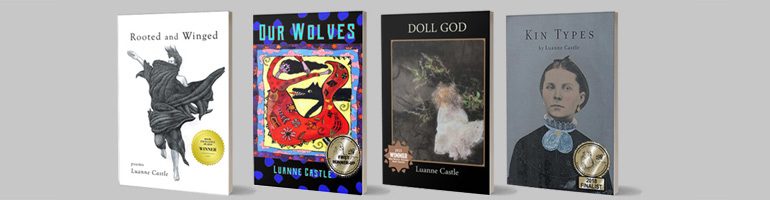
I had fun reading my poetry via zoom through the Well-Versed Words program, hosted by poet Alison Hurwitz. There was time to read quite a few poems from Rooted and Winged, as well as two from Our Wolves and to yak a bit about the poetry. Having to talk about my poetry taught me things about my poetry and my life. Alison is an excellent moderator and offers a reading every month. Check out her website at https://www.alisonhurwitz.com/events.

The video is 48 minutes long (eeks). It has the name of the wonderful moderator, Alison Hurwitz at the beginning, but you are in the correct video. And of course you can skip around if you want to check it out! As for me, no way can I watch it and see myself and listen to my voice hahaha.

https://vimeo.com/816303312

My leg has been diagnosed as an inside meniscus tear and arthritis of the kneecap exacerbated by my primary lymphedema. Surgery is a very very last resort because of the lymphedema. Going to see a PA in sports medicine this week. Long waits for actual doctors. I hope to be able to travel because I have plans to see my mother in Michigan this month. I will be traveling with my daughter while the gardener stays home with the kitties. Yes, I’ve booked a wheelchair at the airport! If you’ve read my blog very long you know there is always a new physical problem ;).

A spot of good news. My son got my sewing machine fixed. It’s been broken for about 15 years. I want to use it for journaling, and now I just have to remember how it works. You would think that the granddaughter of the Head Fitter at The 28 Shop (couture at Marshall Field) would be a natural at sewing. But it was my cousin Leah who inherited some of that talent. Sadly, Leah has now been gone for twenty years.

20 Comments

Filed under Our Wolves, Poetry, Poetry book, Poetry Collection, Poetry reading, Reading, Rooted and Winged, Writing

Write Me a Poem: Poetry and AI (Let’s Discuss!)

Yesterday I posted about asking the new Microsoft ChatGPT to write a blog post about art journaling. I felt a little sad that it could produce a decent freshman essay. But then Amy at https://brotmanblog.com/2023/01/10/time-for-a-break-2/ challenged me to ask it to write a poem. So I decided to have it write poems in the styles of different poets. I asked for a poem about a cat in the styles of Rupi Kaur (who writes simple little ditties that are very popular on Instagram), Sylvia Plath, Walt Whitman, and Luanne Castle (haha). [You see that haha right there? ChatGPT would never do that!]

I am going to post screen shots of the results, although I don’t expect you to actually read them all. But skimming them might be eye-opening as to how AI works.

First here’s Rupi Kaur.

If you know what Rupi Kaur verse looks like you know this doesn’t look like her writing. But there are hints that AI is trying to make this a Rupi poem: “that there is beauty / in simplicity,” for instance.

Now let’s see a Plath version.

Wow, the poem LOOKS the same, but the language is different. It’s dark and sad and somewhat angry. It doesn’t always make sense: “A hunter who leaves nothing dead.” What the heck does that mean? Again, there is no attempt to mimic the form of the poet’s work, but AI seems to have grabbed phrases from the internet and made its own mishmash with a thesaurus.

Here is in my style:

This is quite a change from the Plath. I would say it has a more inspirational tone to it. And some of the language makes me think that AI picked up on my blog posts maybe more than my poetry.

Finally, here is “I Sing Myself” Whitman.

There you go: Whitman’s poem really does sound like an ode to the cat. But same form. All the rhyming, including off rhymes.

Poetry, as we know, tends to be complex, using many poetic techniques, creating multiple “threads.” Poetry can also contain imagery and ideas that are quite idiosyncratic or personal, but rise to a new level in the poem itself. This analysis, if you can call it that, does show me more about how AI works. No way can AI do what poets do.

35 Comments

Filed under #writerlife, #writingcommunity, Reading, Writing, Writing Talk

What Do You Think About All This?

I thought I would share with you about the practice of art journaling. But first, here is a little water journal I made about three weeks ago. It’s made up of scraps of junk that are colored on a bit and then soaked in water. I love this little thing and keep flipping through it.

Please be patient. Ultimately this post is not really about art journaling.

***

Art journaling is a creative and expressive way to combine art and writing in one space. It’s a personal and flexible form of self-expression that allows you to explore your thoughts and emotions through visual and written means.

Art journaling can take many forms, from drawing and painting to collage and mixed media. You can use any materials that you have on hand, such as paints, markers, pens, scrapbook paper, and magazine clippings. There’s no right or wrong way to create an art journal, which is what makes it such a liberating and therapeutic practice.

One of the main benefits of art journaling is that it can help you process your feelings and thoughts in a non-linear and non-verbal way. You can use colors, shapes, and images to convey emotions that may be difficult to express in words. Art journaling can also help you identify patterns and themes in your life, which can lead to greater self-awareness and personal growth.

Art journaling can also be a form of mindfulness practice. When you’re creating art, you’re focused on the present moment and the act of creating. This can help you reduce stress and anxiety and improve your mood.

***

Mindfulness is so important to me. And I get that through art journaling. I also get it through blogging. But I might be out of a “job.” The above section was written by Microsoft’s ChatGPT!!! I asked it to “write a blog post about art journaling.” Here is the rest of the “post.”

***

To get started with art journaling, all you need is a blank notebook or sketchbook and some basic art supplies. You can start by making simple marks and lines, or you can jump right into more complex drawings and paintings. There are no rules, so let your creativity guide you.

Some people like to set a specific intention or theme for their art journaling, while others prefer to let their intuition guide them. You can also use prompts or exercises to get your creative juices flowing. For example, you might try drawing your current mood or creating a collage of images that represent your goals and aspirations.

Art journaling is a personal and intimate practice, so it’s important to create a space that feels safe and comfortable. You might choose to journal in a quiet space or with music playing in the background. Some people find it helpful to set aside a specific time each day or week for art journaling.

In conclusion, art journaling is a powerful and accessible tool for self-expression, self-awareness, and personal growth. It allows you to combine art and writing in a way that feels unique and authentic to you. Whether you’re an experienced artist or a complete beginner, art journaling is a creative outlet that can help you connect with your inner self and express your thoughts and feelings in a meaningful way.

***

I couldn’t have written more cohesively and comprehensively myself, although I would probably have shared photos and added personal comments.

The next way I engaged with ChatGPT was to ask it to “buy my books available on Amazon.” It responded that it doesn’t have the ability to purchase products on Amazon or any platform. Then it went on to give me advice on how to promote my books through Amazon.

So what do you think? New best friend or Trojan horse enemy? Personally I think we are DOOMED. Upper Case for emphasis. I bet ChatGPT can’t make that choice!

54 Comments

Filed under #writerlife, #writingcommunity, art journaling, Reading, Writing, Writing Talk