Tag Archives: Publishing

Talkin’ Poetry

Talkin’ trash here is more like it. So. You know how I’ve been working on poems and flash prose based on my research into my family history? Well, I have been. I’m working toward a chapbook–maybe 25 pieces.

One of my favorites was taken by a new magazine that looked great. They had one issue out with some excellent and even well-known poets, and I loved what I read, so I was excited for the 2nd issue with my poem in it. It was due out in December.

It’s now April and has not yet been published. And they don’t respond to my emails or my tweets.

If they had to fold, I feel bad for them, but it’s so unprofessional to accept work for an issue that will never be and not to notify the writers. I did send an email accepting their acceptance, so am I stuck now with a poem I can’t send out elsewhere?

I say NOT THE CASE. They seem to have broken any possibly contract that could have existed. But I was happy to have half my already-written pieces accepted and now this sets me back. I need another acceptance to catch up to that halfway point ;).

If I’m not going to name the offending journal, I guess I’m not even talkin’ trash, right? I’m just talkin’ poetry.

 ***

In 2004 I wrote a poem that took honorable mention in a competition that had an interesting reading venue. The poems that placed or were awarded honorable mentions netted their poets invitations to read at Carnegie Hall.  That impressed me. I always wanted to play Carnegie Hall, but I thought you had to be a musician! I was not able to attend, sadly, and that meant that somebody else read this poem on my behalf.

Super Nova


After the fires came mudstorms

Bulldozing bodies into the mix.

Weeks spent crumpling like dying stars,

Families’ children into science,

Into candlelit commiseration.

Pressure builds in a cauldron

With boiling tar, the three virtues tied

To a wheel and beaten with rods.

Small skulls of infants and bonobos

Commix in the pasteurized fields.

These offerings burst into flame

Larger than Santorini.

Rebuilding over brick, concrete, bones.

And the moon moves farther from us.

The event that inspired the poem was a horrific mudslide in San Bernardino County on Christmas 2003. Nine children and five adults were killed as they ate their holiday luncheon.

***

Weirdly, although it’s National Poetry Month, I picked my memoir manuscript back up last week. I feel a little split down the middle . . . .

Handsome (and mild-mannered) Rex dreams of a loving home in Arizona

@ Home Fur Good

38 Comments

Filed under #AmWriting, Flash Nonfiction, Literary Journals, Memoir, Nonfiction, Poetry, Poetry reading, Publishing, Writing, Writing Talk

Pinched Ideas on Recommending Books

In March I have a flash nonfiction piece coming out in a journal called Toasted Cheese. I will post a link when it’s published. The piece is called “And So It Goes,” and it’s the story of my great-great-grandparents who immigrated from Goes and Kloetinge (Netherlands) to Michigan. It’s meant to be part of the family history chapbook I plan to put together.

If you’re a writer or want to write, I think you might want to check out and follow the Toasted Cheese website. They are very interactive and provide DAILY writing prompts and creative articles about writing and reading. Here’s a sample article from this past December. The subject is book recommendations.

***

What Do You Recommend?

A Pen In Each Hand

By Baker

  1. Recommend on social media at least one thing you’ve read this year. If you don’t use social media, recommend in person. Independent authors are particularly grateful for recommendations.
  2. Create some recommendation business cards and leave them with your favorite works in the bookstore. You can print them at home. They could be as simple as the word “recommended” with a thumbs-up or a shelf card that lists why you recommend the book. Don’t put stickers on or in the books.
  3. Ask for recommendations at a used book store and/or independent bookstore. If you’re lucky, your local chain bookstore will have fellow book lovers who are well-versed enough to recommend as well.
  4. Recommend a book to a friend on Goodreads.
  5. While you’re there, write a recommendation of a book. If you’re stuck for one, think of a book you discovered on your own and write the review as though you’re speaking to your younger self.

***

What do you think of those recommendations? Do you do any of them? Or do you finish a book and move onto the next and squirrel away your reaction in your own mind?

***

Kana playing with her activity board

This toy is pricy, but it’s rewarding to see cats hunting for their food (without any resulting tragedies to small animals). This is an activity that is natural for them.

33 Comments

Filed under Book Review, Books, Creative Nonfiction, Essay, Family history, Flash Nonfiction, Literary Journals, Nonfiction, Publishing, Reading, Writing, Writing Talk

Review of Luanne Castle’s First Poetry Book “Doll God”

Jennifer very kindly read Doll God and reviewed it. Thanks so much for your support, Jennifer!

Also, a reminder that I am doing a Goodreads Book Giveaway through the weekend.

Good luck to you!


ENTER TO WIN A FREE BOOK

Doll God by Luanne Castle

Doll God

by Luanne Castle

Giveaway ends January 26, 2015.

See the giveaway details
at Goodreads.

Enter to win

6 Comments

Filed under Book Review, Doll God, Dolls, poems about dolls, Poetry, Poetry book, Poetry Collection, Publishing, Writing

A Baker’s Dozen?

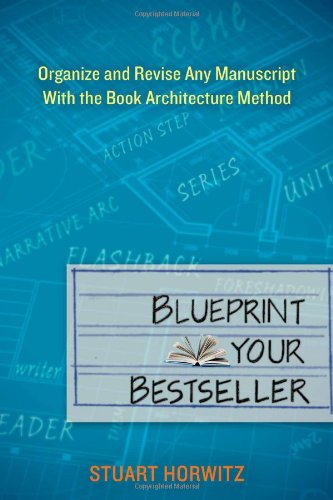
In my post called Target My Structure, I talked about how Stuart Horwitz’s book Blueprint Your Bestseller is helping me organize my memoir.

One of the most important steps of structuring a book, according to Horwitz, is to identify the series in your book. As I mentioned in that post, “a series is anything that has ‘iterations.’ Repetitions, a pattern. But not just any pattern–a pattern where the series “undergoes a clear evolution.” It happens or shows up more than once and changes a bit? It’s probably a series.”

There is no set number of series a book should have, but 12 is a reasonable number.  By happenstance, I have 12 series. Most of mine have to do with emotions, which is something that surprised me a great deal. I like imagery and metaphorical language, so I kind of thought I would find series with certain central metaphors or images. But when I did find iterations (repetitions) of an image, I would see that the image fit squarely within certain emotions that repeat throughout the book.

For instance, the image of a gun shows up in several scenes. In one scene, it’s a rifle. In another, it’s a pistol. In yet another, it’s a shotgun. But what is more important than the guns is that they represent the emotions fear and anger. Fear and anger are represented in different ways in many scenes. Guns are just one way they manifest themselves. But these emotions also show up in verbal arguments, physical abuse, and hiding/secrecy.

Once I had a list of my scenes in hand, I noticed that they correspond fairly well to the major emotions as identified by Pia Mellody.

ANGER

FEAR

PAIN

JOY

PASSION

LOVE

SHAME

GUILT

I also have a few other series in addition to these emotions, but I might add a 13th.  And it would be called THERAPISTS ;).


Do emotions show up often in your writing?

40 Comments

Filed under Books, Creative Nonfiction, Essay, Memoir, Memoir writing theory, Nonfiction, Research and prep for writing, Writing, Writing goals

Target My Structure

I’ve mentioned before that I have had many problems structuring my book. With 200,000 words of memoir already written, I was overwhelmed and confused about how best to structure the story. What to leave in and what to take out. Whether to organize chronologically or thematically.

So I was very happy to find the book, Blueprint Your Bestseller, by Stuart Horwitz. His “architectural” method is really working for me.


In following Horwitz’ plan, some of the first steps include identifying all the series in your book. You can’t know this until you have enough scenes written.  So if you don’t have 50,000 or more words, I would just write out your scenes first. Then find all your series.  A series is anything that has “iterations.” Repetitions, a pattern. But not just any pattern–a pattern where the series “undergoes a clear evolution.” It happens or shows up more than once and changes a bit? It’s probably a series.

Series can be symbols or metaphors like the hat that Holden wears in Catcher in the Rye. They can be characters, objects, phrases, settings, absolutely anything. When I worked on this aspect, I was shocked to discover that many of my series are emotions, such as anger, fear, and shame. Of course, these emotions don’t exist by themselves. They are represented by tangible events or objects, such as locked rooms and guns.

In another early step in this method, I discovered the “One Thing” my book is about. Horwitz took me on a sure path to find this out through a step by step process.

Every time I work on a new step I experience an epiphany about my book.

This past week I accomplished the next step. I created a target for my book, putting my “One Thing” in the center bullseye location. Then I placed post-it notes representing scenes (pink), series (yellow), characters (blue), and settings (green) on the board.  Horwitz says, “The trick of the exercise is to put the narrative element closer to or farther from the bull’s-eye, or theme, depending on the strength of the relationship.” Doing this project, allowed me to see that certain scenes and settings were too far removed, whereas there is a close-knit relationship between everything else.

Caveat: I have so many scenes that I did not place all my scenes on the board. It would have been impossible. I expect to weed out scenes in the next step of the process.


The architecture method is supposed to work with any book, no matter the genre.

As a blogger or a writer, do you ever have problems with structure?

46 Comments

Filed under Books, Creative Nonfiction, Essay, Memoir, Memoir writing theory, Nonfiction, Research and prep for writing, Writing, Writing goals

What the Blueprint Your Bestseller Process Looks Like

Renee is one of my in-person writing buddies. Look what she’s doing with her lovely book! This book she recommends by Stuart Horwitz is already winging its way to me so that I can do the same thing with mine. Best of luck, Renee!! xo

Photo by Renee

Photo by Renee

9 Comments

Filed under Books, Creative Nonfiction, Essay, Memoir, Memoir writing theory, Nonfiction, Research and prep for writing, Writing, Writing goals

She Asked Me a Lot of Questions . . .

Usually only “somebodies” are interviewed. But The Missouri Review isn’t confined by pedestrian boundaries . Although they are a well-respected and long-running literary magazine, they have a cutting edge attitude. For instance, did you know that they have an audio version of their magazine? This is what they have to say about it:

One of the many innovative ideas we’ve had in recent years was to create an audio version of our magazine. Every issue, our staff, lead by audio editor Kevin McFillen, gets an early uncorrected version of the stories, essays, and poems forthcoming in the next issue. The audio team reads the work and then selects a reader (or “performer”) from the Columbia theater community whose voice best captures the text. They get together in our recording studio, down in the basement of McReynolds Hall (it’s room 54 and, you betcha, we call it Studio 54), and then the audio file is edited for production. Each audio recording is then included in the digital version of The Missouri Review.

Alison Balaskovits, Social Media Editor of The Missouri Review was kind enough to interview me for their blog. I hope you’ll check out the interview (at least to see my new headshot 😉 by the magician Christopher Barr).

After you read it, tell me what you liked best about what you learned about me–or what broke your heart or made you irritated.  Insert more smiley faces with winks.

And take a look at TMR’s digital subscription deal, especially if you plan to submit work to them:

The digital edition of our magazine is created by GTxcel. Your subscription is delivered via link to your email address, and then you, as a subscriber, has access to not only read all of the stories, poems, and essays in each issue, but hear them as well. Our art features, in particular, really pop off the screen in the digital version.

One of the best offers we have is our Submit and Subscribe: submit your unpublished work to us and get a one-year subscription to the digital version of The Missouri Review for just $20, which is over fifteen percent lower than the print subscription. It’s a great opportunity to not only send your work to us but also to get a fantastic deal on four issues of our magazine. You can Submit and Subscribe here and, if you’re still not convinced, you can check out a sample of the digital issue.

Here’s the interview.

Should I write a blog post about what I endured to get that headshot accomplished?

###

On another note, I just returned to Arizona, the land of always-summer, from California.  Look what I found in California!  Autumn!

Fall is even beautiful up close.

I

28 Comments

Filed under Blogging, Books, Creative Nonfiction, Essay, Interview, Memoir, Memoir writing theory, Nonfiction, Research and prep for writing, WordPress, Writing