Tag Archives: fiction

It’s a New Year!

Welcome to 2026! I’m not asking for amazing things for the year; I’d just like it to be gentle with me.

2025 was difficult, although I did have some writing successes in journals, have been working with the small press, ELJ Editions, that will be publishing my flash memoir, and had my manuscript inspired by painter Remedios Varo accepted by Shanti Arts.

*Scrap: Salvaging a Family, a hybrid flash memoir, will be out March 20, 2026

*Hunting the Cosmos, flash fiction and poetry for Remedios Varo, will be out fall 2026

I should have a cover reveal soon for Scrap. Can’t wait to share it with you!!!

The problem with the new year, though, is it springs from the old and all the unresolved issues of 2025 will go on in 2026. My mother’s dementia is one of those things. Taking over her affairs is very stressful and time-consuming, but worse is the dilemmas of communication with my mother. I can still have good conversations with her if I ignore the little idiosyncracies (the “critters” that have taken up residence in her apartment, but can only be seen by her), hearing about her going to a service two hours early and waiting for others to show up, etc.

Both Perry and Meesker have serious health issues. As you may remember, Perry was diagnosed with issues two years ago, but I don’t like to talk about it. All I can say is I am constantly feeding sick cats who need food all day long and cleaning up diarrhea, pee outside the box, and dramatically hurled vomit. And Lily still hates Sloopy Anne. Last night she threw herself violently against the gate we have up to keep them apart, trying to get to Sloops.

2025 was productive for me for writing, up to a point. I haven’t written anything for weeks now. Between grandbaby duty, my mom’s stuff, and these cats (on top of regular work and business), I’ve been too busy and very tired.

I read some good mystery series this year, though, as that’s a good way for me to unwind. Actually, I read far more than I usually do, but then I did have hip replacement surgery in May, so mysteries helped out a lot when I was suffering before the surgery and then during the recovery. Here are the series: Yorkshire Murder Mysteries by J.R. Ellis; Dark Yorkshire, Misty Isle, and Hidden Norfolk by J.M. Dalgliesh; Rev. Clare Fergusson and Russ Van Alstyne Mysteries by Julia Spencer-Fleming; Duncan Kincaid and Gemma James Mysteries by Deborah Crombie; China Thrillers, Lewis Trilogy, and Enzo Macleod by Peter May; DCI Craig Gillard Mysteries by Nick Louth. (To give you a clue, I am a fan of Louise Penny, Ann Cleeves, and Elly Griffiths, and the series I’ve listed here are more like the Griffiths and possibly the Cleeves than the Penny books. The Spencer-Fleming series is a lot like the Elly Griffiths’ Ruth Galloway books, notably because of the hot love affair in the middle of the mysteries.

In addition, I read some wonderful stand-alone novels and poetry collections. I reviewed just a few of them for this blog. If I reviewed your book in 2025 and didn’t list it, please let me know!

POETRY

Review of Robert Okaji’s Our Loveliest Bruises

A Gorgeous Collection Combining Genres of Poetry, Genealogy, and History

Review of Merril D. Smith’s HELD INSIDE THE FOLDS OF TIME

FICTION

Book Tour Stop: Book Review of Deborah Brasket’s When Things Go Missing

Elizabeth Gauffreau’s Masterful New Novel, A Review

Christmas Magic

Just got a call from my son. He miscalculated the days this week and asked if I could watch Hudson again tomorrow. Sure! (Good thing I fell asleep on New Year’s Eve at 8PM). The other night the Gardener put together a tricycle for Hudson. He’s almost two, and his feet barely reach the pedals, but we can work on learning to pedal a bike again tomorrow. 🙂

Let’s work on making 2026 a tender, playful, happy year! If we all puts our heads and hearts together .  . . .

48 Comments

Filed under #amreading, #AmWriting, Book Review, Fiction, Flash Fiction, Flash Nonfiction, Memoir, Poetry

Christmas Magic

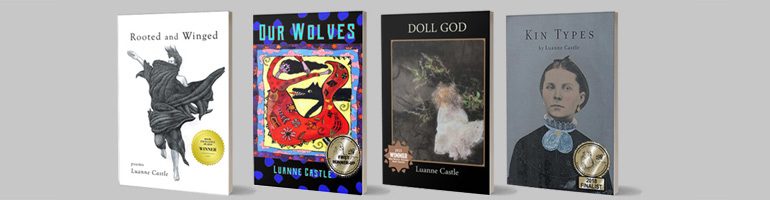
Looking for a happy holiday romance? Check out Eden Dow Robins’s new Christmas release available in paperback and kindle versions. And inside find a little Easter egg in the form of my book Rooted and Winged!

https://www.amazon.com/Frost-Happily-Forever-After-Holiday/dp/B0G64ZSWC7

There’s more, too, but I don’t want to share it before you have read Frost!

Summary

“A small town, two frozen hearts, and a little Christmas magic…

Esme Gerard decided spending the holidays at her favorite place on earth was just what she needed. Once known as the most wicked wild west town in America, Jericho Ridge had been her asylum for more than a decade and was the perfect respite when her heart couldn’t risk taking one more hit.

Until Jack.

Their first encounter left her craving more. Something about him drew her closer. No matter how much she tried to tell herself she wasn’t ready, her heart told a different story.

Jack De Vine had priorities. As a single dad, his daughter was at the top of the list. Second was a secret legacy he had a sworn duty to protect. Third was the winery he and his family ran. Dating was at the very bottom. Ever since his ex-wife left him and their child years ago without a backward glance, he’d kept his heart stored in ice.

Until Esme.

From the first moment he saw her, he was drawn to her. That sent alarm bells off in his head. He knew he should steer clear of her, yet he kept looking for excuses to get closer.”

I hope your holidays are joyful!


Leave a comment

Filed under #amreading, #writingcommunity, Book Review, Books, Fiction, Rooted and Winged, Writing

Elizabeth Gauffreau’s Masterful New Novel, A Review

Liz Gauffreau is a master of historical fiction. And rather than creating a series (so far), she has written completely different books with different historical settings. I loved Telling Sonny, and now I love The Weight of Snow and Regret.

Here is my review of the latter. At the end I’ll share with you how you can purchase the book!

***

Elizabeth Gauffreau’s new novel, The Weight of Snow and Regret, is a tribute to the residents of the Sheldon Poor Farm in Sheldon Springs, Vermont, as well as testament to the harsh lives of society’s disadvantaged. The novel takes place in 1967-68, the last year of the tenure of the poorhouse. But the plight of the poor and culture-rocking events of that year resonate with familiarity with contemporary readers.

The first part of the story weaves in the life of Louisianian Claire and how she falls from her place in middle-class society to living in the poorhouse far from home. In this way, the reader is drawn into the novel through the perspective of this mysterious woman, then the reader is delivered into the capable hands of Hazel, a sympathetic foster child grown into a compassionate woman who now runs the home itself while her husband manages the associated farm. Through Hazel’s kindness and perspective, we meet the other residents of the poorhouse.

The place hasn’t always been run as Hazel manages it. Before her hard work, dedication, and home management skills, the neglect was extreme. Every surface was filthy, with trash strewn about. The residents’ clothing was in desperate need of laundering. In fact, Hazel believes that the men’s underwear had never been cleaned. Hazel cleans the home immaculately, creates wholesome meals with a tiny budget, and gives the residents the care and understanding that they need.

These residents range from the forgotten elderly to the mentally ill to those with intellectual disabilities. Although they respond differently to events, and their interactions with each other can be fraught, Gauffreau’s exploration of their behavior and treatment rings true. One twist is that Hazel herself lived in this poorhouse at one time. A couple of the residents from her childhood time at the shelter are still living there when Hazel takes over. This feels like a gut punch to her to think of them still living in the conditions she and her family had undergone.

Gauffreau meticulously researched the history of the home, poor farm life in the sixties and before, the blues music that spoke to Claire’s troubled and depressed soul, the national and world headlines of the time, and local history. Her painstaking implementation of her research with her compassionate feel for the characters, and her excellent storytelling senses makes this an engrossing read. I read far into the night, without being able to put down the book.

***

Help Meals on Wheels!

Purchase the paperback from the publisher, and $5.00 of the purchase price will be donated to AgeWell Meals on wheels of Franklin County, Vermont.


47 Comments

Filed under #amreading, #bloggingcommunity, Book Review, Fiction, History, Novel

Book Tour Stop: Book Review of Deborah Brasket’s When Things Go Missing

I’m thrilled to be part of the blog tour for the new novel written by Deborah Brasket whose blog Writing on the Edge of the Wild  I’ve been reading almost as long as I have been blogging.  I’ve reviewed this very special book, and I’d love for you to read the review, hoping that will motivate you to pick it up for yourself.

EBOOK GIVEAWAY The top 3 people who leave the most likes and comments on the participating blogs will be emailed a free eBook of When Things Go Missing (epub or mobi) PLUS two extra chapters (pdf or doc file)

***

REVIEW

As I began reading Deborah Brasket’s debut novel, When Things Go Missing, I was expecting a smart and well-written story since I had been reading Brasket’s thoughtful blog for at least ten years. What I didn’t expect was such gorgeous writing, significant and densely woven themes and images, or how strongly the book would make me feel.

This novel is the story of a traditionally structured family of four and how the pieces that are the individuals fit together—smoothly, imperfectly, and jaggedly. The mother leaves one day without saying goodbye or providing a destination. At that point, daughter, son, and husband all respond differently, depending on their relationship with Mom/Frannie. As might be expected, they feel as if the center of the family is gone, leaving them with only tenuous connections to each other.

When Franny leaves town, her son, Cal, is a heroin addict who relies on the help of a rotating roster of enablers—including his mother—to give him money or a place to stay. The younger child, Kay, is a graduate student in archaeology, focused on finding a place for herself in her field. They both rely on their mother emotionally, but with the maternal tenderness spigot suddenly all but closed tight, they struggle to discover who they are and how they can succeed in life whether their mother is a part of their day-to-day lives or not.

The character portraits are carefully drawn. Brasket captures not only Cal’s addictive personality, but his sister’s love wrapped in resentment for the way he siphons attention for negative reasons. Even if the characters and their fascinating evolution throughout the book were all When Things Go Missing has to offer, it would be enough. I couldn’t look away for an instant. Every moment was a surprise and yet each new action made absolute sense for these people and their troubles and their conflicted emotions for each other.

Anyone who has an addict in their lives will be able to relate to this book at a profound level. Anyone who is part of a dysfunctional family group will be compelled to learn from the psychology at work here. And, finally, any parent who ever wanted to just get away from everyone and everything to search for peace and to find themselves, will feel a connection with the character who is missing throughout the novel—Franny herself. Where Franny finds herself will surprise and please you. The character her husband and children find within themselves will gratify you. I promise.

When Things Go Missing made me cry. I could not stop thinking about it when I finished reading. Frankly, I was stunned by the beauty and the brilliance.

***

Following you will find the book information, description, and author bio–as well as the blog tour schedule.

PUBLISHER: Sea Stone Press
PUB DATE: September 22, 2025
PAGE COUNT: 352
FORMAT: E-book $8.99, paperback $14,95, hardback $21.95
AVAILABLE NOW at Amazon, Bookshop, Barnes & Noble, and all major retailers.

ABOUT WHEN THINGS GO MISSING
When Fran Albright turns fifty, she heads to the grocery store and keeps going until she reached the tip of South America, leaving behind an empty hole in the lives of her bewildered family. Her daughter Kay scrambles to finish her master’s degree while trying to glue the family back together. Her son Cal is torn between grief and rage as he fights his own addictions and demons without her there to help. And Walter tracks his wife’s journey southward with her credit card purchases, continuing to care for her as he always has, before heading north to Alaska. Adding to the mystery of the mother’s disappearance are the elated messages she leaves on Kay’s phone and the strange photos she sends Cal, who studies them like hieroglyphs he must decipher to save her and save himself.

When Things Go Missing is a masterful exploration of loss, loyalty, and self-renewal. Told through the viewpoints of Kay, Cal, and Walter, this emotionally rich, mystery-driven family drama is wrapped up in a propulsive page-turner you cannot help getting swept up in.

GENRES: Book Club Fiction, Literary Fiction, Family Saga, Women’s Fiction, Sibling
Fiction, Addiction Fiction, Introspective Family Drama, Healing and Self-Renewal


ABOUT THE AUTHOR

After sailing around the world with her husband and children, teaching literature to college students, and fighting for affordable housing as the leader of a nonprofit, Deborah J Brasket finally settled down among the golden hills and vineyards of California’s central coast to write the kinds of novels she loves to read.
http://www.deborahjbrasket.com
seastonepress@gmail.com

WEBSITES AND SOCIAL MEDIA
Author website and blog, Deborah J. Brasket, Author ~ Writing on the Edge of the Wild –

Novels

Substack Newsletter, https://deborahbrasket.substack.com/

Facebook, Deborah J. Brasket, Writer –  https://www.facebook.com/DeborahJBrasket/

Goodreads, https://www.goodreads.com/author/show/55448191.Deborah_J_Brasket

Instagram, https://www.instagram.com/dbrasket/

LinkedIn, https://www.linkedin.com/in/deborah-brasket-39384370/


BOOK BLOG PARTICIPANTS

18 Comments

Filed under #amreading, #bloggingcommunity, Book promotion, Book Review, Books, Flash Fiction, Nonfiction, Reading

Channeling Ethel Merman

My mother-in-law Diana Dale Castle painted this picture of Ethel Merman. MIL used to hang out at the Broadway theatres during rehearsal time. She would research the actors’ roles and role history and sometimes ended up with a multiple image painting like this one. The painting is under glass which caused the lines in the photo. Also, the color is way off. I am wondering why color is so off in my iPhone pix.

Switch: A Magazine of Microfiction, Editor Elizabeth R. George, published the story I wrote when this painting was demanding my attention. It hangs to the left of my desk . . . . This micro story, “Ethel Merman, American Treasure, May Have Expressed Regret,” allowed me to channel my inner Ethel as it’s Ethel talking to an interviewer.

The story is the 3rd one down.

https://www.switchonline.org/about-1?fbclid=IwY2xjawLrecxleHRuA2FlbQIxMQABHgx66dNYqLdrIVeoUOYsDedT0K4GxnLoYyM9m5Y1-Ic7DuEDuhN0U0uox0pC_aem_RGG7s_ozdQye1MMZagsNoQ

29 Comments

Filed under #AmWriting, #writingcommunity, Flash Fiction, Literary Journals, Publishing, Writing

“What Would Grandma Do” at LatinosUSA – English Edition

Did you have a wonderful grandmother? This fiction story is based on mine.

My story “What Would Grandma Do” is up at LatinosUSA -English Edition.

https://latinosenglishedition.wordpress.com/2025/07/16/what-would-grandma-do-by-luanne-castle/

24 Comments

Filed under #AmWriting, #writingcommunity, Flash Fiction, Literary Journals, Publishing, Writing

Is it Real Life or is it Fiction?

Six years ago, I published a piece of flash fiction at The Story Shack called “Parking Lot Superhero.” I posted a link on this blog and yadda yaddaed about fiction giving me more freedom for structure. The story was one of the first flash pieces I wrote.

Here’s a confession. I don’t even know why I wrote that about freedom because the truth is that this story is completely true except for the names. So maybe the freedom actually came from changing the names. And by changing the names I was able to change the structure and how I ended up structuring it made all the difference. So, yes, I submitted nonfiction as fiction by changing the names.

colorful cars on parking lot
Photo by Erik Mclean on Pexels.com

Is this a character defect? Or is it just a genre, like a roman à clef (novel where real people occur, but their names are changed)?

Have you ever written nonfiction and disguised it as fiction?

If you have read this blog for a long time, you might remember the story, but here it is: https://thestoryshack.com/flash-fiction/drama/luanne-castle-parking-lot-superhero/

This story is not one of my most well-written (and at some point I might revise it), but it’s still one of my favorites because the hero of the story (not me) was such a larger-than-life character in real life.

Going back to my title–Is it Real Life or is it Fiction?–maybe fiction is often real life, just many different aspects of real life glued together in a different combination and order.

One more thing. Why did I want to come clean about this story being true? Although I published it as fiction to protect “Jack” and his family story, I have felt guilt at not giving him credit for being a hero. I still won’t publish his name, but I feel better letting you know that he is a real living hero.

48 Comments

Filed under #writerlife, #writerslife, #writingcommunity, Fiction, Flash Fiction, Publishing, Short Stories, Writing

Distant Flickers Book Review

Distant Flickers: Stories of Identity & Loss is an anthology of engaging short fiction that varies in subject, style and tone. As the subtitle suggests, explorations in identity and the different faces of loss provide a thematic focus for the collection. After each story, an extended bio, author perspective on the story, and information about the author’s other publications is provided, and I really like that. So often in an anthology I don’t feel that I “meet” the writers of the short stories or poems. Here, I am asked to slow down and get to know them a bit.

Every story in the book is special, but I will write about just a few of my favorites. In “1975: East Ocean View,” Elizabeth Gauffreau develops a character study of a young woman whose childhood has been ended by the birth of a baby. The girl, unexposed to early feminism, hasn’t had a chance to grow up on her own, but instead must negotiate a life of poverty with an immature husband and a baby. Gauffreau’s skill with deft understatement and deep understanding is clear in this piece. “1975: East Ocean View” serves as a reminder to me of the best of the short story genre—and what I love about it. No big splash, but lots of dangerous undercurrents. In her second story in the book, “Diary Omissions: The House on Edgewood Road,” Gauffreau demonstrates a flair for dry humor even as she writes poignantly of a family tragedy.

“Two Boys,” by Carol LaHines, is a thought-provoking look at a mother’s loss. The approach to the subject, as well as the writing style, reminds me of Shirley Jackson’s delightful and unsettling “domestic” stories.

“Where Secrets Go to Hide” by Keith Madsen is a charming and humorous exploration of what makes a secret a secret. An undercurrent of darkness occasionally breaks the surface and shows itself, thus providing tension and suspense to the story.

I enjoyed all the stories in the collection immensely. You couldn’t ask for a more satisfying variety of approaches to both identity and loss. The protagonist in “1975; East Ocean View” has lost her future even as she has lost her past. In this way she is in danger of losing her self. In “Two Boys,” the loss affects the mother’s and the child’s sibling’s identities. Madsen’s story is about the loss of innocence, which affects the identity of the protagonist and his family.

You can purchase the book through your favorite book seller here: https://books2read.com/-distantflickers?format=all

18 Comments

Filed under #amreading, #writerlife, #writerslife, #writingcommunity, Book Review, Fiction

Go. Read. Hunting the Devil by Suanne Schafer

I could not put down Suanne Schafer’s new novel Hunting the Devil until I ran out of pages to read. You might recall that I wrote about her first novel, A Different Kind of Fire, and loved it. The new story is entirely different from the first one, but another literary success. Furthermore, Hunting the Devil seems a very important book.

Here is my review, which is also posted on Goodreads and Amazon.

Suanne Schafer demonstrates once again that she knows how to write novels that defy genre boundaries and engage on many levels. Hunting the Devil, her most recent publication, is a historical war story that takes place in Rwanda, but also holds elements of a medical thriller and an unconventional romance complete with love triangle. The cinematic experience of reading this important book is still with me weeks after reading the last page.

Dr. Jessica Hemings, an American medical doctor, is in Rwanda to establish a clinic to treat poor Rwandans when civil war breaks out. With her biracial American features, Hutu paramilitary identify her with the Tutsi population they are committing atrocities upon, so her life is in danger. After her twin babies are killed, Jessica escapes across the country while planning revenge upon the murderer of her children.

The short chapters with initial place names and dates make a complex book easy to follow. Schafer’s descriptions are apt and illuminating, but never drag down the pace of the story. An ex-physician, she knows how to write about medical issues in a way that is believable and comprehensible to the layperson.  The interpersonal relationships and inner landscapes of the main characters are well drawn. Unlike a lot of writers, Schafer even writes sex scenes well.

I knew so little of the Rwandan Civil War when I began this book. Since finishing it, I’ve done some more reading. Schafer has cast this devastating and enthralling story upon a well-researched setting. In doing so, she introduces her readers to an event in history that needs a prominent place in our understanding of world history. She does this through an action-packed can’t-put-it-down storytelling style. I have been recommending the book to family and friends. When anyone asks me how I could read about the atrocities, I explain that as a reader one becomes so caught up in Jessica’s experience that one is compelled to keep going. There is no going back. And for that I am so grateful. The book changed me forever.

Suanne Schafer

You can find the book at these links:


20 Comments

Filed under Book Review, Books, Fiction, History, Interview, Novel, Writing Talk

Suanne Schafer on the Writing of A Different Kind of Fire

When I attended the Stanford online writing program, I met fellow writers with whom I’ve developed a lasting bond. One of my favorites was not even in my nonfiction program, but rather a fiction specialist, Suanne Schafer. Before her first novel, A Different Kind of Fire, was hot off the presses and in my waiting hands, I knew it would be a good read. I just didn’t know how wonderful a book it would turn out to be! When I finished reading this historical (women’s, LGBTQ, art, Texas) novel, I begged Suanne to write about the book for my blog, and she kindly agreed.

You can read my Goodreads review here.

MEET SUANNE SCHAFER, AUTHOR OF A DIFFERENT KIND OF FIRE

A Different Kind of Fire began as an homage to my grandparents. According to family legend, my grandfather had vowed he would never marry unless he married his childhood sweetheart. My grandmother, though, had other ideas. She traipsed off to the Chicago Art Institute with the goal of becoming an artist. Several years later, she returned to West Texas—one child in tow, pregnant with another, and abandoned by a fellow artist, a European nobleman she’d had to marry. Steadfast Bismarck waited seven years for her husband to be declared dead before Bismarck could finally achieve his goal.

To disguise the fact that I was writing a family history, I set A Different Kind of Fire some twenty years before my grandmother went off to art school. Originally, I adopted the contemporary romance format of alternating points of view to reveal a love story. Eventually I realized I didn’t really want to write a family history—I wanted my story to be larger than that. The more I researched the Gilded Age, the less interesting Bismarck became. Back on the ranch doing the same thing day after day, he wasn’t as intriguing as a young woman suddenly on her own in a big city, encountering suffragettes, bohemian artists, misogynist professors, and handsome European nobles. I wanted to write herstory not history.

I chose a very close third-person point of view for A Different Kind of Fire because I wanted readers to feel as though they were Ruby. To accomplish that, I had to become Ruby, to see only through her eyes, to experience only those things she could directly experience. Showing Ruby’s world through an artist’s eyes proved to be a two-part task. As a teenager, I painted well enough to be expected to follow in my grandmother’s footsteps. In an act of defiance, I became a photographer instead. Both art forms required an eye for line and color as well as a sense of composition, so I already saw the exterior world as an artist would. Thus, translating Ruby’s love for her West Texas home was relatively easy. For her, the drab landscape carried colors most folks never saw: “clouds turned scarlet and yellow against the cobalt sky” and “moonlight silver-plated puffy clouds … and gave an argent shimmer to the grasses below.” She sketched a bleached cow skull and “lightly penciled a copperhead wandering through the eyeless sockets, an insolent S snaked” over paper washed with a “venomous green.”

What proved more challenging was revealing how art permeated every aspect of Ruby’s existence. When she first saw Bismarck nude, her immediate desire was to draw him—she created precisely-detailed anatomic sketches guaranteed to shock viewers of the era. Art influenced even Ruby’s subconscious. I pulled an experience from my own life to illustrate this. I always knew when my grandmother occupied my dreams—I woke to the smell of turpentine. So, when talking to her friend Willow, Ruby confided that she “dreamed of art in the same way she dreamed of making love, awakening with the smell of turpentine and linseed oil in her nostrils, as rich and intoxicating as a lover’s scent.”

Line, color, and composition also informed Ruby’s emotions. When her third child was stillborn, she tailored his christening gown to fit his premature body, then “cradled his skull and, with her hand, fixed its geometry in her brain. Her thumb inscribed the arc of his brow in her memory. Her nose imprinted the scent from the crook of his neck on her dreams. The pad of a finger applied the burnished new-penny color of his hair to her mind’s palette. Her arms held him, awed by how his tiny body made her soul feel so heavy. Finally, she sketched her son so she would never forget his innocent face.”

Years later, when Bismarck became paralyzed by being thrown from a horse, Ruby saw him in terms of color: “His eyes, the new-denim blue now turned to faded chambray … By kerosene light, his skin looked yellow. The color of life giving way to death.” The intimacy of working with his frail body gave Ruby new insight into the Biblical scene of Christ in the Selpulcher as she painted “the blue-gray of lips no longer warmed by blood, the greenish cast to the face, the way white flesh hung slackly from bone when unsupported by functioning muscle.”

Ruby experienced the births of five children, the loss of three of them and her beloved Bismarck. At age fifty-four as she pursued another love in New Mexico, she still viewed the world through the filter of art, seeing the world’s highlights and shadows as if on a canvas, “With little atmosphere to filter the sun, New Mexican light blazed intense and harsh, blinding her. The effect was strangely unsettling. Brilliant daylight bleached important details. Dense shade obscured others. Salient information got lost in those extremes. The narrow range of mid-tones didn’t tell the full story.”

Through a close third-person point of view, I hope I captured not only the tastes, smells, and other sensations that made up Ruby’s life, but the sentiments that bound her to her family, her lovers, her home; the innate disposition and moral code that overlay her actions; and most of all the colors, lines, and composition that guided her art.

###

Purchase the novel at Amazon by clicking on the book cover.

23 Comments

Filed under Book Review, Books, Fiction, History, Interview, Novel, Writing Talk