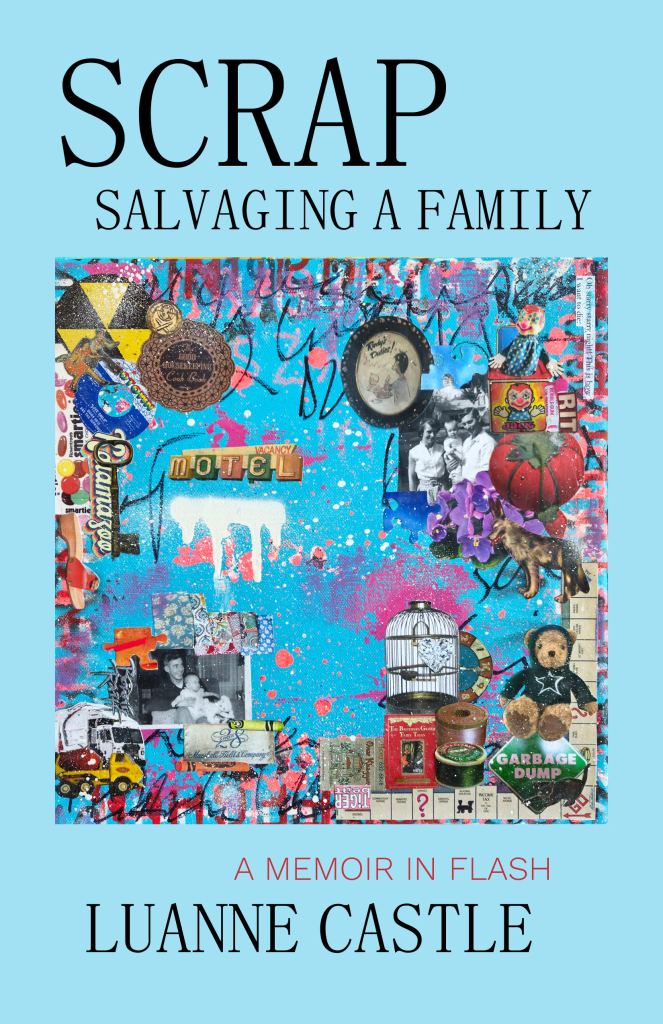
I’m so honored to write an article about my hero Cleveland Amory for Patti Moed’s Trailblazer Nominee series over at Pilot Fish. Please check it out and see what kind of world Amory wanted to create.
Category Archives: Vintage American culture
Pilot Fish Trailblazer Nominee: Cleveland Amory
Filed under #AmWriting, Blogging, Cats and Other Animals, Essay, Inspiration, Nonfiction, Reading, Vintage American culture, Writing
Sorting and Collecting for Free
I’ve been adding social media to my life for a few years. Some types or platforms I find more useful or more appealing than others. While I have not gotten excited over Instagram, I do love Pinterest. I rarely think about the social aspect of Pinterest. I’m simply infatuated with the intriguing photos that lead to stories, more images, or recipes.
As a collector, I find it addictive to add to boards that categorize some of my favorite subjects, and I’m grateful to other Pinterest collectors for providing pins and for the ease of adding my own contributions.
Something about Pinterest reminds me of sorting M&Ms by color before eating them. And collecting shells on the beach and sorting them by shape or color. Simple and therapeutic. Sort of puts me at the emotional age of a toddler.

Some of my boards are writing and reading related, as you might expect. Check out Writing, Scribbling, and Jotting for an idea of my boards. If you have a particular blog post (written by you or someone else) that you would like me to pin onto the board, type the link into the comments here, and I’ll check it out!
I have boards for that ever-present child in me (I linked to Dollhouses in case you want to see a sample):
- Dolls, dolls, dolls
- Dollhouses
- Tiny beauties (miniatures)
- Vintage toys
- Kestner dolls
- Children and dolls
- Puppetry pins
- Paper dolls
- Doll art
- Antique, Vintage and Old-fashioned Nurseries
- Dionne quintuplets
I’ve got fairy tale boards called Red in the Woods and A World of Snow. The former is one of my best boards, mainly because so many artists have a version of Little Red Riding Hood! I don’t usually pin the highly sexualized ones, but there are a ton of those, too.
For my love of textiles I have Hankies and History, Lace and other fun textiles, and Buttons buttons. Really all these textiles and trimming are related to history.

For history I cultivate these boards:
- Family Stories and Geneaology
- Kalamazoo Area History
- Gravestones
- Still life after death
- Historical Zeeland
- Antique, Vintage, and Fun Aprons
The apron board is new and was inspired by blogger Sheryl Lazarus here and here.
I’ve got animal boards like Beasties (just because I love that Scottish word), Black Cats Rule, and Children and Animals.
Speaking of black cats, Kana is doing well! Here she is enjoying a little box. No box too small for this girl!
Art-themed boards include:
- Art of the Scrapyard
- Revision Art
- Translucent beauties
- Scrapbook and paper crafts (woefully in need of work–just like my own scrapbooking!)
Most of my recipe boards are gluten-free. I’ve even got a couple of secret boards. Subjects? Hah, that’s why they are secret.
Some people (read: hubby) might think I’m wasting my time on Pinterest, but it sure seems fun to me. And I only “play” over there for a couple of minutes almost every day.
What about you? Are you on Pinterest? Why or why not?
Getting All Out of Art
When we visited New York in October, we saw this sculpture:

I didn’t really understand what it was, although there was a sign that said it was the Merchant Mariners’ Memorial at Battery Park. I thought it was amusing because of the bird perched on the guy’s head.
Tourists were in front of it, snapping photos, and I had a hard time getting an angle I wanted.

And there was a fence around it, too.
 I was with hubby and daughter and we walked on through the park. After all, we could see the State of Liberty and Ellis Island. I don’t know much about Merchant Mariners other than:
- my dad’s uncle was one during WWI (he died in his 30s from a car accident)
- my dad’s friend when I was a kid was one (he was a very sweet guy but used to get drunk and in bar fights when he was on leave)
- Daniel Keyes, the author of Flowers for Algernon (run to library if you haven’t read it), joined the Merchant Marines at age 17 and practiced medicine on the sailors
Daughter has been visiting (and has to leave today BIG SOBS). She’s packing right now. I just ran across these pix and wondered more about the sculpture. A lot of effort and money goes into these public art projects, so what is this one about?
Apparently, it’s supposed to look like THIS:

American Merchant Mariners’ Memorial, designed by the sculptor Marisol Escobar, is located just south of Pier A on a rebuilt stone breakwater. It is a representation in bronze of four merchant seamen with their sinking vessel after it had been attacked by a U-boat in World War II
These men were drowning after a Nazi U-boat attacked their ship. And look how powerful it is. Why is it so blocked now that you can’t get the effect of this drama? A beautiful work of art, but because the “setting” or “context” is no longer correct for it, much of the meaning and beauty is lost.
Like a diamond needs the right setting and a painting needs the right placement, does writing need the appropriate context, too? Are there ways that the full expression of a book, story, or poem is lost because the context has changed? Or is writing something that we can always access in just the way someone did 20 years before? or 200? What do you think?
Filed under #AmWriting, Nonfiction, Sightseeing & Travel, Vintage American culture, Writing
Where Do You Store Your Treasures?
I store photographs and documents in a fire safe in hopes that if there was a fire, they would be safe, but from what I’ve read, it depends on how hot and how long the fire lasts whether even a fire safe can save them.
Other treasures I store in an antique trunk I stole received from my father years ago. He gave it to me to use because he didn’t have room for it, so I got it refinished because I was 25 (many people would say I should not have done that), and I’ve loved it ever since.
The furniture restorer followed the original look of the trunk–with the alternating light and dark oak stripes. It’s an antique dome-top steamer trunk that would have been used for travel.

The pictures inside are classic Victoriana.

Here are some close-ups.


So what do I store in my antique trunk?
I store holidays decorations, including Hanukkah decorations and my grandmother’s vintage glass Christmas decorations.

Where do you store your treasures?
Filed under #AmWriting, Family history, History, Nonfiction, Vintage American culture, Writing
Poetry Potpourri
the museum of americana is a literary magazine with a mission close to my heart:
the museum of americana is an online literary review dedicated to fiction, poetry, nonfiction, photography, and artwork that revives or repurposes the old, the dying, the forgotten, or the almost entirely unknown aspects of Americana. It is published purely out of fascination with the big, weird, wildly contradictory collage that is our nation’s cultural history.
They’ve published two of the poems I intend for my chapbook of poems based on my family history. You can read them here.
I love how my interest in family history and genealogy and research connects with my partnership with poetry in these poems.
On another note, if you bought a copy of Doll God, send me your address and I will mail you a sticker to complete your book cover.
If you haven’t bought a copy, please consider it if your finances allow–either for yourself or if you think you’ll hate it (gotta allow for that) as a gift for someone you think will enjoy it. Amazon says it will arrive before Christmas.

Have I ever told you what book existed before Doll God? It’s a scrapbook my daughter made for me two years ago. In it, she hand wrote many of my poems and she included posts from the adoption blog, Don’t We Look Alike, that we worked on together.
In the slideshow you can see a sample of the scrapbook. Note the subtle cat-themed touches. And if you see a pic of a high school couple just remember that it’s easy to find stock pix online (big winky face).
Our Cemeteries
In the past, when we’ve visited Michigan, hubby and I visited his parents’ graves. This time, we went with my mother to the veteran’s cemetery where my father is buried. When we got to Toronto, we also visited hubby’s grandparents’ graves. Sherri Matthews gave me the idea to write about our cemeteries.
In Michigan, it was “pouring rain,” (is that a Michigan expression where pouring is used as an adjective meaning the rain is coming down in a downpour?) and we had left the umbrella back home. There is a government building on the very large property, and I stopped by to see if they had an umbrella to borrow. A nice young man ran about looking for one, even running out to his own car, but alas no umbrella.
 The cemetery feels very spacious because there are a lot of grounds with a curving road that cuts through. All the newer sections use flat markers, rather than gravestones, so the illusion is as if one is in a park. It looks clean and contemporary.

When we got to my father’s section, the rain stopped.
Graves are dug in the order of date of death, and many have come after my father. There is an institutional feel. Everything is large and impersonal. Big equipment just beyond my father’s grave is carving out room for more of our dead veterans, and in some cases, their spouses.

I’m grateful for the sacrifices of our veterans, and I am glad that this national cemetery is well cared for and in a beautiful setting. But it’s not where I would have liked my father to be buried. Originally, my parents had plots in a family section of a local cemetery. He would have had a regular headstone, where we would not have been limited by government rules. I also don’t like this idea for my mother because eventually (she’s in very good health and a very young 80, to be clear) she would have to go in the same grave with him, I believe. But near the end my father became more and more focused on his military service in the Korean War, and he changed his funeral and burial plans.
In Toronto, we found old traditional cemeteries. We were told the name of the Jewish cemetery where we would find hubby’s grandparents, so we followed my iPhone directions to get there. We were told it was on the north side of the road, and when we got there we discovered two cemeteries–both Jewish–one on each side of the road. We went to the appropriate side, but we couldn’t find any of the relatives, although we searched the names on every stone. I kept thinking we were in the wrong place because in general the dates appeared too old to me. Although there were a few where the deaths were past 2000, for the most part I thought these plots had been bought 100 years ago.
I felt bad about this cemetery because although someone was taking care of the grass, many stones were falling over. I didn’t know how much vandalism had to do with this and couldn’t help but wonder why nobody had fixed them!


Jewish cemeteries are sometimes subjected to vandalism. Quite recently in France hundreds were vandalized. But these are old stones and maybe they have fallen over on their own?
Eventually I wandered across the street to the very neat and orderly, but crowded, cemetery.

I searched for some time, as the sun was moving down in the sky, creating shadows. Finally, hubby reached a cousin on the phone. He drove over and showed us that there was yet a third cemetery just up the street! That’s where we found hubby’s grandparents.

Although this cemetery had the right feel and was quite beautiful and old, I won’t show you my photos of hubby’s grandparents’ gorgeous stones because his relatives are what hubby and I think of as superstitious, and I don’t want to annoy anyone.

These Toronto cemeteries all had the look of big city cemeteries where the rows of gravestones are quite close together because land is precious.
Filed under #AmWriting, History, Memoir, Photographs, Sightseeing & Travel, Vintage American culture, Writing
Back Home
I got home last night from another trip. This one was just as long as the one hubby and I took in August. We flew into Chicago, drove to Kalamazoo, Toronto, New York, Pennsylvania, and finally Indiana, visiting my mother, hubby’s cousin, and our daughter.
Now I need to write “The Definitive Guide to Gluten Free Travel REDUX.” Or at least Part 2. And pick up my writing-writing. On top of that, I plan to prepare for a poetry reading I’m giving in Redlands, California, on November 8.
But for now I need to unpack and catch up on work. Just glad to be HOME.

Saw this cool cardboard dollhouse in an antique mall.
Gotta Read Those Old Headlines Carefully!
My friend and professor Clare Goldfarb published a beautiful piece in Lilith that involves two of my favorite topics: memory and family history. If you recall, I reviewed her novel She Blinked here. You can read “Material Culture: The Samovar” here. I love how it focuses on an object to talk about family and history. Just gorgeous.
That would make a good writing prompt: write about a family heirloom.
I’m working on the Flash Essay course I’m taking right now, but in my research for essay #2, I found this interesting newspaper article from July 9, 1920. Look below the lake commerce article for that tiny article that begins “Seven Babies.”

When I first read this report, I took it at its word: that there were seven babies that had been killed or kidnaped. They even clarified in the headline, although they tried to disguise it. I can just hear the argument.
“You can’t leave it so readers think these were real babies.”
“But it makes for better newspaper sales!”
“Put Kewpies in the headline!”
Grumble grumble. I’ll put it in, but in a way that fast readers won’t pay attention and will still think it’s 7 dead babies.
***
Haha. Is that all this woman can write about: dolls, cats, and birds?!
Speaking as a doll collector, I can tell you that Kewpies are very popular collector items, and I think this stash of 1920 dolls would be a hit today with the right person. You can click through the following photo to the blogger who posted about her aunt’s kewpie collection a few years ago. It’s full of cute Kewpie photos, and, yes, you can find a real baby in the mix (though not in this exact photo)!
 Today is my BIG birthday. I turn 60 today. I still feel like a smidgling (my made-up word for a wee one), but there it is: 60. That’s a whole lotta numbers!
Beauty Addiction
On Monday I mentioned that I would tell you about The Doll Empress who I met quite a few years ago. She must not be confused with The Doll Lady. I have changed her name here for reasons you will see when you read the following story.
I call her Bitzi because she did go by a cute nickname, but there was nothing Bitzi about her love for dolls.
###
The directions to her house were wrong—I knew that when she gave them to me, but she sounded fragile or confused enough that I thought I’d wing it and see if I could find her place myself. All I need is the address, I thought. I ended up driving back and forth on her rural street until I noticed a dirt road which seemed to disappear into the horizon. I figured I’d try driving down that path since she had mentioned a dirt road.
Sure enough it turned into a sort of primitive cul-de-sac, ending at a gray barn, flanked by houses, trailers, and outbuildings. She had told me to honk when I got there because her dog would greet me barking. So I did honk. The big piebald dog was there almost immediately, barking on schedule. I waited quite some time for her to appear, but I ended up honking again before she finally came out.
When she approached my car I realized why it took her so long. She was walking very, very slowly. Her face was remarkably unwrinkled for 75, her eyebrows jet black, and her gray hair unnaturally robust. It didn’t occur to me until later that her hair might be a wig.
Her greeting was taciturn at best. I followed her into the house, taking a last look for the moment at her property which I mentally labeled “hillbilly compound” (judge me kindly, please). The county dump was neater and less overrun by sad-looking objects.
We entered the house by the cluttered kitchen and through the dining room while I heard about her three cats and three husbands. Later I learned about her three religions. We entered the front room. The one main wall of the room had been outfitted with a wooden shelving unit, fronted by Plexiglas.
When I read about Bitzi in the local paper, the reporter described her place as a doll museum. Museums conjure up organized collections, patterns of objects, on shelves. But these shelves were hardly organized. Perhaps at one time she had tried to organize because I did see small groupings of Kewpies, of Barbies, of baby dolls; but at some point she must have given up re-arranging and had resorted to tucking dolls into cases somewhat randomly.
I had sought out Bitzi when I realized that my own doll collection had defined itself into specific types of dolls. I was here because Bitzi said she had a huge Red Riding Hood collection and was interested in selling some. She also claimed to have a lot of Korean dolls, something I really wanted to see.

My Red Riding Hood dolls
We leisurely strolled through the front room, admiring dolls along the way. I thought of it as a “front room” instead of a living room because surely no one could actually live in a room walled by pairs of staring eyes. Next, we entered a side room with doll cases, a bedroom walled with what she called “boys’ toys” (confiding that this was her 2nd husband’s collection), and then eventually back across the house to what must have been her own bedroom.
By this point it was obvious to me that the only living spaces in the house were the tiny kitchen and the bed. Her 3rd husband must have spent most of his time outside.
I felt uncomfortable pressed between the doll case and her partially-made bed. The room smelled musty–like bedding or clothes not washed often enough. Some of her dolls were beautiful, some in bad condition, and most from the 20th century. I realized we had spent at least an hour in her house, but I had not seen one sign of a Red Riding Hood or Korean doll. Still, I’d seen hundreds and hundreds of dolls and some pretty cool toy trucks and cars.
Was this it then? Maybe she was lonely, so had told me she had dolls she didn’t really own. We walked back outside, crossing the porch area in front. I counted six small refrigerators stacked on the porch, along with numerous other appliances, tools, and junk. A sweet-looking black and white cat followed us briefly, while a gray cat sat licking its hindquarters on top of one of the refrigerators.
We went around to the other side of the house to what Bitzi referred to as the sun porch. She started to stumble on the high steps as one foot slipped out of the men’s corduroy bedroom slippers she was wearing. Once inside she showed me how they had walled up the sun porch from the rest of the house because the cats kept coming in. The plywood was unadorned.
The sun porch was one long room with perhaps one small window, hardly a “porch” of any kind. Near the entrance she had a diorama of witches, fairies, and other woodland creatures, created by a man she described as a hermit who lives in the mountains near Idyllwild. She also had a few of his magnificent dolls which looked like Queen Elizabeth clones.
The same shelves as in the house lined the walls of the tunnel-like porch, floor to ceiling, and dolls overwhelmed the shelves. She had lots of Ginnys, little fashionable dolls from the 1950s with movable arms and legs. One unit was stacked with Ginnys in boxes from floor to ceiling. Who could be enjoying dolls which were stacked in dust-covered boxes? She explained that the boxes didn’t have windows. I guessed that meant that sunlight couldn’t damage the dolls or their outfits. Almost every Madame Alexander doll ever made was on display in this area.
Bitzi asked me some personal questions such as did I have a job, what does my husband do, and she apologized for being so nosy. She talked about her life and herself. A self-confessed OCD “beauty addict,” she admitted that she couldn’t be “allowed out of the house” or she would buy whatever she liked.
By now I’d been nervously checking my watch every so often because I had to pick my kids up for after-school activities. I’d been with Bitzi over two hours. Finally, we were at the end of the porch. I sighed with relief and followed her outside. The fresh air was good when I inhaled deeply. The porch air had been stale and dusty.
“Well, thank you so much,” I said.
Bitzi threw her arm out and spun it, vaguely pointing to the barn and all the other outbuildings, as she did so. “Aren’t you going to see the rest of my dolls? We haven’t gotten to the Red Riding Hoods and the Korean dolls yet.”
Well, dear readers, I moved swiftly through the barn for the next hour, eventually buying a couple of dolls from my childhood era. In one room of the barn, 19th century oak furniture pieces were crammed together and every drawer was overflowing with doll parts. In one dresser, each drawer held legs, arranged by size by drawer. Another chest held arms and another heads. If only I’d had an iPhone in those days–and the nerve to snap some shots!
By now I knew my kids would be beside themselves and I absolutely had to leave. I promised Bitzi I’d be back another day to see the dolls in the other buildings–and particularly the Red Riding Hoods and the Korean dolls.
But I never went back. I never wanted to go back.
Unlike Bitzi, I can say no to dolls. I can set a boundary and usually stick to it. But something about witnessing the results of her passion obsession made me feel queasy. I want to always remember to know when enough is enough–of dolls and cats. Of anything. If I can’t say no to myself, how can I say no to anybody else when they ask for something unreasonable?
###
A few years later, Bitzi contacted me by letter, asking if I would be interested in buying parts of her collection as she was moving in with her children. I didn’t respond. I still feel like a heel about that.
More recently, I discovered that Bitzi was a famous doll collector. Her collection was eventually auctioned off by Theriault’s in 2008. Some of the dolls sold for thousands of dollars each. But what I saw that day at Bitzi’s was that she loved all the dolls equally: the $20 dolls and the $4,000 ones.
Filed under Creative Nonfiction, Dolls, Memoir, Nonfiction, Vintage American culture, Writing
Dolls in Our Family
When I was in Michigan for my father’s funeral and to spend time with my mother, I organized the family photo albums and loose photos so that Mom could find her way in the basement. I took a couple albums home with me to digitize for her.
The first one I worked on is an album that my mother put together when she was 10 years old, so the photos are all from the 1940s.
I love to see that the kids had dolls. In this one, my aunt is holding her two Christmas dolls. This would be about 1946 or 47.
 Here my mother and her siblings are with a couple of cousins. My mom is the tallest girl because she was the oldest of all the cousins. I don’t think my uncle is holding a doll. What IS that he’s got? A bow?
 I love that crocheted shade pull you can see hanging in the window. Just another little touch that was part of my young life and slowly disappeared over the years.
Given a little time, I can probably figure out what dolls most of these are. Surprisingly, none of them look like Shirley Temple dolls–and those would have been very popular.
In this last photo (actually there are a few more, but the dolls and stuffed animals aren’t as visible), my aunt (age 6) is sitting with Pat (age 7), one of their cousins. Pat is the larger girl. Pat has a very important surgery coming up next month. If you are a praying sort, please put her on your prayer list.
Notice the wagon handle off to the side, showing they are sitting in a little red wagon. And the leather sandals and saddles shoes with the stretched out saggy socks. Sometimes I think there was more in common between my childhood and my mother’s than between mine and my kids’!

I’m not sure if all the girl cousins loved dolls, but the ones in these pictures seem to have enjoyed them.
Do you have any old photos of family members with dolls? Over on Pinterest I have a board of photos (particularly vintage and antique) of children with dolls.
I don’t intend to natter on about dolls all the time, but on Thursday I think I will share with you a doll story you might find interesting. Actually it’s about The Doll Empress. You thought The Doll Lady overdid the dolls in her house? Hah, she is nothing compared with The Doll Empress.
Filed under #writerlife, Dolls, History, Inspiration, Memoir, Photographs, Vintage American culture, Writing